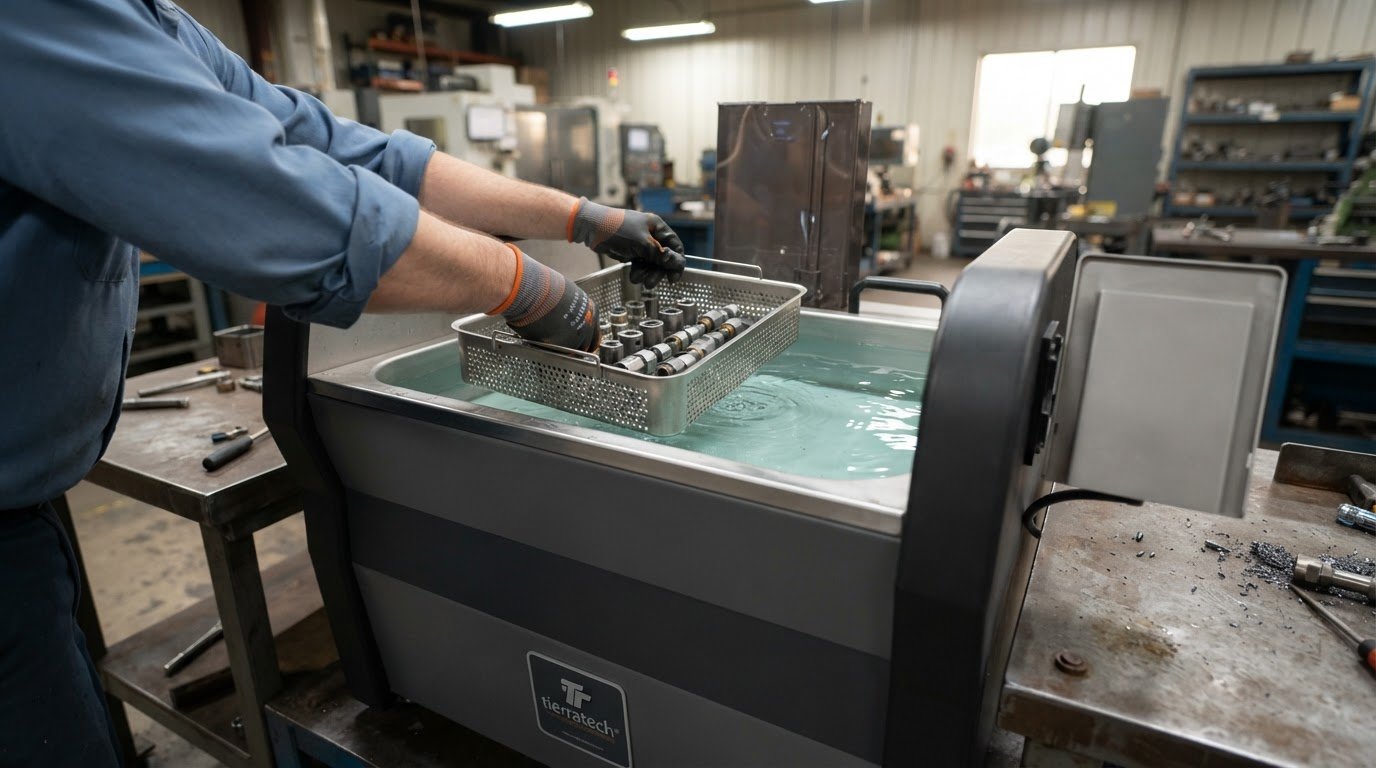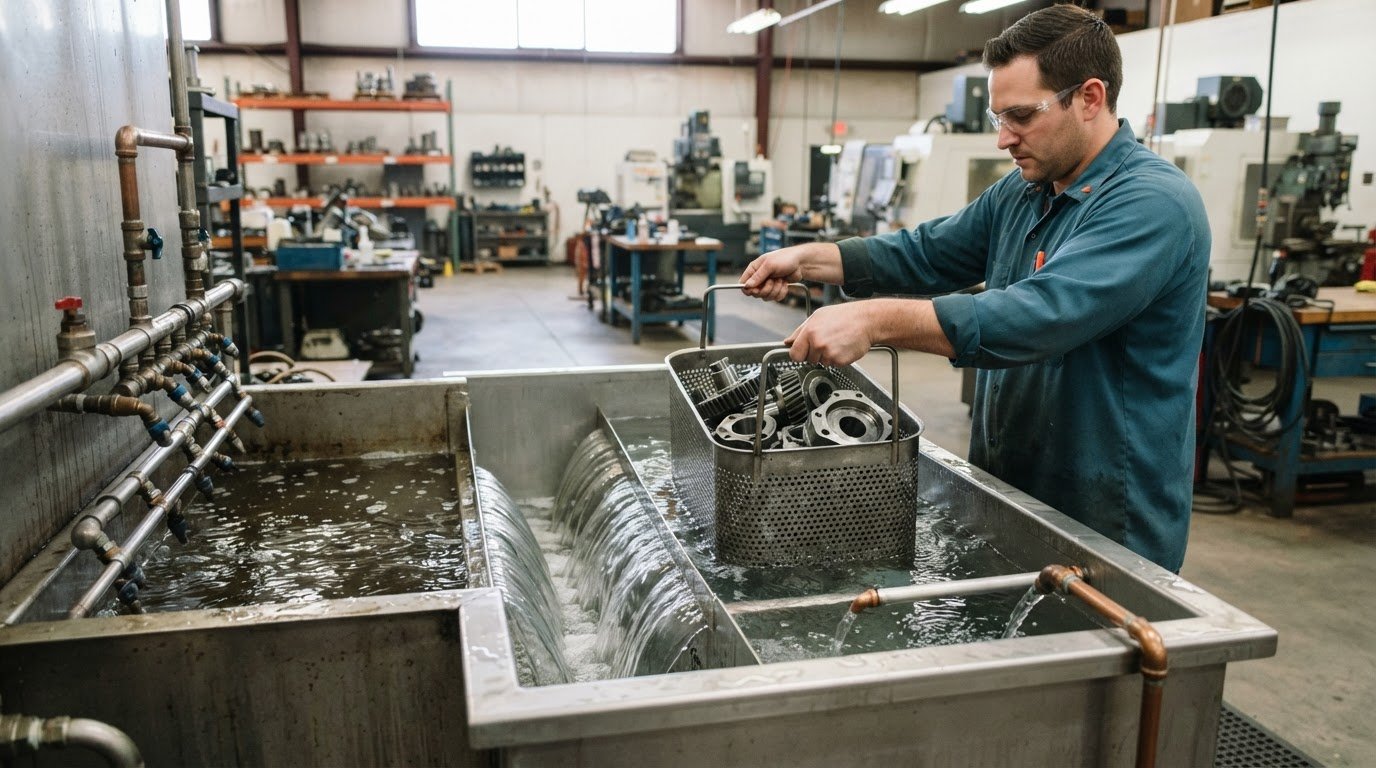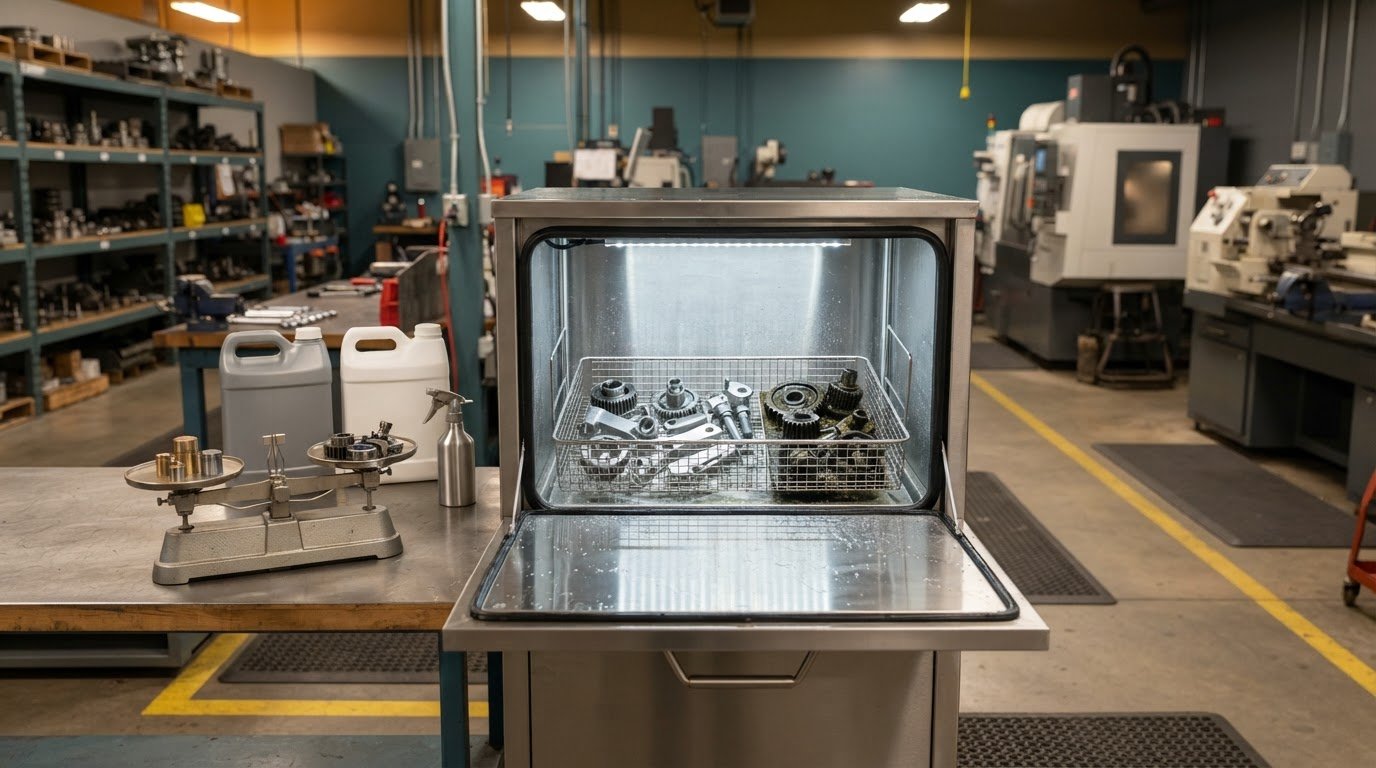
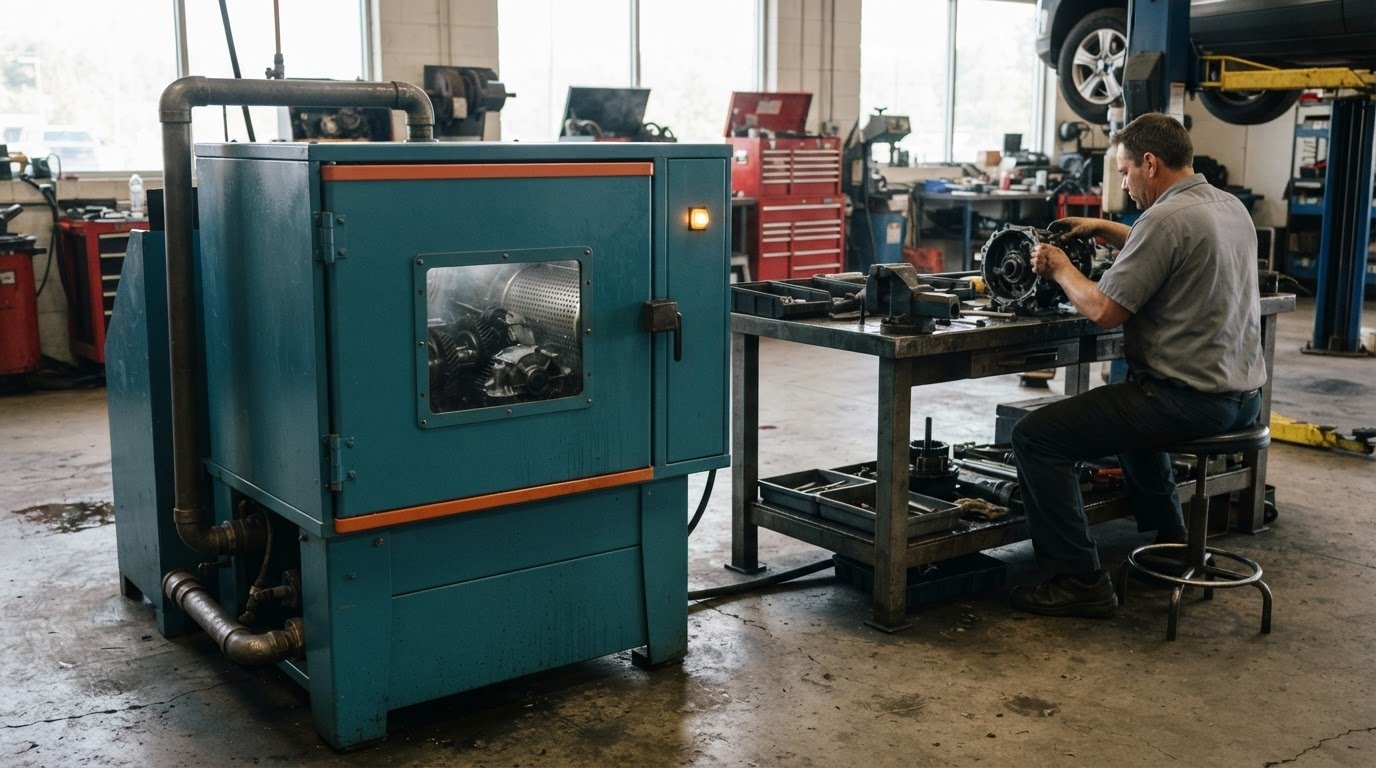
Manual parts cleaning ties skilled technicians to repetitive work.
That time has a real operational cost: technicians pulled away from repairs and production can slow work that needs their expertise. Automation can run cleaning cycles while employees focus on other tasks, but the labor impact depends on the parts, soil load, batch frequency, and time needed to load and unload the machine.
This article explains how automatic washers reduce manual cleaning work and how to weigh those gains against equipment fit, chemistry, waste disposal, energy, and maintenance. You’ll learn which operating factors shape the decision, where automation can ease workflow pressure, and what to assess before choosing a washer for your operation.
Key Takeaways
- Automated cleaning can free technicians for repair and production work, especially when recurring batches keep manual scrubbing in the workflow.
- Assess the full operating picture by accounting for labor, energy, cleaning chemistry, maintenance, and waste disposal.
- Match washer design to the parts, contaminants, cleaning demands, and available floor space to avoid a poor fit.
- Review chemical use, filtration, and solution life alongside cleaning performance to understand the environmental and operating trade-offs.
- Compare the hands-on time needed to load and unload equipment with the cleaning work it can remove from a typical shift.
Why Are Automatic Parts Washers the Key to Reducing Manual Labor?
Automatic washers replace repeated hand-scrubbing with a controlled cleaning cycle, reducing the time workers spend on routine parts preparation. In automotive and heavy-equipment maintenance, this can free technicians for repairs, inspections, and production work.
Automated Cleaning in Automotive and Mining Workshops
Automated cleaning uses machine cycles to clean batches of components with less hands-on scrubbing. Automotive shops can process greasy engine parts, while mining maintenance teams can clean heavy-equipment components before inspection or repair. Labor savings with an automatic parts washer come from moving repetitive cleaning into a machine cycle, freeing workers for tasks that require mechanical judgment and hands-on diagnosis.
Cleaning Time and Repair Turnaround
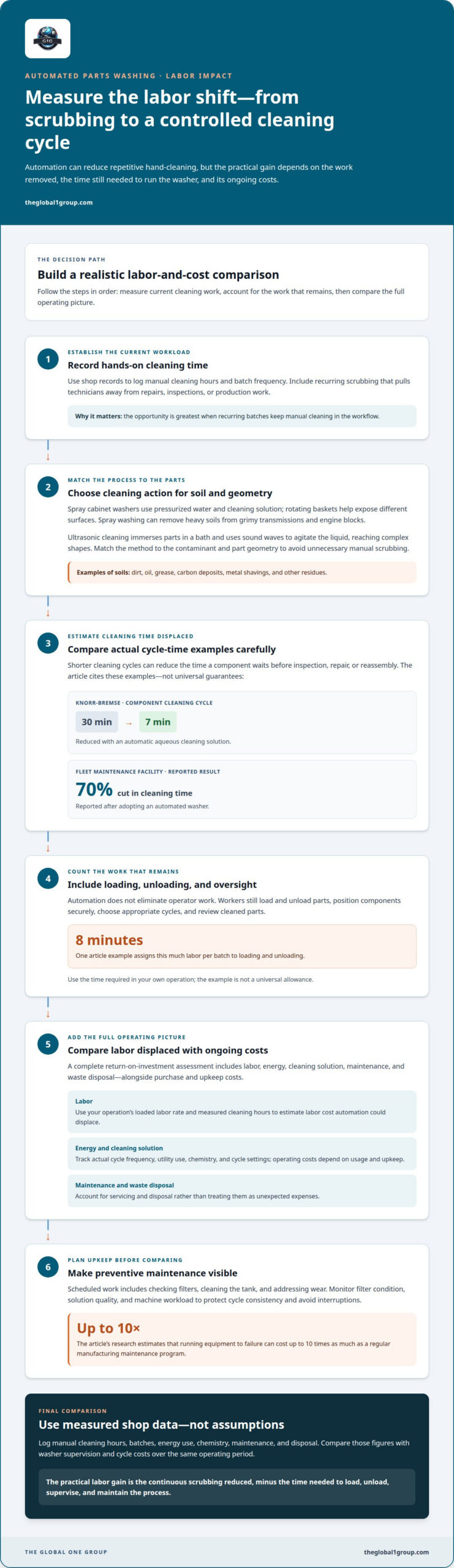
Shorter cleaning cycles can reduce the time a component waits before inspection, repair, or reassembly. Knorr-Bremse reduced a component cleaning cycle from 30 minutes to 7 minutes with an automatic aqueous cleaning solution. A fleet maintenance facility also reported a 70% cut in cleaning time after adopting an automated washer. Those examples show how cleaning can stop bottlenecking repair work.
Parts washers remove dirt, oil, grease, carbon deposits, metal shavings, and other residues from industrial components. Clean surfaces help technicians spot cracks, wear, and damage that grime can conceal. In transmission repair, for example, removing oil and debris before inspection makes the component easier to assess and prepare for reassembly. Cleaner parts also reduce the chance that leftover contaminants interfere with the next maintenance step.
Match the cleaning method to the soil and component. Spray cabinet washers use pressurized water and cleaning solution, with rotating baskets helping expose different surfaces. Spray washing can remove heavy soils from grimy transmissions and engine blocks. Ultrasonic cleaning immerses parts in a bath and uses sound waves to agitate the liquid, reaching complex shapes. Choosing a method based on the contaminant and part geometry helps avoid unnecessary manual scrubbing.
Repeatable cycles can produce more consistent cleaning than relying on each worker’s scrubbing technique. A batch washer processes multiple components with minimal operator input, while the operator loads parts and manages the cycle. This repeatability matters when automotive or mining teams clean similar components across shifts. Workers can inspect parts in a consistent condition instead of spending extra time removing residue left by uneven hand-cleaning.
For OSHA-focused safety planning, assess the washer’s chemicals, heat, moving parts, and loading tasks. Controls depend on the hazards involved; address chemical exposure, guarding, safe handling, and worker training for the specific process. Manual solvent cleaning can expose workers to harmful chemicals and repetitive-motion risks, so replacing repeated hand contact with a controlled machine cycle can reduce some exposure points.
Automation does not eliminate operator work. Workers still load and unload parts, choose appropriate cycles, and review cleaned components. The practical gain comes from reducing continuous scrubbing and redirecting that time to repair turnaround, inspection, or other shop-floor priorities.
Automated washer operating and maintenance costs
Compare the labor removed with the washer’s ongoing operating and upkeep demands. A complete return-on-investment assessment includes labor, energy, cleaning solution, maintenance, and waste disposal.
Labor Hours and Replacement-Part Costs
Labor savings matter when they outweigh the time and resources required to run the washer. Include replacement parts and cleaning-related rework in the calculation, since cleaner components can reduce contaminant-related wear.
Operating Costs and Return on Investment
Operating costs combine recurring expenses with the washer’s purchase and upkeep costs. Track actual cycle frequency and utility use, then compare those expenses with the labor hours removed from manual cleaning.
Energy demand depends on the equipment and cycle. These figures are examples, not universal rates; actual operating costs depend on cycle settings, chemistry, usage, and upkeep.
Remaining Loading and Unloading Labor
Automation reduces continuous scrubbing, but workers still handle parts and maintain the cleaning process. One example assigns 8 minutes of labor per batch to loading and unloading. Operators also need to position components securely, select the appropriate cycle, and inspect the results. Scheduled maintenance adds work, including checking filters, cleaning the tank, and addressing wear before it interrupts operations.
Preventive maintenance protects cycle consistency and helps avoid costly breakdowns. The research estimates that running equipment to failure can cost up to 10 times as much as a regular manufacturing maintenance program. Build inspection and servicing into the operating plan, accounting for filter condition, solution quality, and the machine’s workload. That keeps upkeep visible instead of treating it as an unexpected expense.
Hourly Labor Costs for Parts Cleaning
Actual U.S. labor costs depend on employee wages, payroll overhead, and time spent cleaning. Use your operation’s loaded labor rate and multiply it by measured cleaning hours to estimate the labor cost automation could displace.
Build the comparison from shop records: log manual cleaning hours, batches, energy use, chemistry, maintenance, and disposal. Then compare those figures with washer supervision and cycle costs over the same operating period. For a closer look at the cleaning requirements behind that calculation, review cleaning process considerations.
Selecting equipment based on parts, contaminants, and space
Choose washer capacity and cleaning action to suit the parts moving through your operation. An engine block, a small precision component, and a greasy assembly create different loading, access, and cleaning demands. The right fit depends on part dimensions, contaminant type, batch volume, and floor space, not simply the largest machine that fits the budget.
There’s no single parts-per-cycle figure for every automatic washer. Batch capacity depends on the washer’s design, basket dimensions, part size, and how workers arrange the load. A global transmission manufacturer’s automated system was designed to handle 32 assembled transmissions per hour, illustrating production throughput rather than a universal per-cycle count.
Start by identifying what the washer must remove. Oil, grease, carbon deposits, metal shavings, and other contaminants can collect on different surfaces and inside passages. A bulky engine component needs enough room for cleaning solution to reach its surfaces, while a complex component may require a method that reaches narrow openings. Match the wash process to the residue and the part’s geometry.
Loading patterns matter as much as a machine’s stated capacity. Parts that overlap or block spray access can retain residue, even when the batch fits inside the chamber. Arrange similar-sized components so the cleaning action can reach exposed surfaces, and separate delicate parts from heavy assemblies. This reduces the chance that workers will need to clean parts manually after the cycle.
Available floor space can narrow equipment choices. Measure the washer footprint and allow room for workers to load, unload, and move parts safely. Then compare the layout with production flow: a washer near engine repair may reduce part handling, while a distant machine can add transport steps. The best location supports the existing workflow without obstructing access.
Include capital cost and amortization in the equipment decision. Spread the machine’s purchase and installation costs across its useful operating life and expected wash volume. A high-capacity washer may suit frequent production batches, while a smaller unit may better fit lower-volume maintenance work. Compare those costs with the labor, replacement parts, and rework associated with continued manual cleaning.
Contamination prevention also affects part and equipment lifespan. Residue on components can contribute to wear or corrosion, while clean surfaces help technicians identify damage during inspection. Choose filtration and cleaning features that manage the soils entering the system. Oily batches, for example, place different demands on solution management than dry metal debris, so account for contaminant load when estimating upkeep.
Base your selection on a representative batch, not an idealized load. Record the largest parts, typical contaminants, expected volume, and available installation space. Then assess how the washer will handle those parts without blocking access or disrupting operations. This practical comparison connects equipment fit with cleaning quality, workflow, and the long-term cost of maintaining parts and machinery.
The number varies by washer design, basket size, part dimensions, and how the load is arranged.
Chemical use, waste, and energy efficiency
Cleaning chemistry affects cycle performance, worker exposure, waste handling, and operating efficiency. Compare a water-based detergent process with manual solvent cleaning by tracking chemistry use, solution life, disposal, and energy for the same batch. This shows whether the investment reduces recurring chemical and waste demands instead of shifting those costs elsewhere in the operation.
Automated washing can reduce direct scrubbing and help limit chemical use, but results depend on the soil load, cleaning solution, and how effectively the process keeps that solution usable.
Aqueous washers use water-based detergents and can support freshwater reuse. Oil skimming or filtration can extend solution life by removing contaminants before they build up in the tank. For example, a shop cleaning greasy assemblies can separate floating oil and filter suspended debris, helping maintain the bath rather than discarding it after each batch. Track solution condition and replacement frequency to assess the actual benefit.
Solvent choice also affects waste requirements. Petroleum and chlorinated solvents can create toxic waste that requires disposal under applicable federal and state rules. Disposal volume and solvent consumption are therefore important parts of the operating-cost comparison.
Energy use depends on washer heating, pump operation, and cycle duration. Record power use for representative loads, including cycles for heavily soiled components before assembly. A heated process may use more energy than an unheated one, while efficient filtration and solution management can reduce unnecessary repeat cycles. Compare energy per batch alongside chemistry and disposal rather than evaluating electricity alone.
Build a practical comparison from consistent records. For each batch, note the cleaning method, chemistry used, water consumption, energy demand, and waste generated. Include manual scrubbing and any repeat cleaning needed when residue remains. Then compare those inputs with the automated cycle and its solution-maintenance needs. This makes chemical reduction measurable and links environmental performance to the same operating decisions as labor and throughput.
Choose chemistry for the contaminants and materials being cleaned, not simply for the lowest purchase cost. A greasy engine assembly may need a different approach from a component carrying fine metal debris. Match detergent strength, temperature, filtration, and cycle time to the soil. This helps protect parts, control chemical consumption, and avoid repeat washing that adds energy use and waste.
Automated parts washers and labor savings
Automatic washing replaces much manual scrubbing with batch cycles, while still requiring workers to load, unload, and supervise. Compared with manual parts cleaning, it can reduce labor and rework while delivering repeatable results; the business case depends on cycle fit, volume, and total operating costs.
Manual and Automatic Cleaning Labor
Manual cleaning keeps workers occupied throughout scrubbing, while an automatic cycle shifts much of that effort to setup and oversight. One example estimates that a washer can complete two days’ worth of manual cleaning in around 3 hours. That time shift matters when mechanics can return to repairs, assembly, or inspection instead of spending long stretches at a cleaning station.
Measure the labor change across the full process, not just the wash cycle. Record hands-on cleaning time, loading and unloading, supervision, and any repeat work after a batch. An automatic parts washing machine can reduce maintenance personnel requirements by 23%, according to the provided market estimate. That figure signals potential, but each operation should compare its own task mix and workload.
Cleaning Costs and Quality Across Methods
Cost comparisons should include labor, rework, downtime, chemistry, energy, maintenance, and disposal. Manual cleaning can carry hidden costs when a component waits for scrubbing or reaches inspection with residue.
Automatic cycles can clean batches consistently, helping reduce variation between workers and shifts. Consistency supports inspection because technicians can examine components without as much residue obscuring wear or damage. But a machine cannot compensate for a poor match between the cleaning method, contaminant, and part. A cycle that leaves deposits may require manual touch-up, eroding expected labor and cost savings.
Consider the longer operating horizon, too. Total costs reflect more than wages: delays, rework, and lost productive time can accumulate across repeated cleaning tasks. Compare the same categories for automated washing, using actual batch frequency and maintenance records rather than relying on labor reduction alone.
Environmental performance belongs in the comparison, too. An aqueous process uses water-based detergents, while solvent-based methods can create hazardous waste that requires proper disposal. Track chemistry use, waste volume, and energy alongside worker time. These measures show whether a change improves the whole washing process or simply shifts effort and expense from scrubbing to utilities or waste handling.
The practical takeaway is to compare completed, inspection-ready parts, not just machine cycle times. Log how much manual labor each method requires, then include repeat cleaning and repair delays. If automated cleaning fits your parts and workflow, explore automated parts-washing options as a next step.
The Global One Group: Parts washing, chemistries
The Global One Group helps operations assess parts washers and chemistries for their cleaning needs. Turn to the team when manual cleaning consumes technician time, or when contaminants, part types, and cycle demands make equipment selection difficult. Matching the washing process and chemistry to the components can help you assess labor requirements alongside cleaning quality, waste, and ongoing operating demands.
For facilities using Magido or Fountain equipment, The Global One Group also supplies replacement parts for those brands. Aligning parts washing, chemistry, and equipment needs can help maintenance teams plan a workable cleaning process without losing sight of shop-floor priorities.
Contact The Global One Group to discuss parts washers and chemistry for your operation.
Make Your Next Cleaning Decision Count
Turn labor savings with an automatic parts washer into a clear operating decision by defining what success looks like for your shop. Choose the work that creates the most friction, then set practical measures for technician time, cleaning consistency, and fit with daily workflow. This gives your team a stronger basis for evaluating equipment and chemistry without letting cycle speed alone drive the decision.
The Global One Group supplies industrial parts washers, parts washing chemistries, and replacement parts for Magido and Fountain equipment. Bring your cleaning requirements and equipment considerations into the discussion to focus the next step on your operation’s needs.
Contact The Global One Group to discuss parts washing options for your operation. A considered equipment decision can help your team direct skilled labor where it matters most and keep maintenance work moving.
Frequently Asked Questions
What’s the True Cost of Manual Parts Cleaning?
The true cost includes more than the cleaner’s time. Calculate hands-on labor using your loaded hourly rate, then add cleaning chemicals, waste handling, repeat cleaning, and production work delayed while employees scrub parts. For example, a maintenance team can track cleaning and rework hours across a representative shift. This reveals the operating cost a washer would need to offset.
How Much Labor Time Does an Automatic Parts Washer Save Compared With Manual Cleaning?
Labor time saved depends on the parts, soil, batch size, and cleaning method. Compare the hands-on minutes needed for manual scrubbing with the time workers spend loading, unloading, supervising, and inspecting machine-cleaned parts. Count rework, too. A washer may run unattended during its cycle, but workers still manage the process. Track comparable batches to see how much technician time returns to other work.
What Is the Purchase Price of an Industrial Automatic Parts Washer?
The purchase price depends on washer type, capacity, cleaning method, and configuration, and is provided after a quote request. A compact unit for intermittent maintenance work has different requirements from equipment built for production batches or complex parts. Installation needs and selected features also affect the investment. Compare equipment against your part dimensions, contaminant load, throughput needs, and available space to define the right fit.
What Are the Operating Costs of an Automatic Parts Washer, Including Detergent, Water, Energy, and Maintenance?
Operating costs include detergent or solvent, water, electricity, preventive maintenance, and waste disposal. Record each input over representative cycles, since heating, pump use, cleaning frequency, and solution replacement affect the total. Include filter and oil-skimmer upkeep where applicable, as well as labor for loading and service. A cost-per-cycle view helps compare batches and identify which inputs drive recurring expenses.
How Do You Calculate ROI and Payback Period for an Automatic Parts Washer?
Calculate annual net savings by subtracting the washer’s yearly operating costs from the manual-cleaning costs it replaces. Include labor, chemistry, disposal, rework, and downtime. Estimate payback by dividing the total installed investment by annual net savings. For a practical result, use actual workload and cycle records, and compare the same operating period before and after automation.
Which Industries and Parts Benefit Most From Automatic Parts Washing?
Automatic washing suits operations that repeatedly clean batches or handle stubborn contaminants, including manufacturing, automotive maintenance, mining, and heavy-equipment repair. Production facilities can clean components before assembly, while rebuild shops can process varied parts between inspection and repair. It is a strong fit where manual cleaning disrupts skilled work or consistent cleaning supports inspection. Part size, material, soil, and batch frequency shape the choice.