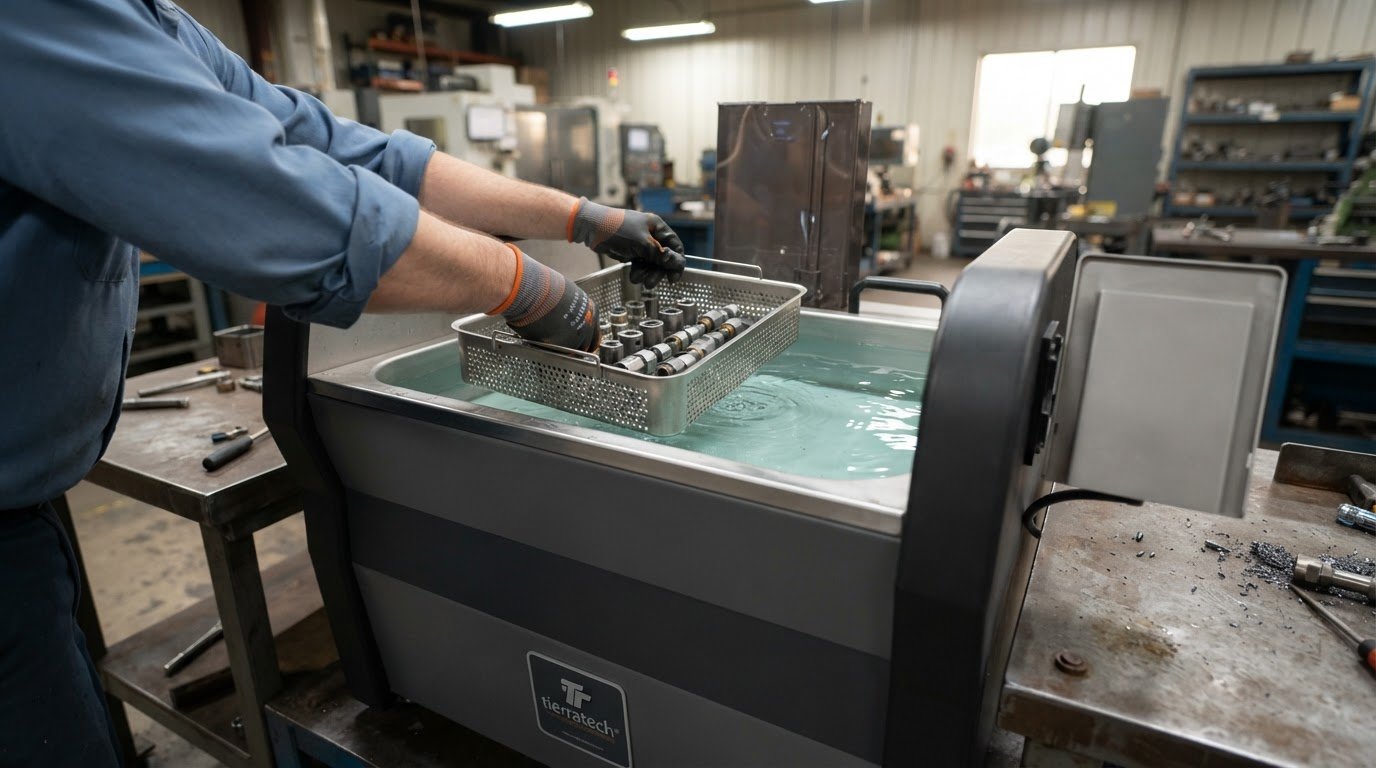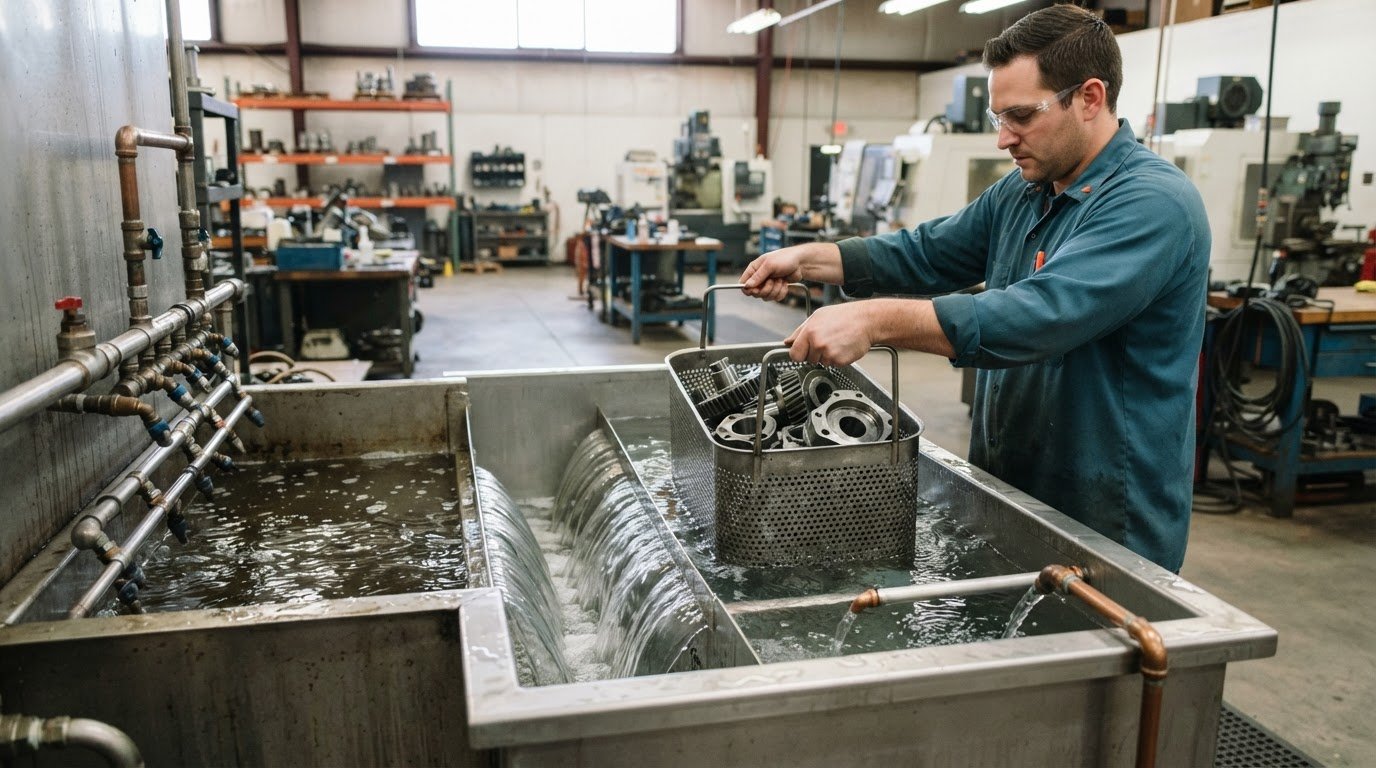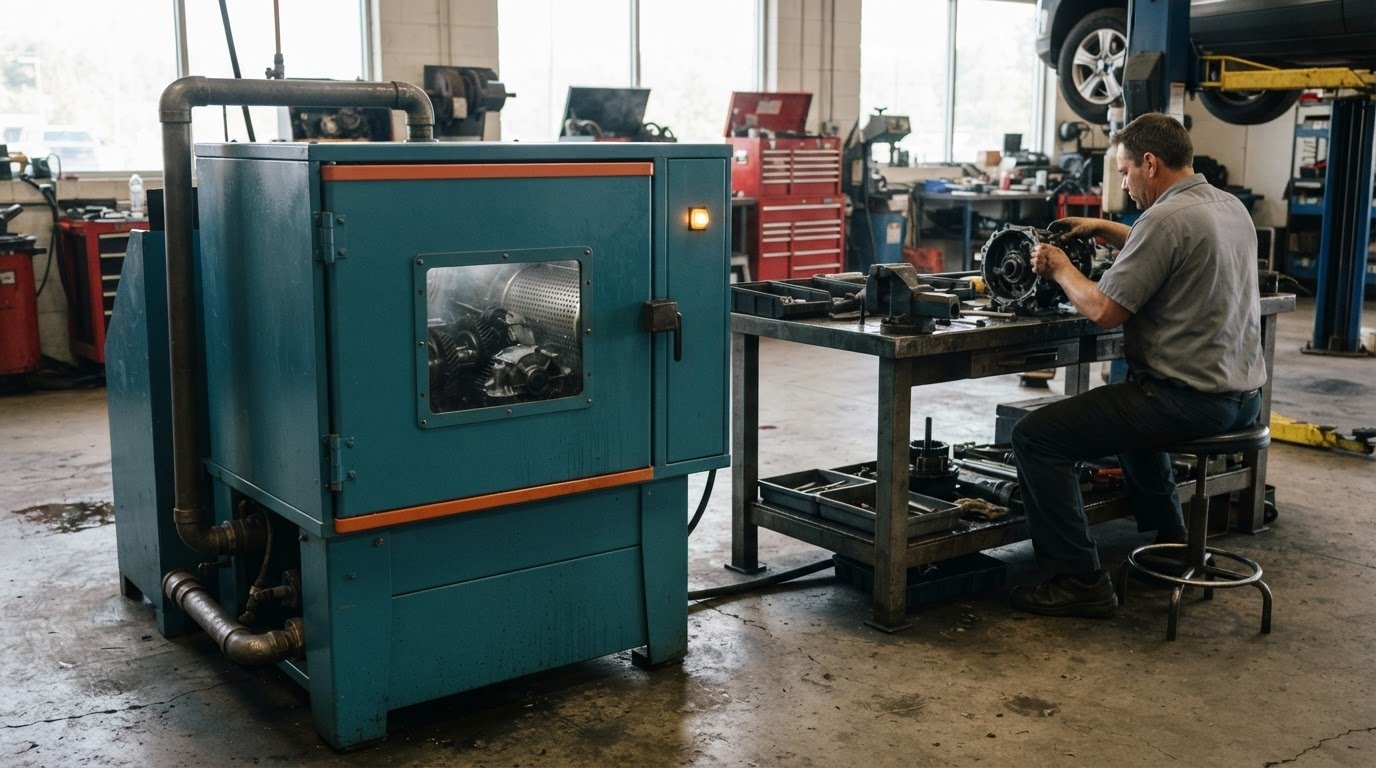
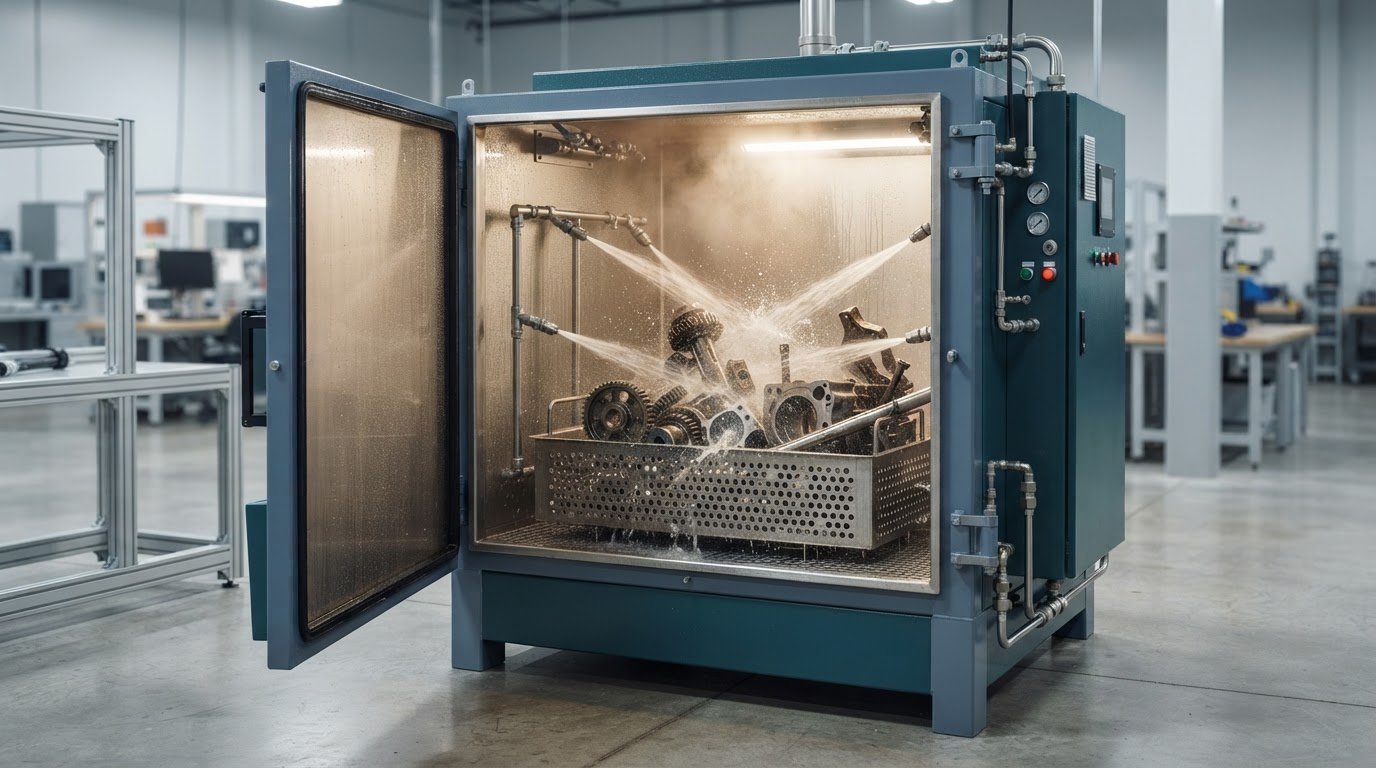
A high pressure parts washer cabinet cleans components inside an enclosed chamber by directing pressurized cleaning solution over their surfaces. Choosing one involves more than pressure: heating, spray coverage, cabinet layout, and cleaning chemistry all affect how effectively it handles your parts and soils.
Start with the cleaning task, not a headline specification. The right setup must reach the contaminated surfaces, loosen the residue, and fit the pace of your maintenance or production workflow.
This guide explains how cabinet washers work, how heat affects cleaning, and which design choices shape pressure and flow performance. You’ll learn how to match a washer and its chemistry to your application, so you can make a practical equipment decision without overlooking details that matter on the shop floor.
Key Takeaways
- Choose cabinet layout and spray coverage around the parts’ size, shape, and soil, not just the machine’s headline pressure.
- Define custom specifications by the cleaning task and shop-floor workflow, including how parts load, drain, and move through the process.
- Understand how enclosed, pressurized washing directs cleaning solution onto components to remove contaminants.
- Consider heat and chemistry together: both influence how effectively the wash cycle tackles the residue on your parts.
- Match pressure and flow to the application, since cleaning performance depends on how the spray reaches and works across each part.
Cabinet washer design
A high pressure parts washer cabinet contains the wash process around the component. Its chamber, door, work support, spray arrangement, and drainage path determine how operators load parts and expose contaminated surfaces. Start with the largest routine component, then account for its weight, shape, and loading clearance. A compact bracket and a long engine component place different demands on cabinet access and interior space.
Work support matters as much as chamber size. A fixed rack can suit consistent batches, while a movable basket may make loading and unloading easier. Parts need stable support so they don’t shift during washing or block spray from nearby surfaces. For parts with recessed channels, consider how their position exposes those areas to the spray. If components vary widely, check whether the chamber accommodates each one without awkward handling.
Spray access depends on the relationship between the nozzles and the part. A spray pattern may miss a blind recess if the component is positioned poorly. Review how operators orient each part, where residue collects, and whether the wash process can reach those areas. Door opening, loading height, and operator clearance also affect daily handling. A cabinet that fits the component but makes loading difficult can slow routine maintenance.
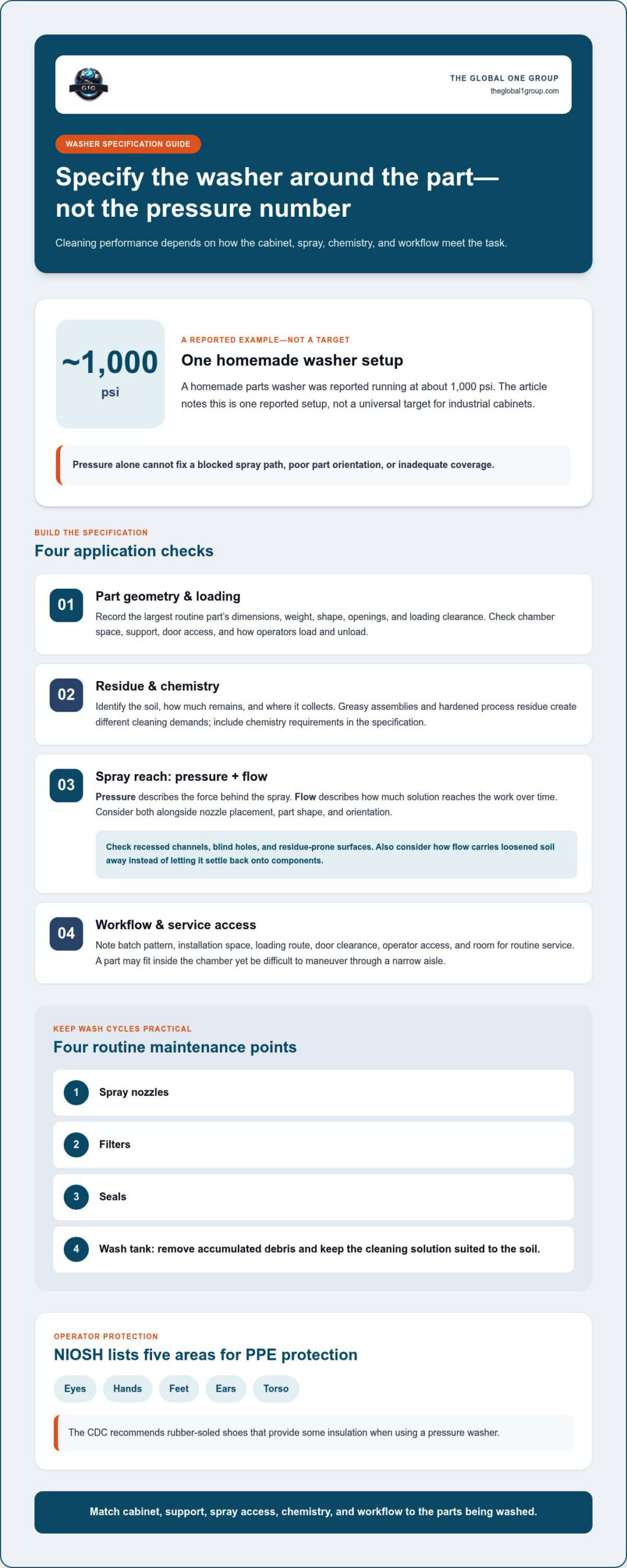
Plan installation and maintenance in sequence. Place the washer on a stable, level surface, leave room to open the door and access service points, then connect the utilities required by its design. During maintenance, inspect spray nozzles, filters, seals, and the wash tank. Remove accumulated debris and keep the cleaning solution suited to the soil. These checks can reveal restricted flow or leaks before they disrupt a wash cycle.
Plan operator protection for the pressure-washing task. The National Institute for Occupational Safety and Health (NIOSH) advises pressure-washer operators to wear PPE that protects the eyes, hands, feet, ears, and torso. The Centers for Disease Control and Prevention recommends rubber-soled shoes that provide some insulation when using a pressure washer. Include these protections in the work-area setup, along with safe access to the cabinet controls.
Before selecting a design, record the details that affect loading and cleaning:
- Measure the largest part and note its weight and shape.
- Identify recessed areas, blind holes, and residue-prone surfaces.
- Map the loading path, operator stance, and door clearance.
- Consider how filters, nozzles, seals, and tank access fit routine upkeep.
These steps connect cabinet dimensions to the actual workload. A casting with deep passages needs a different loading orientation from a flat plate. Matching the chamber, support, spray access, and service access to the parts being washed helps keep repeated shop-floor cycles practical.
Custom washer specifications
Define the cleaning task before settling on equipment details. A useful specification connects each part’s geometry, residue, and production workflow to the washer’s design.
Custom Specification Choices
Start with a representative part, such as a cast housing with narrow passages. Record its dimensions, weight, openings, and residue locations, then describe how operators load and unload it. These details help define the usable chamber, part support, and access needed for consistent cleaning.
Next, map the cleaning cycle. Note whether parts arrive individually or in batches, how much soil remains, and where it collects. A greasy assembly and a component with hardened process residue create different cleaning demands. Include the required cleaning chemistry in the specification, because solution compatibility and soil type shape the wash process.
Document practical constraints around the machine, too. Measure the installation space, door clearance, loading route, and access needed for routine service. A large part may fit inside the chamber but be difficult to maneuver through a narrow aisle. Include these site and workflow details when defining a custom washer, rather than treating chamber capacity as the only design decision.
Pressure and Flow Rate
Pressure describes the force behind the spray; flow describes how much solution reaches the work over time. Both affect cleaning, but neither tells the whole story alone. A homemade parts washer was reported running at about 1,000 psi. That example shows one reported setup, not a universal target for industrial cabinets.
Match spray performance to the part and soil. A narrow passage needs suitable positioning and spray access; an open surface needs coverage across its working area. More pressure alone won’t solve a blocked spray path or poor part orientation. Consider how nozzle placement, flow, and the component’s shape work together during the wash cycle.
Describe the cleaning result you need, not just a pressure figure. Identify the hardest residue, the surfaces that must be reached, and the part’s orientation during washing. Then assess how flow carries loosened soil away instead of letting it settle back onto components. This gives equipment planning a practical foundation.
Before finalizing specifications, assemble a concise application record:
- Part examples, dimensions, weight, and batch pattern.
- Residue type, location, and cleaning chemistry requirements.
- Installation space, operator access, and service access.
- Required spray reach and the surfaces most difficult to clean.
Use that record to compare washer requirements against the work itself. To discuss the details of your washer application, bring a representative part and its cleaning requirements.
Definition of high-pressure parts washing
High-pressure parts washing uses pressurized cleaning solution to remove soil from industrial components. In a cabinet, the operator places a part inside an enclosed washing area, starts the cycle, then removes the cleaned component. For example, washing a greasy pump housing requires solution to reach its exterior and accessible passages. The process combines mechanical spray action with cleaning chemistry.
Pressure helps the solution act on attached contamination, but spray contact matters just as much. A nozzle aimed at an exposed face can clean that surface while missing a recessed channel. Consider part orientation, openings, and soil locations before choosing a wash method. A component with blind pockets may need repositioning to expose those areas to the spray.
Cleaning chemistry supports the mechanical action by loosening or breaking down residue. The suitable solution depends on the material and contaminant. Oil on a steel bracket presents a different cleaning problem from residue on an aluminum housing. Match the chemistry to the soil and part material, then assess whether the wash reaches the required surfaces.
A parts-washing cycle has distinct stages. First, load the component so the spray can reach contaminated areas. Run the wash cycle with the selected solution, then allow the solution and loosened soil to drain before removing the part. For a machined valve body, this sequence helps operators focus on internal passages as well as visible faces.
High-pressure washing differs from wiping because the spray reaches multiple exposed surfaces during a controlled cycle. It also differs from an open spray task because the cabinet contains the washing operation. Neither distinction removes the need to position parts correctly. For example, a gear placed flat against a support can shield contact surfaces from the spray.
Use these checks to define what “clean” means for the application:
- Identify the soil, such as oil, grease, or process residue.
- Mark the surfaces and passages that need cleaning.
- Consider the part material when selecting cleaning chemistry.
- Inspect a washed component for remaining soil in recessed areas.
Inspection connects the wash method to the actual result. A clean-looking outer surface may hide residue inside a bore or threaded opening. For a component returning to service, decide which surfaces require inspection and what remaining contamination could interfere with its function. That standard helps operators assess cleaning consistently across repeated parts and batches.
Heated industrial parts washer cabinets
Cabinet washers direct pressurized spray inside an enclosed work area. Standard spray washers may offer open access, while ultrasonic cleaners use cavitation in a liquid bath.
Wastewater and Chemical Requirements
In the United States, wastewater disposal and chemical handling depend on the discharge route and applicable jurisdictional requirements. Identify the receiving sewer or disposal route, follow applicable federal, state, and local rules, and use chemical label and safety information to guide handling decisions.
Track the cleaning solution and the contaminants it removes. Oil, metal fines, and process residue can change the wastewater stream, so account for what enters the tank before selecting a disposal approach.
Suitable Industries and Parts
High-pressure cabinets suit industrial maintenance and production work where components carry oil, grease, or process residue. Automotive repair, equipment manufacturing, and machine shops may wash parts such as pump housings, engine components, gears, and tooling.
Evaluate the part’s material, shape, and soil. A steel housing with accessible surfaces presents a different task from a component with deep passages or sensitive finishes. The cleaning method must reach contaminated areas without damaging the part.
Heat changes how a wash solution interacts with oily soil. Reported examples include aqueous solution heated to 135 degrees for pressure spraying, a homemade parts washer run at 160 degrees, and dishwasher water approaching 200 degrees. These examples describe different setups, not a universal operating target.
Choose a temperature based on the soil, cleaning chemistry, and component material. Heat can support cleaning, but it doesn’t replace spray access or suitable chemistry. A greasy pump casing, for example, still needs spray coverage across its external surfaces and openings. Consider the complete wash process rather than treating temperature as the only measure of performance.
Heating also affects the operating routine. Operators should understand the machine’s temperature controls and follow its operating instructions before loading parts or handling solution. A consistent procedure helps crews manage hot liquid, inspect cleaned components, and keep the wash cycle suited to the task.
Operating Safety and PPE
Choose a cabinet with a secure closure and controls that keep operators clear of active spray. Follow the machine’s operating instructions, and don’t reach into the wash area during a cycle. Account for hot solution and wet floors around the equipment.
The National Institute for Occupational Safety and Health (NIOSH) advises pressure-washer operators to wear PPE protecting the eyes, hands, feet, ears, and torso. The Centers for Disease Control and Prevention recommends rubber-soled shoes that provide some insulation when using a pressure washer. Set up safe access and protective equipment before operating the washer.
Treat that listing as a product-price reference when comparing wash supplies, and check that a detergent suits the washer, the soil, and the component materials. Consider detergent alongside temperature and spray coverage, since the complete wash process must match the parts and cleaning task. A listed price alone does not establish cleaning performance or compatibility.
What pressure and flow rate do high-pressure parts washer cabinets use?
Pressure and flow work together, but they describe different parts of the wash. Pressure drives the spray; flow describes the volume of solution delivered. A forum member reported running a homemade parts washer at about 1,000 psi. Treat that as one reported setup, not a standard specification for industrial cabinets.
There isn’t one pressure and flow combination for every component. A broad, exposed surface has different needs from a narrow passage or recessed pocket. The spray must reach the soil, and the flow must carry loosened contamination away. If a part blocks the nozzle pattern, increasing pressure won’t fix poor access.
Assess the application before comparing equipment figures. Identify the hardest residue, the part’s shape, and the surfaces that need cleaning. A machined housing with internal channels, for example, needs spray access to those channels. Part orientation and nozzle placement determine whether solution reaches them during the cycle.
Use pressure and flow as paired selection criteria. A strong spray can act on stubborn soil, while adequate solution volume supports coverage and rinsing. The right balance depends on the cleaning chemistry, the contaminant, and how the part sits inside the cabinet. Evaluate performance against the actual wash task, not a single headline number.
For a practical comparison, collect the same details for each candidate washer:
- The pressure and flow specifications for its wash system.
- The nozzle arrangement and spray access around the loaded part.
- The part’s geometry, residue, and required cleaning result.
- The chemistry used and how the cycle handles loosened soil.
Then test the setup with a representative component. Inspect surfaces that tend to retain contamination, including bores, corners, and sheltered faces. If residue remains in one location, review part positioning and spray access before changing system settings. This helps distinguish a coverage problem from a pressure or flow mismatch.
Ask how the washer maintains usable spray performance during routine operation. Debris in a filter or nozzle can restrict solution delivery and alter coverage. Regular inspection and cleaning help preserve the intended flow path. Operators should also follow the machine’s instructions when adjusting pressure, handling solution, and maintaining spray components.
Pressure alone doesn’t define cleaning capacity. A cabinet needs a suitable combination of spray force, solution delivery, nozzle reach, and chemistry for the parts being washed. To align washer specifications with your application, document the component, residue, and cleaning goal before selecting the system.
The Global One Group: Parts washing, chemistries
The Global One Group offers industrial parts washers and cleaning chemistries for operations evaluating cabinet washer performance. Its washers and chemistries can support decisions shaped by residue, component material, and the cleaning result you need. Matching the cleaning approach to the application helps teams assess how the wash cycle fits their maintenance or production work.
The Global One Group also offers replacement parts for Magido and Fountain equipment. These parts support maintenance and repair of either brand’s washer systems. Bring your equipment requirement into the conversation to keep the discussion focused on your operational needs.
Contact The Global One Group to discuss parts washing, chemistries, or Magido and Fountain parts.
Put Your Cleaning Requirements Into Motion
Turn the washing challenge into a practical equipment decision. Before specifying a high pressure parts washer cabinet, identify the parts driving the workload, the cleaning result they require, and the chemistry suited to their soil and material. This gives your team a clear basis for discussing process fit and equipment needs.
The Global One Group offers industrial parts washers, parts washing chemistries, and replacement parts for Magido and Fountain. These offerings can support your next decision, whether you’re planning a parts-washing process, selecting cleaning chemistry, or sourcing parts for those washer brands.
Bring your application details into the conversation and focus the discussion on the work your operation needs to handle. Contact The Global One Group to discuss your requirements and take the next step with confidence.
Frequently Asked Questions
What Is a High-Pressure Parts Washer?
A high-pressure parts washer cleans industrial components by directing pressurized cleaning solution onto contaminated surfaces. A high pressure parts washer cabinet can help remove soils such as oil and grease from pump housings, brackets, and tooling. In a maintenance workflow, operators load components for washing rather than manually scrubbing every exposed face. Results depend on matching the equipment and cleaning solution to the part, residue, and required cleaning outcome.
What is a high-pressure parts washer cabinet and how does it work?
This enclosed machine washes components using directed spray. The operator positions a part inside, closes the cabinet, and runs the wash cycle. The system pumps cleaning solution through its spray arrangement, then collects the liquid for the washing process. For example, a repair team can wash a removed valve body before inspecting its passages and returning it to assembly.
Which detergents and cleaning fluids are compatible with high-pressure cabinet parts washers?
Compatible cleaning fluids suit the washer system, component material, and soil being removed. A detergent selected for oily steel components may not suit every material or contamination type. Follow the machine’s operating guidance and the chemistry’s use instructions, then match them to the parts in your process. The Global One Group offers parts washing chemistries for industrial cleaning applications.
How much does a high-pressure parts washer cabinet cost in the United States?
Pricing for a high-pressure parts washer cabinet varies based on size, pump capacity, construction materials, and integrated features like oil skimmers or specialized filtration. Standard entry-level industrial units typically start around several thousand dollars, while heavy-duty, customized systems designed for high-volume production can cost significantly more depending on specific facility requirements.
How do high-pressure parts washer cabinets compare with standard spray washers and ultrasonic cleaners?
A high pressure parts washer cabinet encloses the washing operation and uses aggressive pressurized streams to blast away heavy grease and stubborn residues from complex surfaces. In contrast, standard spray washers often rely on lower pressure and higher volume for general washing. Ultrasonic cleaners use high-frequency sound waves to create microscopic bubbles that reach into blind holes and intricate internal passages, making them ideal for delicate or deeply recessed components rather than heavy exterior buildup.