Guessing at a replacement can keep a Fountain parts washer down longer than the repair itself. The right fountain parts washer parts depend on the machine’s model and component details, not visual similarity alone. A mismatch can affect washer performance and create extra maintenance work.
When a needed part is hard to identify, cleaning operations may be left waiting. The Global One Group supplies genuine and compatible replacement parts for Fountain equipment, giving maintenance teams a practical source for replacements suited to their washer. This guide explains how to identify the right part, what equipment details to gather, and how to compare replacement options.
Accurate matching supports cleaning performance and helps teams plan maintenance with fewer avoidable delays. Start with the washer’s model information and the component that needs attention, then use those details to narrow the search.
Key Takeaways
- Consistent cleaning depends on a replacement that suits the washer’s model and intended use.
- Use the machine nameplate, manuals, and service records to build a reliable starting point for identifying the part.
- Compare genuine and compatible options by documented fit and application. Compatible does not mean interchangeable across every model.
- Gather equipment details, symptoms, and clear photos where available to make a parts request more useful.
- The Global One Group supplies genuine and compatible fountain parts washer parts for Fountain equipment.
Why the Right Fountain Parts Washer Parts Matter to Daily Operations
A parts washer that no longer cleans consistently can disrupt more than the wash bay. Residue left on a workpiece may require another cleaning cycle, slow the next production step, or lead staff to inspect and rework parts. If the washer also behaves differently during normal use, operators and maintenance teams lose time managing uncertainty instead of keeping work moving.
A correctly matched replacement helps the machine operate as intended for its design and application. Fit matters: a part that looks similar may not suit the washer’s model or operating setup. Select Fountain parts washer parts using equipment details and reliable documentation, not appearance or brand name alone. Correct part fit is the foundation of dependable washer operation.
Separate routine consumables from equipment components when assessing what needs attention. Cleaning chemistry is a consumable used in the washing process; a replacement part is a physical component of the washer. They serve different roles. Changing a consumable won’t address an equipment issue, and replacing a component won’t necessarily resolve a cleaning concern tied to the washing process. A general overview of how a parts washer works can help put the equipment’s role in context, but model-specific documentation should guide replacement decisions.
When a washer component becomes an operational bottleneck
Watch for changes from the washer’s normal results or operation: parts come out less consistently clean, the machine behaves differently during a cycle, or operators need to repeat steps they usually complete once. These observations signal that something warrants attention, but they don’t identify a failed part on their own. Record what changed and when it occurs. Leaving the issue unresolved can add troubleshooting tasks to maintenance work and interrupt the handoff between washing and downstream operations.
Why Fountain model and application details matter
Start with the washer’s make and model, then consider the application it serves. Equipment used for different cleaning tasks may require different replacement matches, so brand identification alone doesn’t establish fit. Use the machine nameplate and available manuals or service records to connect the request to the specific unit. Tie component names and specifications to verified documentation rather than inferring them from visual resemblance or a general description.
This model-first approach helps maintenance teams distinguish a likely match from a guess before sourcing begins. It also gives the parts request useful context: which washer needs attention, what operating change prompted the search, and which documented part information applies. That clarity supports a focused replacement decision, helps protect intended cleaning performance, and can prevent avoidable disruption in the wash bay.
How to Identify the Correct Fountain Parts Washer Replacement
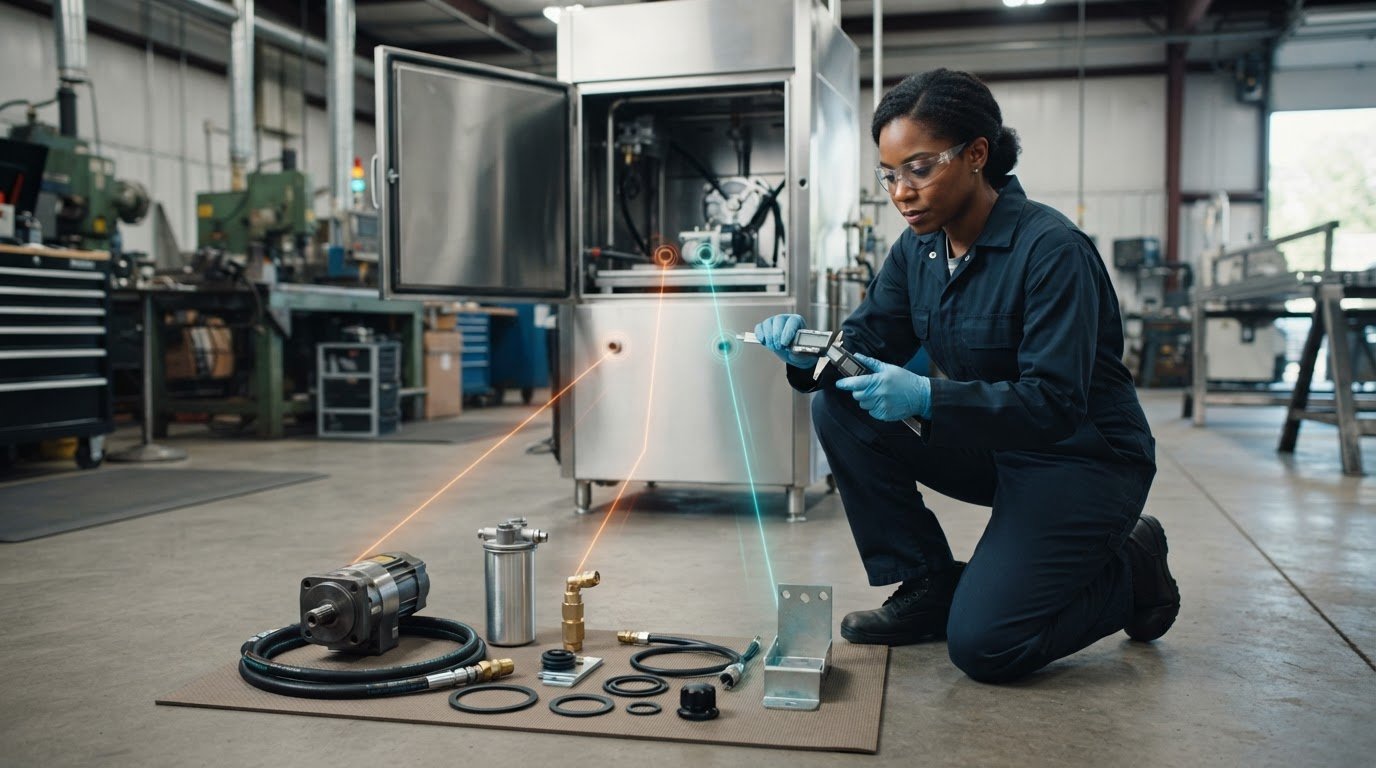
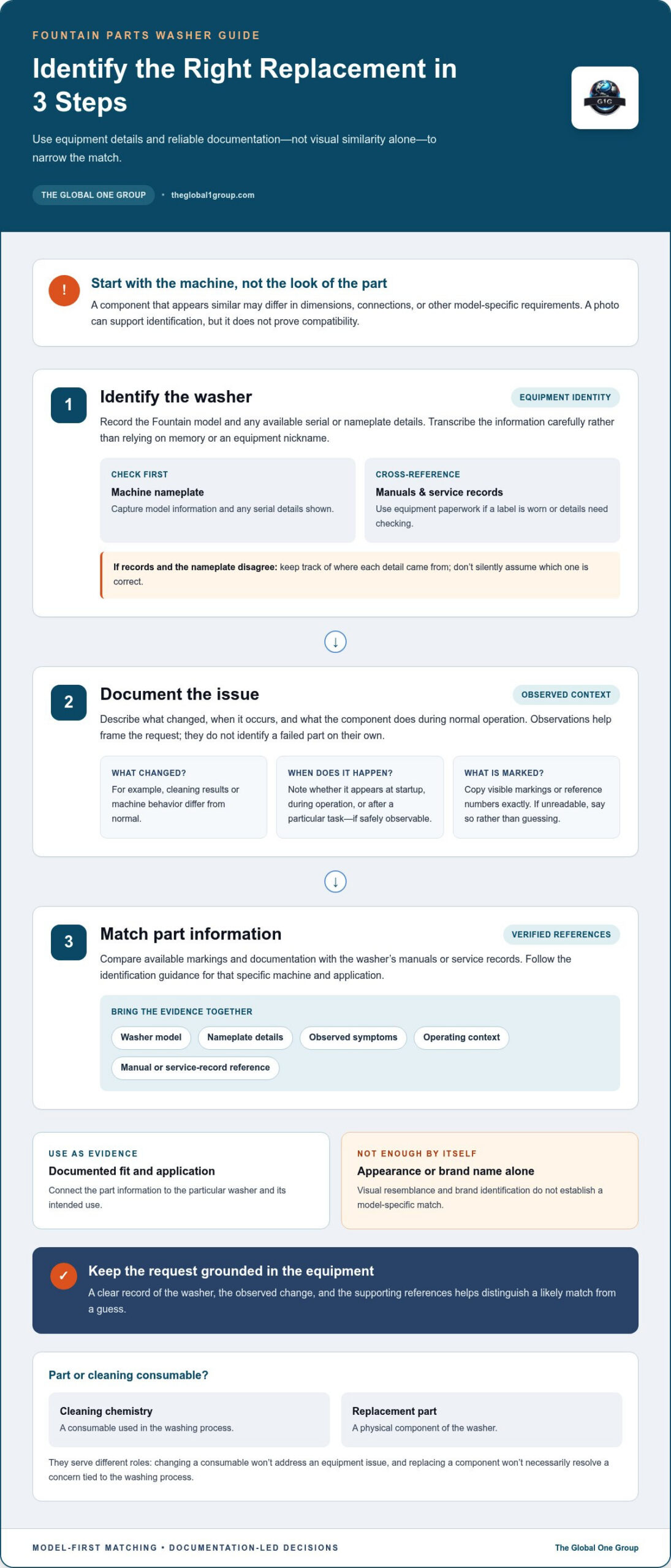
A focused identification process helps maintenance teams avoid ordering based on guesswork. Work through three steps in sequence: identify the washer, document the issue, then match the replacement information against equipment references. This gives a parts request useful context and helps distinguish a plausible visual match from a part suited to the specific machine.
- Identify the washer. Record the Fountain model and any available serial or nameplate details.
- Document the issue. Describe what has changed, when it occurs, and what the component does in normal operation.
- Match the part information. Compare available markings and documentation with the washer’s manuals or service records.
Start with the washer’s identifying information
Locate the machine nameplate and transcribe the model information carefully, along with any serial details shown. Avoid relying on memory or a handwritten equipment nickname. If the label is worn or difficult to read, use available manuals, service records, or equipment paperwork to cross-reference the machine. Follow the identification guidance in the documentation for that washer.
The model, nameplate details, and service records help narrow a replacement-part match. These identifiers connect the request to the equipment, while documentation can provide the terminology or references needed to describe the component accurately. Keep track of the source for each detail, especially if paperwork and the nameplate don’t appear to agree. That gives the next matching step a clear starting point.
Describe the failed component and its operating context
Write down the component’s known function, the observable change, and when the issue occurs. For example, note whether the change appears during startup, during normal operation, or after a particular task, if you can observe that safely. Record visible markings or reference numbers exactly as they appear. If none are readable, say so rather than guessing at a part number or assigning a component name without documentation.
Appearance can support identification, but it can’t prove compatibility. Two components may look alike while differing in dimensions, connections, or other model-specific requirements. Use verified part references and equipment records to establish the match. Don’t treat a photograph or visual resemblance as the final basis for selection.
Keep the information together: washer model, nameplate details, symptom description, operating context, and any documentation reference. Clear notes reduce back-and-forth and make it easier to distinguish the equipment issue from an assumption about its cause. For a broader framework for organizing a replacement request, use this industrial parts washer replacement parts guide.
With those details prepared, The Global One Group can help source genuine and compatible Fountain replacement parts. Include the model-first information in your Fountain parts request to support a focused match.
Genuine vs. Compatible Fountain Parts: Compare Fit Before You Choose
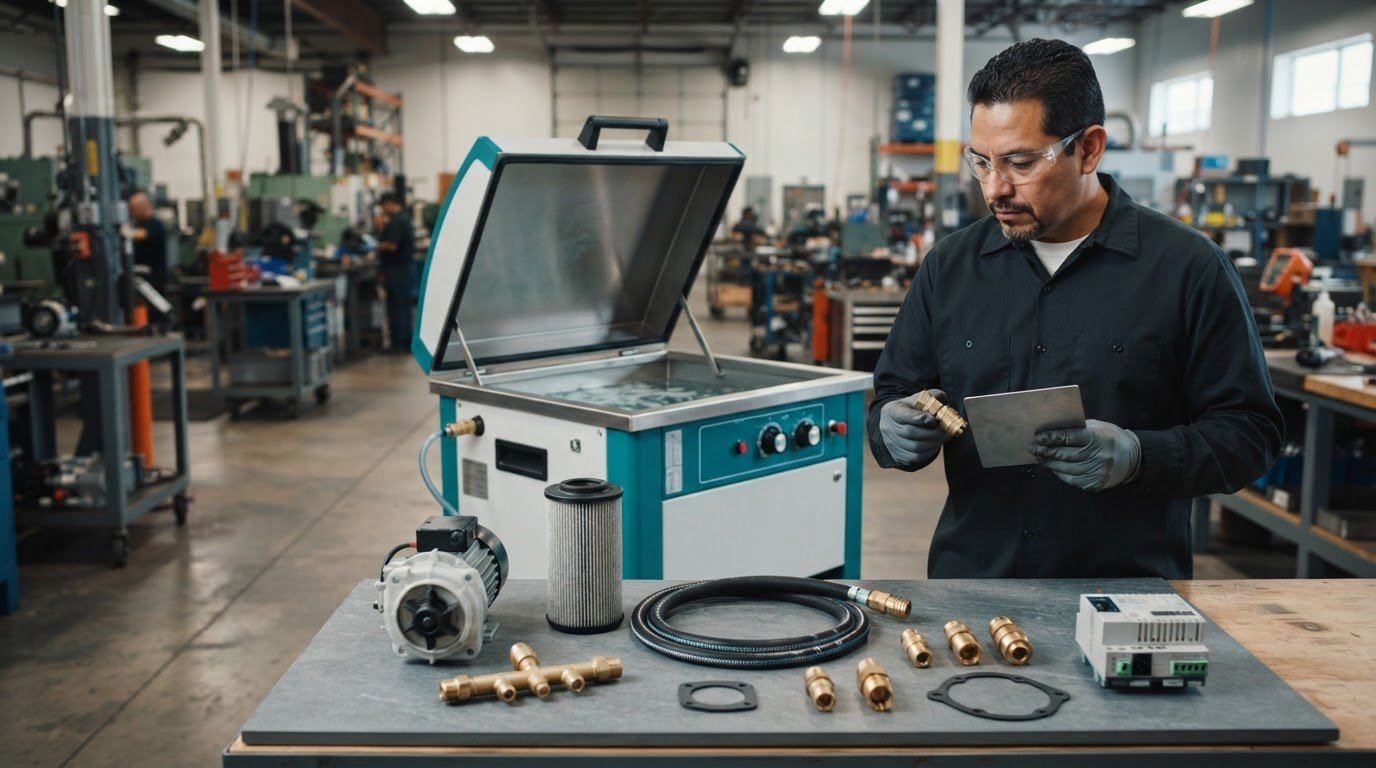
A genuine part and a compatible replacement can both be options for Fountain equipment, but the label alone doesn’t establish whether either one fits your washer. Compare the documented model match, component description, available specifications, and intended application. Neither option is automatically right for every situation. The choice depends on evidence for the specific machine and replacement.
“Compatible” does not mean universally interchangeable across Fountain washer models. A replacement may suit one model or application without fitting another. Treat each option as a specific match to verify, not a general substitute based on brand, shape, or a similar-looking part.
What to compare when reviewing a replacement option
Start with the part documentation and the washer’s equipment references. Check that the component description corresponds to the part you need and that the documentation connects it to your washer model. Compare technical specifications when reliable documentation provides them. If the model match or a relevant specification is unclear, resolve that technical question before selecting a replacement rather than filling the gap with an assumption.
| Option | Information to match | Buyer consideration |
|---|---|---|
| Genuine replacement | Component description, Fountain model reference, and available part documentation | Confirm the documented match for the specific washer and application. |
| Compatible replacement | Documented fit for the specific Fountain model and any stated specifications | Compatibility for one model doesn’t establish fit across the full range. |
Use the table as a comparison framework, not as a substitute for technical records. If two options appear similar, compare their documented model references and specifications instead of choosing by appearance. If documentation identifies a match for a different model, don’t assume the part will transfer to yours. Accurate records help procurement and maintenance teams make a defensible choice and avoid introducing a new fit issue during replacement.
Check cleaning-system and chemistry context
The washer’s cleaning method and operating conditions can also inform part selection. Consider how the equipment is used and what cleaning chemistry the process involves, but don’t infer chemical compatibility from a general description or material appearance. Use product-specific documentation for any compatibility claim. If cleaning chemistry is part of the decision, consult this parts washing chemistries selection guidance alongside the washer’s equipment references.
For fountain parts washer parts, compare options against the actual model and application, then resolve gaps in the documentation before choosing. The Global One Group supplies genuine and compatible replacement parts for Fountain equipment. Share the available equipment and part information through The Global One Group’s Fountain parts sourcing to support a focused selection.
Prepare a Fountain Parts Request That Helps Prevent Sourcing Delays
A clear parts request gives sourcing a stronger starting point. Gather information from the washer, the component, and the operating issue before submitting a request. Complete details help identify the equipment, explain what has changed, and focus the search on a replacement suited to the machine and its application.
Information to gather before sourcing
Use the nameplate, manuals, and service records as references. Capture details as written rather than reconstructing them from memory. If a marking is unreadable or a document doesn’t identify the part, note that gap instead of guessing. Use this checklist to organize the request:
- Washer identification: Fountain model and any available serial or nameplate details.
- Component information: The part’s known role, visible markings, and references in manuals or service records.
- Issue description: What changed in operation, when it happens, and how it affects the cleaning process.
- Supporting records: Relevant equipment documentation or maintenance history that helps describe the unit and issue.
- Photos, when available: Clear images of the nameplate, labels, or component. Use images to support written details, not as proof of fit on their own.
Be specific in the symptom description. “The washer behaves differently during operation” gives less context than recording the exact observed change and when it occurs. Stick to what operators can see or document; don’t present an assumed cause as a confirmed diagnosis. Copy component markings exactly, including characters that may be easy to confuse, and identify the source of any part reference.
Once these details are together, explore Fountain parts support for genuine and compatible replacement parts. A model-first request with clear equipment and issue information gives the sourcing discussion a practical foundation.
Plan for continuity without overstocking blindly
Spare-parts planning should reflect the role a washer plays in your workflow. Identify which equipment issues could interrupt a critical cleaning step, then review maintenance history for recurring needs. A component that could stop an essential process may deserve a different planning priority from one that causes a manageable delay. Base decisions on your operation, not a universal stocking list.
Keep those records current. When maintenance teams document the washer model, prior issues, replacement references, and operational impact in one accessible place, they can use that history to inform future planning. Review the information as equipment use or workflow needs change. This approach helps teams make deliberate decisions about Fountain parts washer parts, avoid stocking items without a clear operational reason, and prepare useful details before the next sourcing need arises.
Source Fountain Parts Washer Parts from The Global One Group
The Global One Group supplies genuine and compatible replacement parts for Fountain equipment. This brand-specific offering gives maintenance teams a practical route to finding a replacement while keeping the washer’s model and application at the center of the decision. The company also supplies parts for Magido equipment, a separate brand.
A brand-specific source for Fountain washer parts
Finding a source for fountain parts washer parts is only one step. The replacement still needs to match the equipment. A clear model reference and documented part information help focus the request, while incomplete or assumed details can lead to delays as teams work out whether an option suits the washer. Brand identification alone doesn’t establish model compatibility, so base the match on equipment records and relevant part documentation.
Genuine and compatible options can both be considered, but neither label replaces the need to verify fit for the specific Fountain washer. Compare the component description and available specifications with the machine’s documentation and intended use. The Global One Group supplies replacement parts for Fountain equipment, supporting a model-first approach rather than treating every Fountain part as interchangeable.
That preparation matters on the shop floor. A focused request helps maintenance and purchasing teams discuss the same machine, component, and observed issue. It can reduce avoidable back-and-forth caused by unclear labels, incomplete records, or selections based on appearance alone. It also keeps the sourcing decision tied to the operational need rather than assumptions about the cause of a washer problem.
Move from equipment details to the next step
Before sourcing, bring together the details that connect the replacement to the actual washer:
- Equipment: Fountain model and available serial or nameplate information.
- Part: Component description, known function, and any markings or documented references.
- Issue: The observed operating change and when it occurs.
- Records: Relevant manuals, service history, or other equipment documentation that supports identification.
Share these details accurately, and distinguish documented information from observations or assumptions. If a label is difficult to read, say so; don’t fill gaps with a guessed number or part name. Clear photos can supplement the written information, but use equipment documentation to establish fit.
Use verified records to guide the match, then take the next step with The Global One Group’s Fountain parts offering. Find Fountain parts washer parts.
Make the Next Parts Decision Count
A replacement decision can also improve how your team handles future maintenance. Once you’ve identified a suitable part, keep its verified reference with the washer’s service records. That gives operators and purchasing a clearer starting point the next time a component needs attention, instead of rebuilding the search from scratch.
The Global One Group supports industrial washer operations with equipment, cleaning chemistries, and replacement parts, including genuine and compatible options for Fountain washers. Use that parts-sourcing support to make a more informed decision about fountain parts washer parts based on the washer and its documented requirements.
Put your equipment information to work and take the next step toward sourcing the right replacement: Find Fountain parts washer parts. A clear, informed request gives your team a practical path forward and keeps maintenance decisions focused.
Frequently Asked Questions
How much do Fountain parts washer parts cost?
Pricing varies by component and washer application, so there’s no universal price for Fountain parts washer parts. A replacement for one model may not serve another, even if the components appear similar. For a useful current price, first identify the washer and part using its documentation, then review the product information for that specific replacement. Avoid generic price ranges when estimating a repair or setting a maintenance budget.
Where can I find the model number on a Fountain parts washer?
Look for an identification plate or label on the washer and record the model exactly as shown. If the label is worn or difficult to read, check the machine’s operating or service documentation, or review existing maintenance records that identify the unit. Don’t infer the model from the machine’s shape or appearance. Accurate identification helps distinguish similar equipment and gives a parts search a reliable starting point.
Are Fountain parts washer parts interchangeable between models?
No. Don’t assume a component fits every Fountain washer, even if it looks similar to one already installed. Different equipment models may call for different replacement matches. Use the model information and available part documentation to establish fit for the specific unit. If documentation doesn’t clearly support cross-model compatibility, treat that as unresolved rather than relying on a general description or visual comparison.
Can I keep running a Fountain washer if a component is damaged?
That depends on the damage and the washer’s behavior, so continued operation shouldn’t be assumed safe or effective just because the machine still runs. If you notice abnormal operation, a leak, or compromised cleaning results, pause use and follow the machine’s operating guidance before continuing. Record what happened and when, then identify the affected component. Don’t try to diagnose the cause from one symptom alone.
How long do Fountain parts washer replacement parts last?
There’s no single service-life estimate that applies to every replacement part. Longevity can vary with the component, equipment model, operating conditions, maintenance practices, and cleaning workload. Use relevant equipment guidance to plan inspections, and record when replacements occur and whether the same issue returns. That history can help your team spot recurring maintenance needs, but don’t apply a generic lifespan estimate to a specific component without reliable product guidance.
Should a shop keep spare Fountain parts washer parts on hand?
A targeted spare-parts plan may help limit disruption, but stocking every possible item isn’t practical for every operation. Consider which washer supports a critical cleaning step, how a breakdown would affect work, and what your maintenance records show about recurring issues. Use those factors to prioritize potential spares. Keep the associated equipment and part references organized so staff can identify the correct item instead of relying on memory.