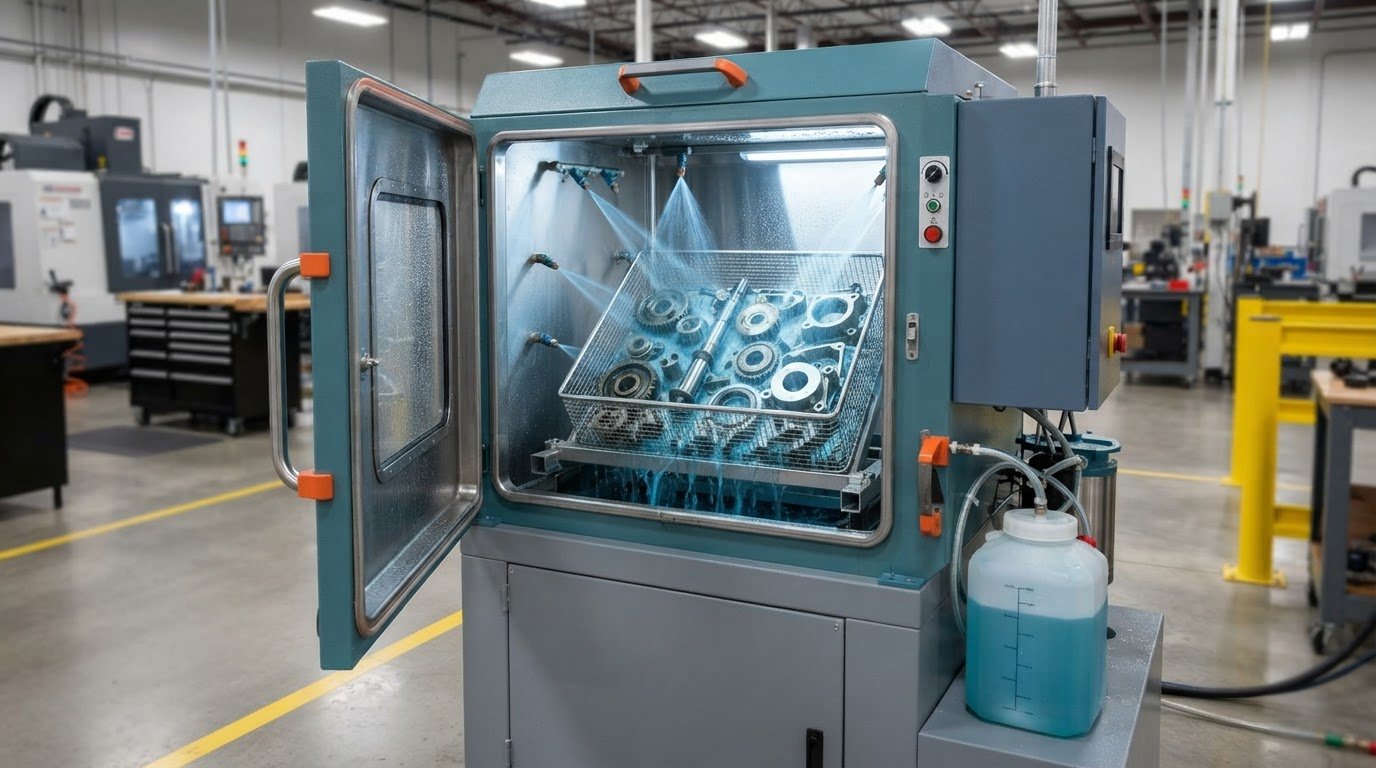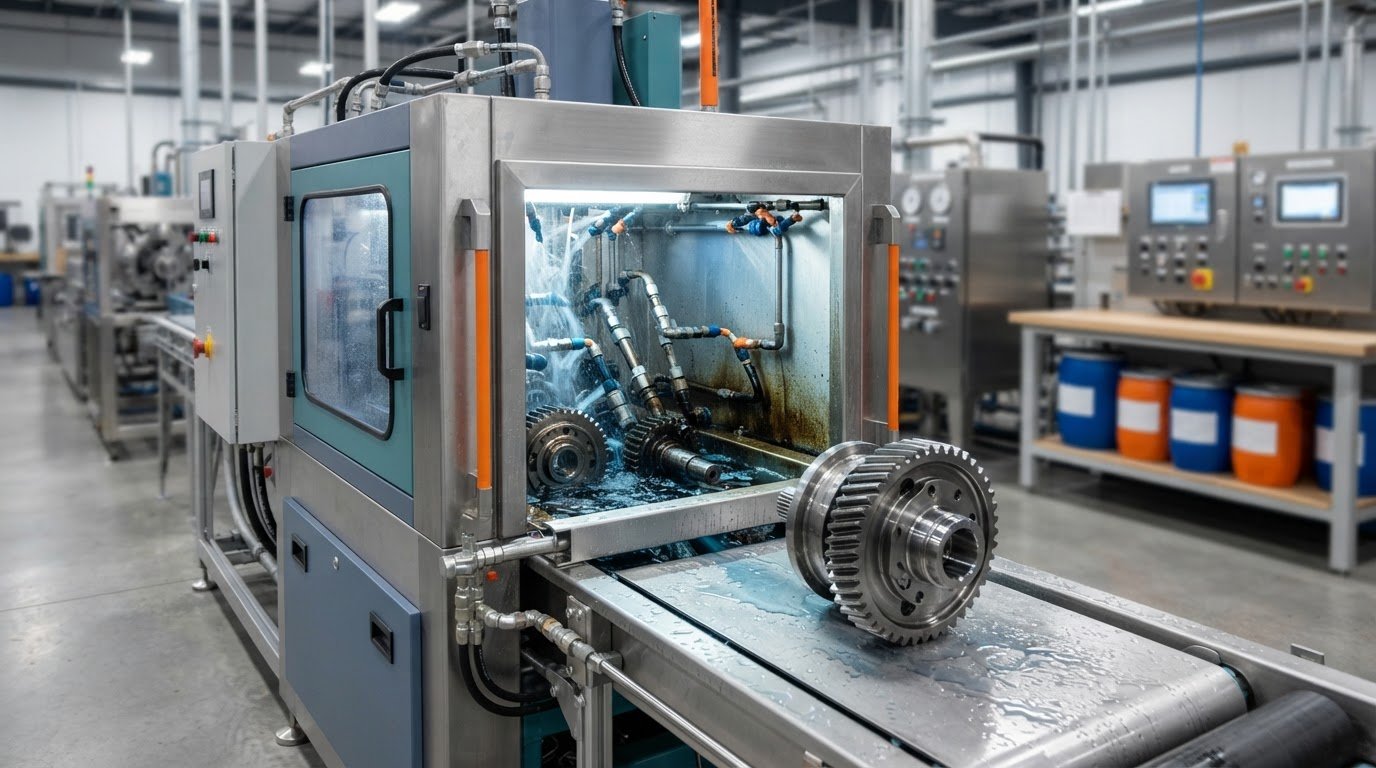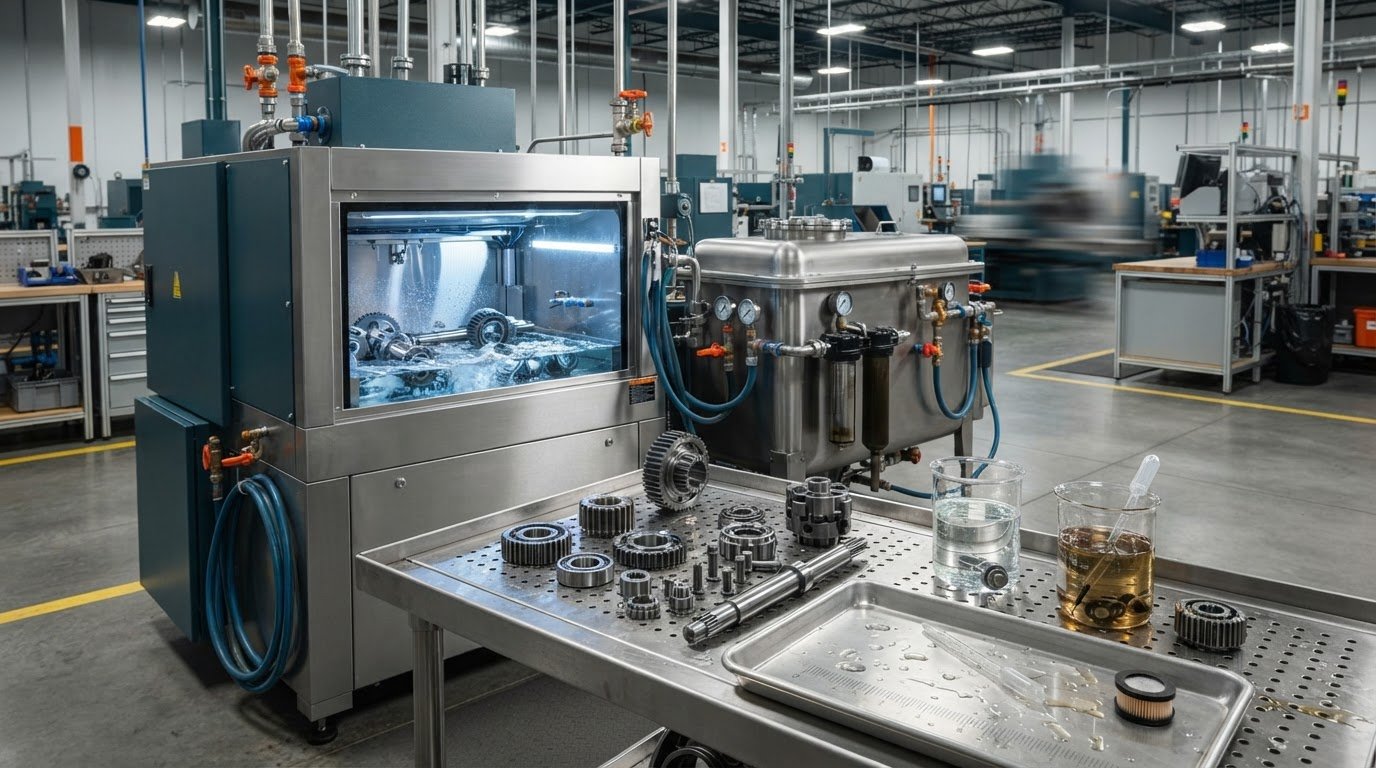
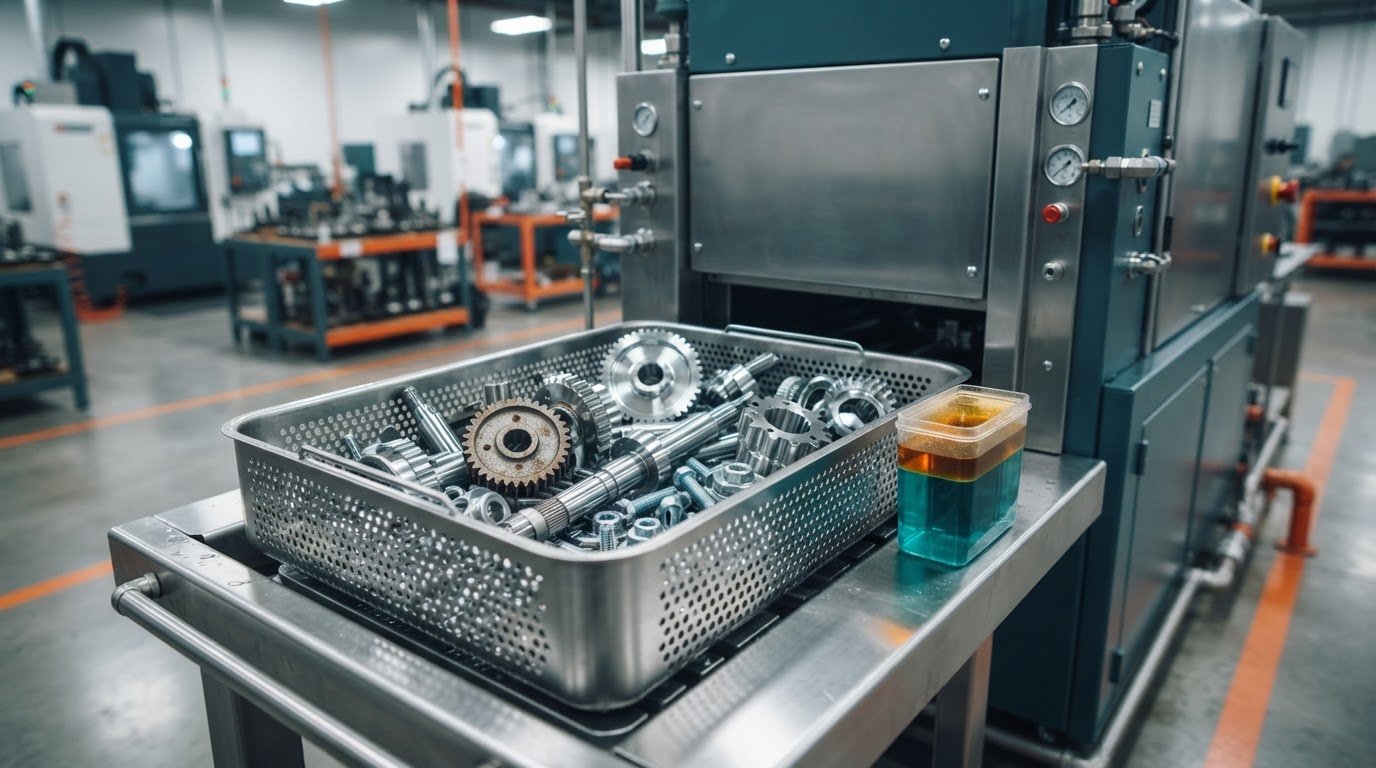
A freshly cleaned steel part can start rusting before it reaches storage, coating, or assembly. Rust inhibitor parts washer detergent can help limit that risk, but cleanliness alone does not guarantee corrosion protection. The inhibitor works as part of a process, and results depend on the formula, the washer conditions, and what happens after washing.
When rust appears after washing, detergent is one factor to review, but not the only one. Concentration, bath condition, rinsing, drying, water quality, handling, and the time parts sit exposed can all affect the outcome. A chemistry that works well for one metal or washer setup may not suit another.
This article explains how rust-inhibiting detergent differs from a cleaner without corrosion protection, what affects its performance, and how to match chemistry to your parts, washer, and workflow. It also outlines process conditions to review when cleaned parts show surface rust. The Global One Group supplies specialized chemistries for industrial parts-washing systems to support informed choices for consistent cleaning and protection.
Key Takeaways
- Choose rust inhibitor parts washer detergent by considering the metals, soils, washer type, and corrosion protection needed before the next operation.
- Assess cleaning and corrosion protection separately. An inhibitor does not replace checks for degreasing performance or washer compatibility.
- Review concentration, bath condition, temperature, and exposure time when protection varies between wash runs.
- Support repeatable results with consistent loading, effective drainage, prompt drying, and post-wash inspection.
- Match chemistry to the full workflow and use specialized parts-washing chemistries to support consistent industrial cleaning operations.
Why Rust Inhibitor Parts Washer Detergent Matters After Cleaning
Rust inhibitor parts washer detergent is cleaning chemistry formulated to help limit corrosion on compatible metal parts during a defined washing and post-wash process. The detergent can remove oil and soil while its inhibitor helps reduce rust risk, but neither function guarantees the other. Clean parts can still corrode if the chemistry, washer conditions, or handling steps do not fit the job.
Raw steel is especially vulnerable after grime and protective oil are removed. Before drying, coating, assembly, or controlled storage, moisture and oxygen can reach the exposed surface. A delay at this handoff can leave parts at risk, even when the wash removed soil effectively.
What does a rust inhibitor do in parts washer detergent?
An inhibitor helps reduce corrosion risk through chemistry-specific interactions at the metal surface. Its behavior depends on the formulation and substrate, so results on one steel part or process do not establish performance on every part. The corrosion inhibitor concept covers substances used to reduce corrosion, but a detergent’s results depend on how its chemistry performs in the operating process.
Concentration, temperature, bath condition, and exposure time all influence results. Follow the product directions and assess protection under the conditions your washer actually runs. Treat this as temporary, in-process protection, not a substitute for a specified coating, long-term preservation method, or controlled storage plan. Do not assume an inhibitor protects a part for a fixed duration unless the product guidance defines that use.
Why can cleaned steel rust so quickly?
Oil and residue can shield steel from direct contact with water and air. Washing removes that contamination, as intended, but can also leave the clean surface exposed to moisture and oxygen. If parts remain wet, sit in a humid area, or wait before the next operation, corrosion may begin before they reach coating, assembly, or storage.
Operators often call this early surface corrosion flash rust. It can appear soon after washing, especially when drying or downstream handling falls behind. Flash rust does not point to one cause by itself. Detergent choice, concentration, rinse conditions, water quality, part geometry, drainage, drying, and the surrounding environment can all play a role.
Review the handoff, not just the wash tank. Water trapped in holes, seams, or stacked parts can extend wet contact after the cycle ends. A clean steel component left on a damp surface may face different conditions from one that drains freely and moves promptly to drying. Match the rust inhibitor detergent to the metal and washer, then keep the post-wash route controlled. Cleaning removes contamination; dependable protection requires the chemistry and handling process to work together.
How Rust Inhibitor Parts Washer Detergent Protects Metal
A rust inhibitor does not make every washed part immune to corrosion. It adds corrosion control to the cleaning process, helping reduce risk under the conditions the chemistry is designed to handle. Its practical role depends on the formulation and the surface it contacts. Protection on raw steel should not be assumed to translate unchanged to aluminum, another alloy, or a different operating setup.
Inhibitor performance depends on both the detergent formulation and the conditions inside the washer and after the cycle. Concentration, bath condition, temperature, and exposure time can all affect the result. Treat rust control as a process outcome, not a standalone product label claim.
Which process conditions can affect inhibition?
Start with concentration. Running below the product’s specified range can weaken expected cleaning and inhibition performance. Using too much can create other process issues, including residue or difficult rinsing. Follow the chemistry directions for dilution, operating temperature, and cycle conditions rather than adjusting by guesswork.
Bath condition matters too. As soil and contaminants accumulate, the working solution changes. A bath that no longer performs consistently may produce different cleanliness or protection results from one load to the next. Water quality can influence how the chemistry works and what remains on the part. Carryover from a heavily soiled load, insufficient drainage, or a rinse step that does not suit the process can also affect surface residues and corrosion outcomes.
Keep variables controlled. Record operating settings, watch for changes in bath appearance or cleaning results, and follow the supplier’s guidance for monitoring and solution maintenance. If you change concentration, temperature, rinse practice, or cycle time, assess the result on representative parts before treating the process as stable.
Why do metal type and washer design matter?
Steel and cast iron are ferrous materials, but surface condition and part geometry can still influence the outcome. Aluminum and other nonferrous metals have different corrosion behavior and may respond differently to cleaning chemistry. Do not assume a detergent selected for steel is suitable for mixed-metal loads. Match product guidance to every substrate that enters the washer, especially when a batch includes dissimilar materials.
The washer affects exposure as well. Spray equipment directs solution onto accessible surfaces, while immersion keeps parts in contact with the bath in a different way. Part orientation, blind holes, tight joints, and crowded baskets can change how solution reaches a surface and drains away. Chemistry that performs in one machine or loading pattern may not deliver the same result in another.
Base the decision on the actual metals, equipment, and workflow. The Global One Group supplies specialized industrial parts-washing chemistries for industrial cleaning systems. Consider material and equipment details together when setting operating conditions and evaluating results consistently.
How to Compare Rust Inhibitor Detergents for Your Parts
Compare chemistry against the job, not just the words “rust inhibitor” on a label. Start with the soils to remove, every metal in the load, your washer type, the protection needed between washing and the next operation, and the supplier’s operating guidance. The industrial parts washing chemistry selection guidance provides additional context for these selection criteria.
| Selection factor | What to compare |
|---|---|
| Target soils | Oil, grease, chips, and other contaminants the process must remove. |
| Metals | Every substrate in the load, including steel, cast iron, aluminum, or mixed materials. |
| Washer type | Spray, immersion, or another system, plus its normal operating conditions. |
| Inhibitor needs | Whether parts need interim corrosion control before coating, assembly, or storage. |
| Supplier guidance | Recommended concentration, temperature, use conditions, and material compatibility. |
Which questions help match chemistry to the application?
First, define the cleaning job. Identify the substrates, soils, and cleanliness required for the next step. Document the washer type and operating conditions, including how parts sit in the basket or fixture. Then map the handoff: do parts move directly to coating or assembly, or must they remain protected while waiting for storage? This record makes detergent comparisons relevant to production rather than relying on broad claims.
How should you assess metal compatibility and cleaning trade-offs?
Check the product’s material guidance against every metal in the load. Chemistry suited to raw steel may not suit aluminum or mixed-metal batches. Assess corrosion protection and soil removal separately. A rust-inhibiting formula still needs to remove the actual oils and residues, while a strong degreaser does not automatically provide the protection your workflow requires. For more on soil removal, see this heavy-duty degreasing chemistry guidance.
Next, compare product directions with the process you can consistently run. A detergent’s claims are useful only when its material guidance, operating conditions, and intended washer application align with your parts. Consider the time before parts enter the next operation. A short transfer to coating has different protection demands from a delay before controlled storage. Do not treat “all-purpose” as proof of compatibility.
Before changing a production bath, evaluate candidate chemistry on representative parts and inspect both cleanliness and post-wash condition. Keep the load, washer settings, and handling steps consistent during the comparison so you can identify meaningful differences. The right match balances degreasing requirements, metal compatibility, inhibitor needs, and equipment fit instead of optimizing one claim at the expense of the whole process.
How to Use and Assess Rust-Inhibiting Detergent in a Parts Washer
A repeatable wash process depends on more than detergent selection. Control the steps from identifying part materials through post-wash inspection, and record what happens at each stage. This gives operators a clear baseline and makes troubleshooting more useful than changing chemistry in response to one rusty load.
- Identify the substrates. Note every metal in the load, including mixed materials, and confirm the chemistry guidance covers them.
- Set the process from product directions. Follow the specified concentration, temperature, and washer-use instructions. Do not apply assumptions from a different detergent or machine.
- Run a consistent load. Use a repeatable arrangement so parts receive comparable exposure and drain effectively. Avoid crowding parts in ways that trap wash solution.
- Dry parts promptly. Follow the established drying method and move parts to their next operation or controlled storage without unnecessary delay.
- Inspect and record results. Check representative surfaces for cleanliness, residue, retained moisture, or rust, then compare findings with the process record.
What should operators control during the wash cycle?
Keep concentration and temperature within the chemistry supplier’s instructions, and operate the washer as intended for that solution. Maintain the bath using established monitoring and contamination-control practices. Heavy soil carryover can change bath condition and make cleaning results less consistent, so record relevant changes rather than treating every run as identical.
Avoid unapproved additives. Do not change concentration, temperature, cycle time, and rinse practice all at once. Multiple changes make it difficult to identify what improved or worsened the result. For routine equipment upkeep, follow the appropriate industrial parts washer cleaning guidance. Washer cleaning and process troubleshooting serve different purposes, though both support reliable operation.
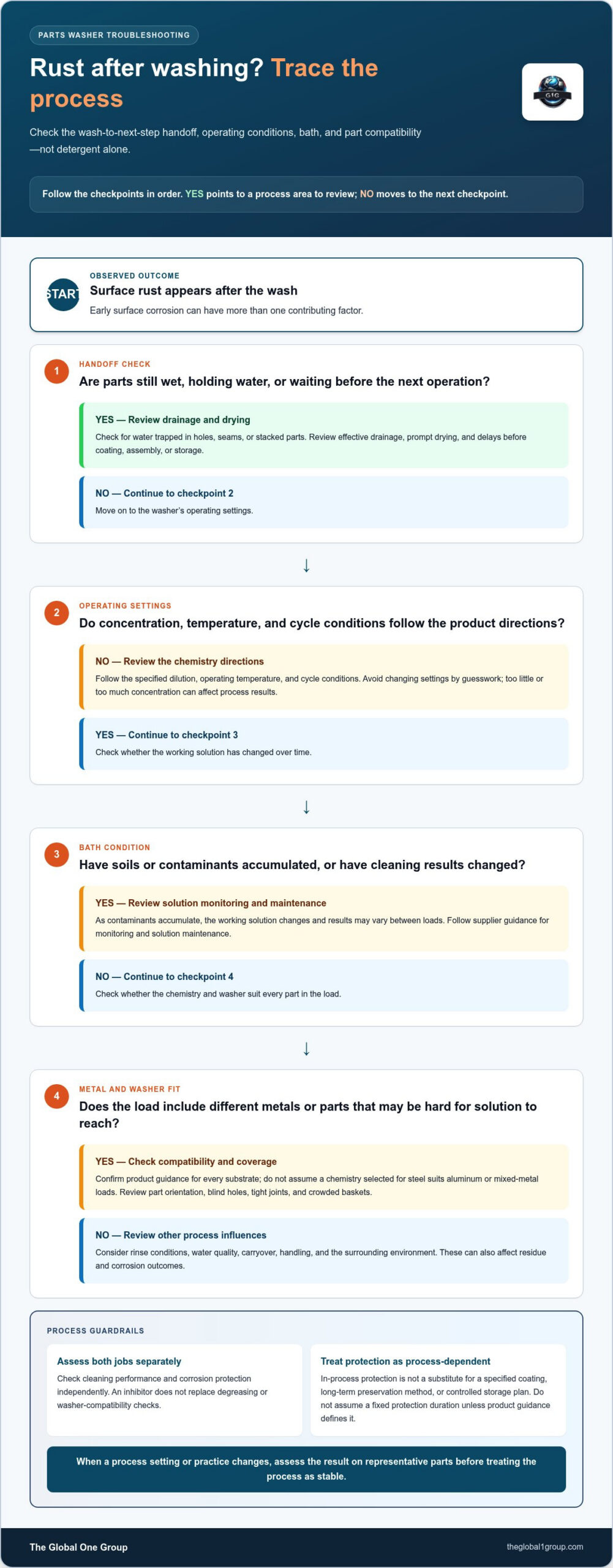
What should you check if parts show rust after washing?
Start by looking for patterns. Do affected parts share a substrate, basket location, geometry, or delay before drying? Compare them with parts from the same run that stayed clean. Then review bath condition, process settings, rinsing, drainage, drying, and storage conditions. Rust on a few parts may point to a local handling or drainage issue, while a wider pattern may call for a process-level review.
Record the observations, including load arrangement, chemistry settings, bath condition, drying method, and where and when rust appeared. Change one controllable variable at a time, then compare the next representative load under otherwise consistent conditions. This helps distinguish a chemistry issue from water retention, inconsistent handling, or a bath that needs attention.
For a review of chemistry against your washer and handling workflow, see parts-washing chemistry support from The Global One Group.
Build Rust Protection Into Your Industrial Parts-Washing Process
Reliable protection starts with a process decision, not a label claim. Match rust inhibitor parts washer detergent to the metals and soils, the washer’s operating conditions, and the next production step. Keep loading, drying, and handling consistent so each batch follows the same route. That makes it easier to distinguish a chemistry mismatch from a process change when results shift.
When should you review your chemistry and process together?
Review the setup when substrate materials, incoming soils, production demands, or downstream operations change. A new coating step or longer wait before assembly can alter what the wash process needs to deliver. Treat recurring rust, residue, or inconsistent cleaning as signals to investigate, not automatic proof that detergent alone caused the problem. Use recorded operating settings and inspection results to guide a controlled review, changing one factor at a time where practical.
Make the review useful on the shop floor. Compare current conditions with the process that produced acceptable results, and document what changed. A short record can include:
- Part materials and recurring soil types
- Washer operation and chemistry settings
- Bath condition and maintenance observations
- Drying, handling, and time before the next operation
- Where residue or rust appears on the parts
This gives your team a practical basis for deciding whether to adjust chemistry, restore process consistency, or investigate equipment and handling factors.
How can an integrated parts-washing approach support operations?
The washer, chemistry, and maintenance routine work as one cleaning system. Detergent must fit the equipment and the parts, while consistent maintenance helps the system deliver the intended wash process. If a component or operating issue disrupts performance, review equipment and replacement-parts needs alongside chemistry and handling rather than treating each decision in isolation.
The Global One Group supplies industrial parts washers, specialized parts-washing chemistries, and replacement parts for Magido and Fountain washers. This brings equipment, chemistry, and maintenance components into the same operational conversation: select chemistry for the application, align it with the washer, and account for equipment needs. The company is also a Certified Master Distributor of Magido Cleaning Systems.
Build your next chemistry or equipment review around the actual parts, process conditions, and downstream requirements. Explore industrial cleaning solutions from The Global One Group as a practical next step for your parts-washing operation.
Make Your Next Wash-Process Review Count
Turn your rust-control goal into a practical operating baseline. Choose a representative raw-steel load, define acceptable cleanliness and post-wash condition, and record settings and handling steps your team can repeat. That baseline helps operators spot drift and evaluate whether a process change improves results.
Use the same discipline when selecting rust inhibitor parts washer detergent. Compare the product’s intended use with actual production needs, then review results when parts, soil load, or the downstream schedule changes. A measured adjustment can help protect part quality without adding guesswork to the wash line.
The Global One Group supplies industrial cleaning equipment and chemistry for parts-washing operations, helping align product choices with shop-floor demands. Explore industrial parts-washing solutions and take the next step toward a process your team can run with confidence.
Frequently Asked Questions
What does rust inhibitor do in parts washer detergent?
A rust inhibitor helps reduce corrosion risk on compatible parts during washing and the period immediately afterward. It does not guarantee a rust-free surface under every condition. Check the chemistry’s intended materials and use instructions, then consider the next step. Parts headed straight to a coating line may have different interim protection needs from parts waiting in a staging area. Evaluate the finished surface against that specific handoff.
Can parts washer detergent prevent flash rust on steel?
It may help limit flash rust, but no detergent can guarantee prevention under all operating and handling conditions. Steel parts that leave the washer wet and sit before drying can still develop surface rust. If flash rust appears, note where and when it forms, then check rinsing and drying along with the chemistry. This helps show whether the issue is localized or affects the whole load.
Is rust inhibitor detergent safe for aluminum parts?
Use a detergent on aluminum only when its product guidance says it is compatible with that material and your operating conditions. Aluminum can respond differently from steel, so a formula selected for ferrous parts should not automatically be used for a mixed-metal load. Check the washer chemistry instructions and assess representative parts for discoloration, residue, or other unwanted surface changes before adopting the detergent for regular production use.
How do you choose a rust inhibitor parts washer detergent?
Start with the actual part materials and soils, then compare the detergent’s compatibility guidance with your washer and the process settings you can maintain. Identify whether parts go next to coating, assembly, or storage, because that affects the protection needed after washing. The right rust inhibitor parts washer detergent must support corrosion control without compromising cleaning or the next operation. Follow the supplier’s directions during evaluation.
Why do parts rust after washing in a parts washer?
Parts can rust when moisture remains on exposed metal after washing, but detergent is not the only possible factor. A part may drain poorly because of its shape or position, or it may wait too long before drying or moving to a controlled area. Compare affected parts with clean ones from the same run. Differences in location, geometry, or handling can help identify where to investigate first.
Can rust inhibitor detergent protect parts during long-term storage?
Do not assume detergent inhibition provides long-term storage protection. A wash chemistry may support temporary corrosion control, but storage conditions and the time parts remain exposed can exceed its intended role. For extended holding periods, define a separate preservation approach that fits the part and its storage environment. Keep wash-process protection and storage protection as distinct steps, and follow the relevant product directions for each.
Does rust inhibitor parts washer detergent replace degreaser?
Not automatically. Some parts-washing chemistries combine soil removal with corrosion inhibition, but the presence of an inhibitor does not prove the detergent can remove your particular oil, grease, or process residue. Judge cleaning performance against the soils on the parts and the cleanliness required downstream. If parts remain oily after washing, review the detergent’s cleaning suitability and operating directions rather than relying on its rust-control claim.