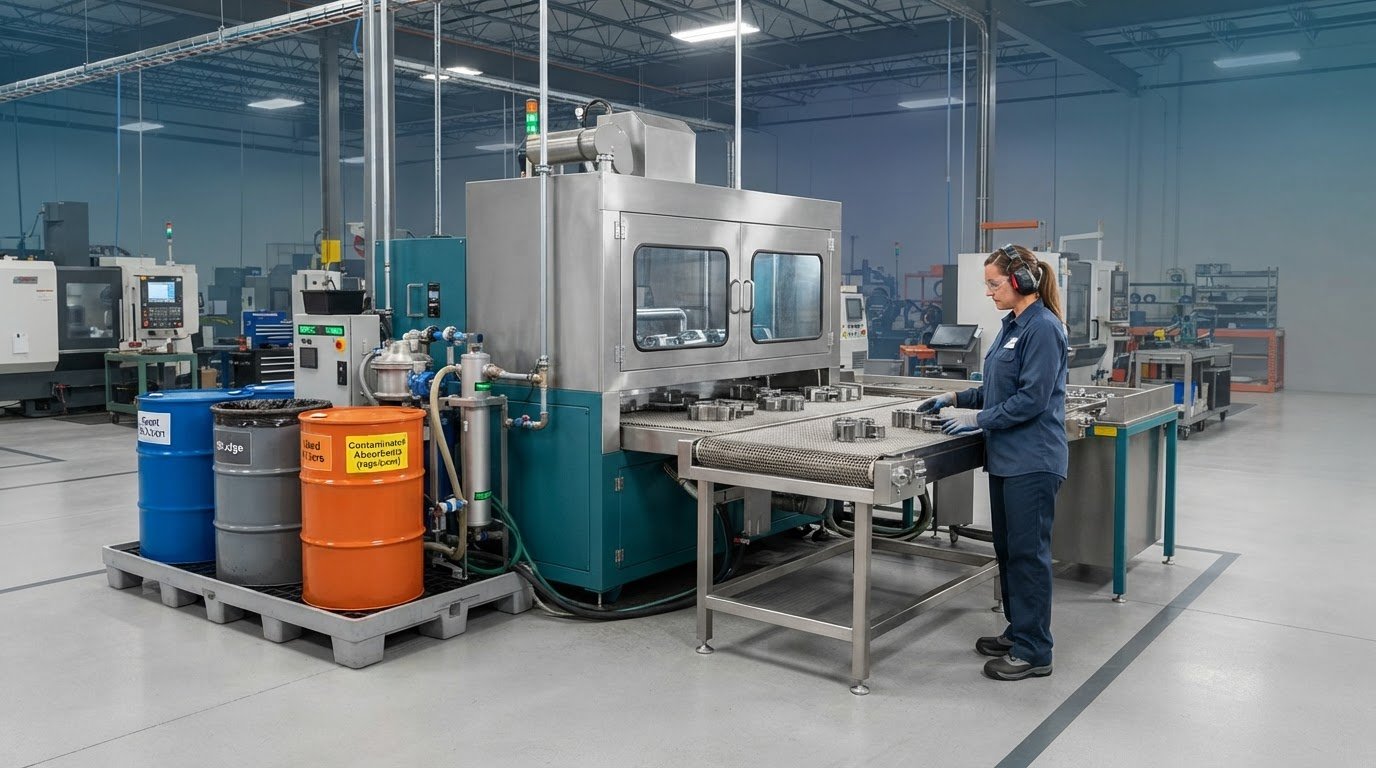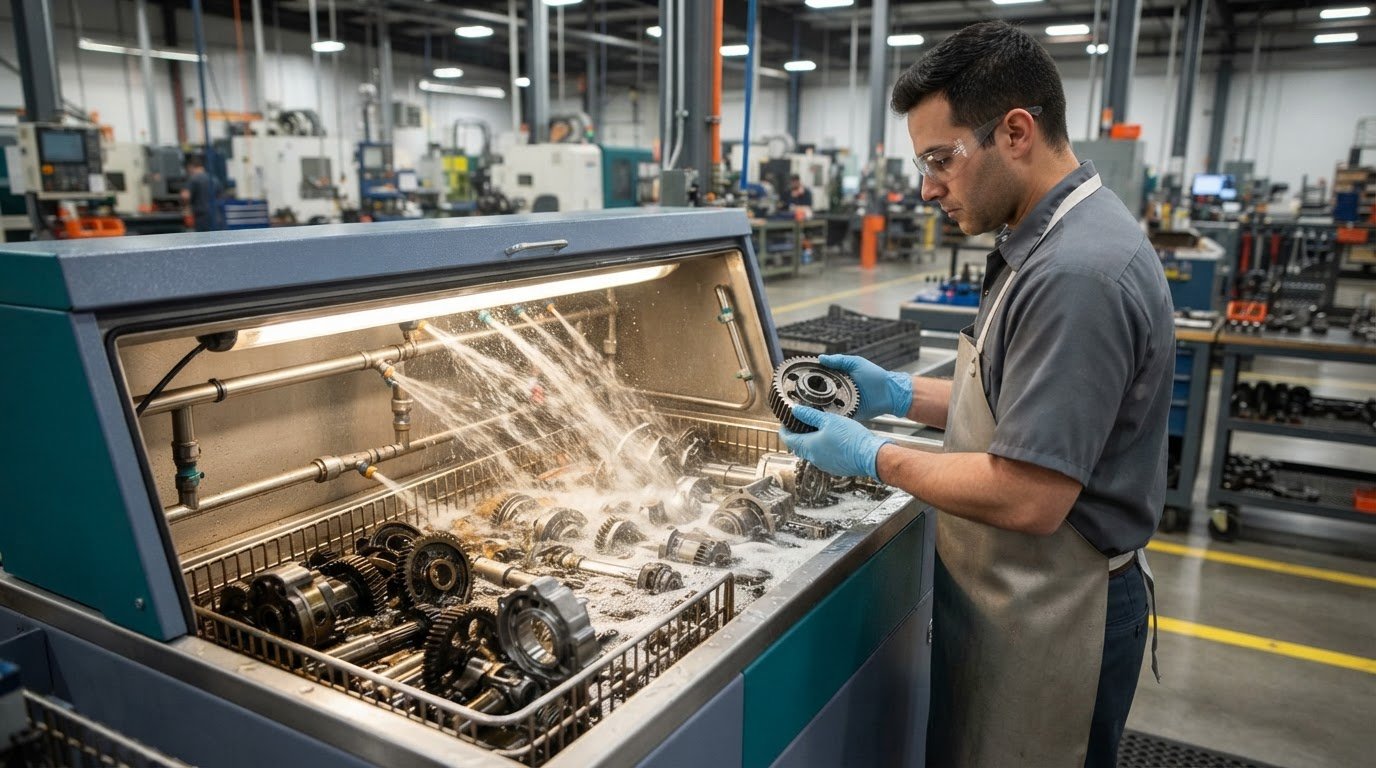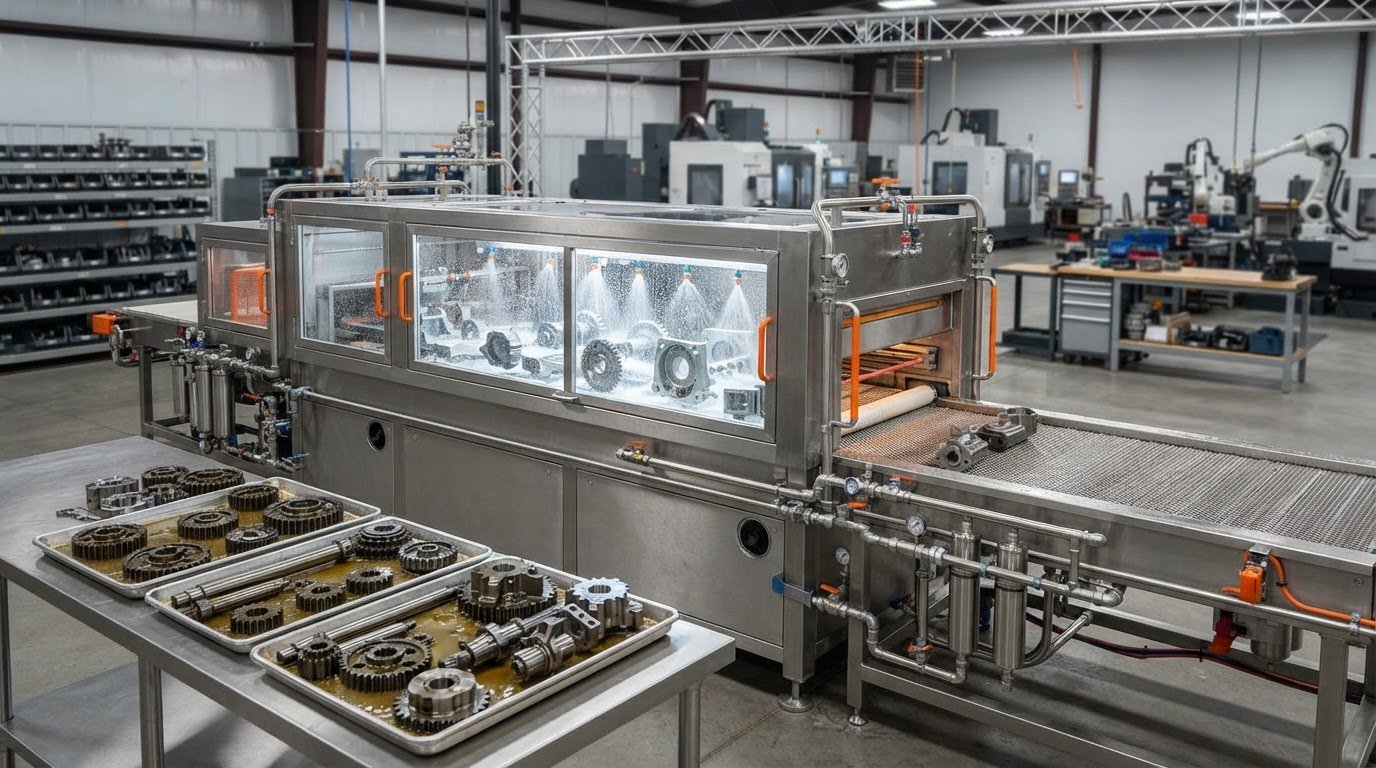
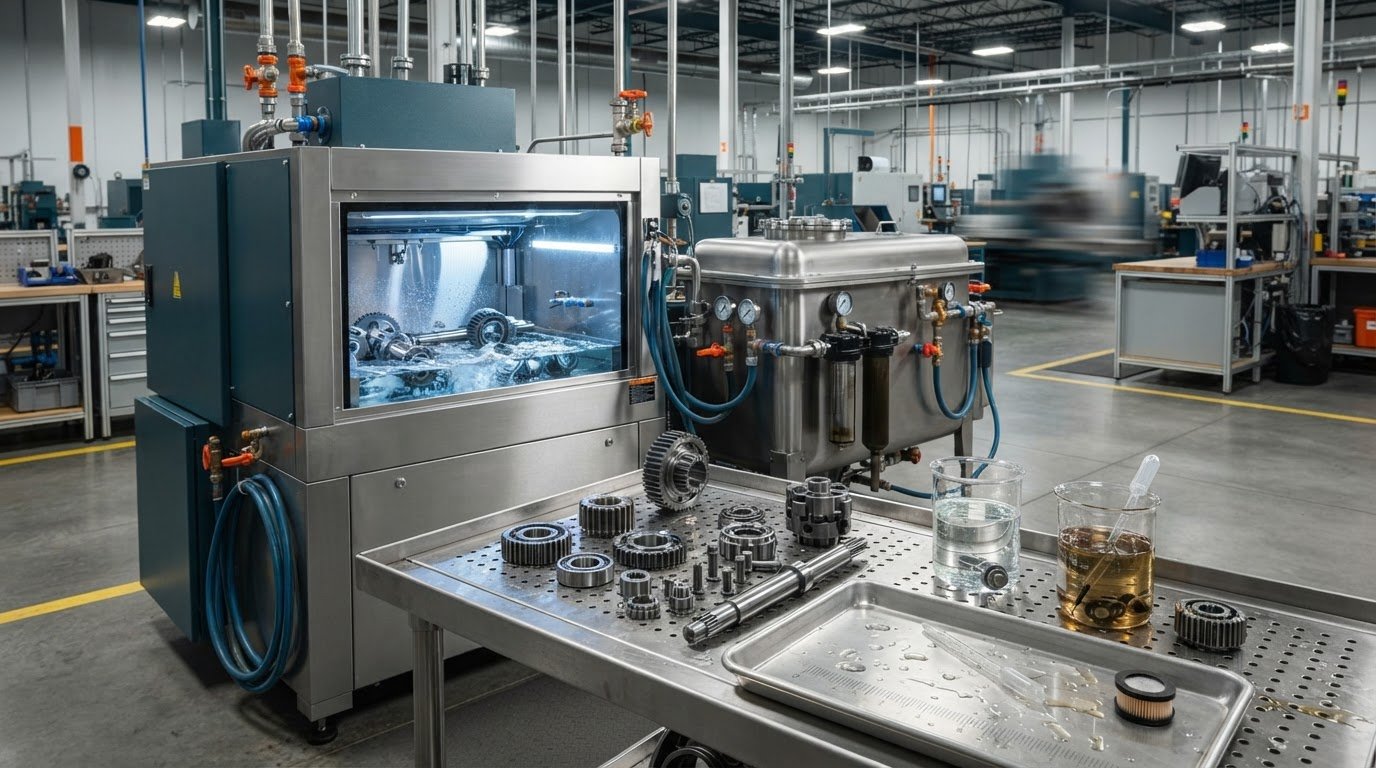
The chemistry that cuts through tough grease can still leave residue, affect a sensitive surface, or interfere with washer performance. Choosing parts washing chemistries by soil alone may solve one cleaning problem while creating another.
On the shop floor, a cleaner needs to remove the target contamination and suit the part material, washer, and production requirements. The right choice starts with the whole process, not the strongest-sounding product description.
This guide compares aqueous and solvent options and explains how to assess chemistry against your soils, substrates, washer type, and operating requirements. You’ll learn which questions help narrow the field, how to weigh cleaning results against residue and equipment concerns, and how to build a practical selection process. The Global One Group supplies industrial parts washing chemistries alongside heavy-duty parts washers, connecting chemistry decisions to the equipment and demands of your operation.
Key Takeaways
- Match parts washing chemistries to the soil, part material, washer, and operating conditions, not just the toughest contaminant.
- Compare aqueous, solvent, and specialty options against the same cleaning target instead of relying on product labels alone.
- Define acceptable residue and required cleanliness before evaluating whether a chemistry fits the application.
- Document soils, substrates, washer details, and production needs to make selection and testing more consistent.
- Treat chemistry as part of the full cleaning process, coordinated with washer performance and maintenance routines.
Why Parts Washing Chemistry Determines More Than Cleaning Power
Parts washing chemistry is the cleaning formulation selected to work with a particular washer, part material, soil, and application. The formulation helps loosen or remove contamination, but it does not work alone. Mechanical action, temperature, cycle time, and the way parts are positioned in the washer also affect the result.
That’s why the most aggressive cleaner isn’t automatically the right one. A formulation suited to heavy oil may not address embedded particles or other soils. Even when contamination is removed, the chemistry may leave a film that the application cannot tolerate. This parts cleaning overview describes different methods, including solvent degreasing and aqueous cleaning. In practice, the method and chemistry need to fit the cleaning job and equipment.
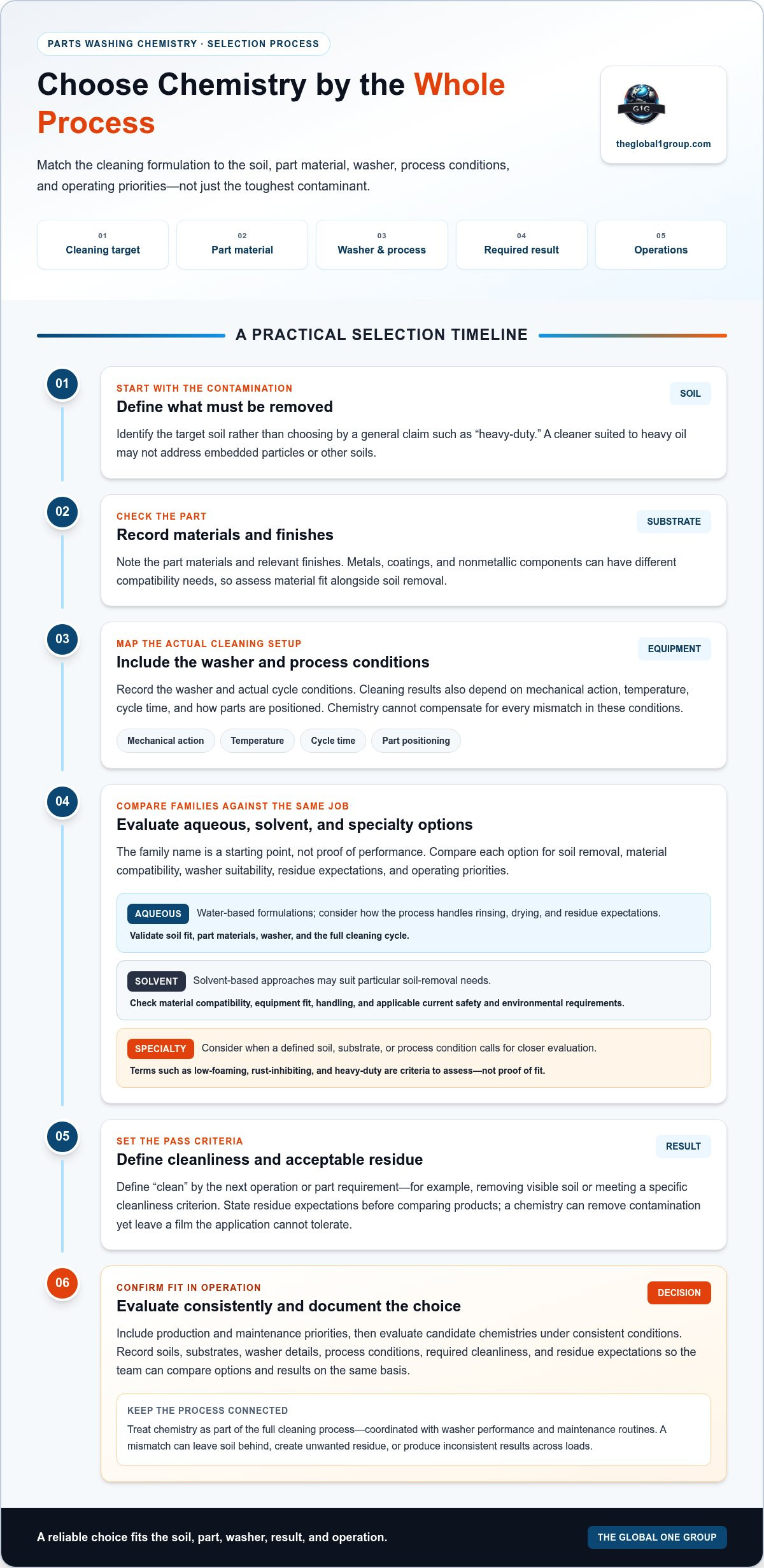
Start with five connected factors: the cleaning target, part material, washer, process conditions, and operational priorities. Priorities might include a defined residue limit, repeatable results, or fitting the cleaning step into production. Write these down as application requirements rather than assuming a product will meet them.
What does parts washing chemistry do?
The chemistry helps separate soils from a part so the washer’s mechanical action can carry them away. The washer provides that action, while temperature and cycle time influence how the process runs. A chemistry choice cannot compensate for every mismatch in those conditions. Define “clean” by the next operation or part requirement, such as removing visible soil or meeting a specific cleanliness criterion.
Why can the wrong chemistry create process problems?
A mismatch can leave soil behind, create unwanted residue, or lead to inconsistent results across loads. Part materials matter because metals, coatings, and nonmetallic components can have different compatibility needs. The formulation must also suit the equipment and its operating conditions. Evaluate these factors together rather than assuming a stronger cleaner will resolve a process issue.
Before comparing labels, write down what the process needs to achieve and preserve:
- Soil: Identify the contamination that needs removal.
- Substrate: Record the part materials and relevant finishes.
- Washer and process: Note the equipment and actual cycle conditions.
- Result: Define acceptable cleanliness and residue expectations.
- Operations: Include production and maintenance priorities.
This framework turns chemistry selection into a process decision. It also gives the team a consistent basis for comparing options and evaluating results.
Aqueous, Solvent, and Specialty Parts Washing Chemistries Compared
No chemistry family suits every application. Compare options against the soil, part material, washer, and required cleaning result, then evaluate the fit under actual process conditions. The table is a starting point, not a performance guarantee.
| Chemistry family | Typical considerations | Questions to validate |
|---|---|---|
| Aqueous | Water-based formulations may suit processes designed around aqueous cleaning. Consider how the process handles rinsing, drying, and residue expectations. | Does it address the target soil and suit the part materials, washer, and full cleaning cycle? |
| Solvent | Solvent-based approaches may suit particular soil-removal needs. Evaluate material compatibility, equipment fit, and applicable handling requirements. | Does the chemistry fit the washer and application, and have current safety and environmental requirements been reviewed? |
| Specialty | Formulations may target a particular process requirement or operating concern. A product description alone does not establish suitability. | What specific need does the formulation address, and can that benefit be evaluated in the application? |
How do aqueous and solvent chemistries differ?
Aqueous approaches use water-based cleaning formulations; solvent approaches use solvent-based formulations. Either may suit an application depending on the contaminants, substrate, washer, and process. The family name alone does not show that a chemistry will remove a given soil or work with a specific material. For more background on equipment and process considerations, review an aqueous parts washer explainer.
Safety and environmental factors belong in the comparison, too. Requirements depend on the specific chemistry and application, so assess them using current authoritative guidance. OSHA’s overview of cleaning industry safety provides context on potential hazards, including chemical exposure. Review the handling and compliance requirements that apply to the actual process rather than relying on broad claims.
When should buyers evaluate specialty formulations?
Consider specialty options when a defined soil, substrate, or process condition calls for closer evaluation. Terms such as low-foaming, rust-inhibiting, and heavy-duty describe possible selection criteria, not a complete specification or proof of fit. Consider what each term means for your washer and cleaning target, then evaluate results under consistent conditions.
Compare parts washing chemistries on the same basis: soil removal, material compatibility, residue expectations, washer suitability, and operating priorities. The Global One Group supplies specialized chemistries alongside industrial parts washers. Explore parts washing chemistry options as part of a coordinated cleaning process.
How to Compare Parts Washing Chemistries for Your Actual Application
Product labels alone do not make a fair comparison. Evaluate each candidate using the same parts, soils, washer, and operating conditions. If a trial changes the chemistry, temperature, and cycle time at once, it becomes difficult to identify which change affected the result. Keep process variables consistent where practical, then document what the cleaned parts show and how the washer performs.
Which soils and materials must the chemistry handle?
Start with the actual contamination, not a broad label such as “shop soil.” Record whether parts carry oil, grease, process residues, or a combination. Then list the substrate, coatings, finishes, and sensitive features the cleaning process must preserve. Compare visible cleanliness with any defined downstream requirement, such as the surface condition needed before assembly or another production step.
Use these details to set a pass-or-fail target before comparing formulations:
- Soil removal: Is the target contaminant gone from the relevant surfaces and features?
- Part condition: Do materials and finishes remain acceptable after cleaning?
- Cleanliness: Does the result meet the application’s visible or documented requirement?
- Residue: Does the part meet expectations for the next operation?
How should chemistry fit the parts washer and workflow?
Evaluate chemistry in the washer that will run the process. Consider the washer type and its normal operating conditions, then confirm the formulation suits the equipment. Concentration, temperature, and cycle settings can affect the outcome. Use application-specific evaluation and relevant equipment and chemistry instructions rather than assuming one setting works for every combination.
Check the process factors that matter to your setup. Foam may affect how a washer operates. Residue may affect the next production step, and bath life and maintenance may shape routine workload. Treat each as a factor to evaluate, not a benefit to assume from a product description.
Stronger chemistry isn’t automatically better overall. A formulation that removes a target soil quickly may still be a poor process fit if it leaves unwanted residue, does not suit the substrate, or complicates washer operation. Compare cleaning consistency and labor demands alongside initial soil removal. Keep notes on results, settings, and observations so the team can distinguish a repeatable improvement from a one-off outcome. This application-led comparison makes parts washing chemistries easier to assess on performance and process fit, rather than marketing language alone.
A Practical Checklist for Selecting Industrial Parts Washing Chemistry
A structured selection process helps prevent a promising label from becoming a costly process mismatch. Document the application first, then evaluate candidate chemistry under representative conditions before making a wider change.
What information should you gather before comparing options?
Build a clear baseline before reviewing products. Record the contaminants, part construction, washer setup, and required cleaning outcome. Include current process settings and recurring concerns, such as leftover soil, visible residue, or inconsistent results.
How can you validate a chemistry choice before wider use?
Evaluate a candidate using representative parts, soils, and washer conditions. Set acceptance criteria in advance, follow product and equipment instructions for handling and process changes, and document each adjustment. Change one variable at a time where practical so the results remain useful.
Use this checklist to move from application details to a controlled evaluation:
- 1. Define the cleaning need. Identify oils, grease, process residues, or other contaminants, and note how often parts enter the washer.
- 2. Document the parts. List substrate materials, coatings, finishes, and sensitive features the cleaning process must preserve.
- 3. Describe the washer and process. Record washer type, current chemistry, concentration if known, temperature, cycle settings, and other relevant operating conditions.
- 4. Set the required outcome. Distinguish visible cleanliness from any documented requirement for the next production step. Define acceptable residue and consistency.
- 5. Evaluate under representative conditions. Use parts and soils that reflect normal work, and keep the washer process consistent across candidates as far as practical.
- 6. Track results and observations. Record soil removal, residue, repeatability, and relevant maintenance observations. Note each process adjustment and the conditions under which it occurred.
- 7. Review before scaling. Compare results with the criteria set at the start. Resolve gaps and follow product and equipment instructions before changing the wider operation.
This record gives operators, maintenance teams, and purchasing staff a shared basis for comparing parts washing chemistries. It also helps separate a genuine cleaning improvement from a result caused by changed process settings.
For help connecting your cleaning application with suitable chemistry and washer needs, discuss your parts washing application with The Global One Group.
Build a Reliable Cleaning Process with The Global One Group
A chemistry choice works best as part of a complete parts washing process. The formulation, washer, production requirements, and maintenance routine all influence how the operation runs. A practical evaluation accounts for these connections instead of treating cleaner selection as a standalone purchase.
Why consider chemistry and equipment as one process?
The washer creates the conditions for cleaning, while the chemistry helps address soils on the parts. Their fit depends on the application and process details, including the parts being cleaned and the washer’s operating conditions. The Global One Group supplies specialized parts washing chemistries alongside heavy-duty industrial parts washers, supporting an equipment-and-chemistry discussion grounded in your cleaning application.
A coordinated view helps teams shape a more relevant evaluation. Production demands and maintenance routines matter, too: a cleaning approach needs to work within the actual workflow, not just on a single part in isolation. The Global One Group is also a Certified Master Distributor of Magido Cleaning Systems and supplies replacement parts for Magido and Fountain equipment.
What should the next step look like?
Bring the application details into the discussion. A concise record helps connect chemistry considerations to equipment and day-to-day operating needs. Include:
- Soils: The contaminants on the parts, such as oil, grease, or process residues.
- Substrates: Part materials, coatings, finishes, and any sensitive features.
- Washer: The equipment type and relevant operating details.
- Process: Current settings, cleaning frequency, and maintenance observations.
- Cleaning target: The required cleanliness, residue expectations, and any downstream needs.
These details give the conversation a clear starting point and keep selection focused on your actual requirements. They also make it easier to discuss how parts washing chemistries fit with washer performance and production priorities, without assuming one formulation or process suits every operation.
Ready to put your application details to work? Discuss your parts washing needs with The Global One Group and explore chemistry and equipment considerations for your cleaning process.
Make Your Next Cleaning Decision with Confidence
The right parts washing chemistries match the soil and substrate while fitting the washer and the demands of your operation. Compare candidates against the same cleaning target and process conditions, then evaluate the choice with representative parts before making a wider change.
A reliable cleaning process depends on more than a formulation. Washer performance, production requirements, and maintenance routines all belong in the decision. The Global One Group supplies specialized chemistries for industrial cleaning applications, heavy-duty industrial parts washers, and Magido and Fountain replacement parts, bringing key parts of the washing process together.
Bring your soil types, part materials, washer details, process settings, and cleanliness requirements into the conversation. Discuss your parts washing chemistry needs with The Global One Group and take the next step toward a cleaning process built around your application.
A clear evaluation and the right operational details help you move forward with greater confidence in your chemistry choice.
Frequently Asked Questions
What are parts washing chemistries?
Parts washing chemistries are cleaning formulations used in industrial parts washers to remove soils such as oils, grease, and process residues from components. Their results depend on the contaminant, part material, washer, and operating conditions. Define the required outcome first, such as a visibly clean part or a documented downstream requirement. Then compare candidate formulations against that target rather than relying on broad product labels alone.
What is the difference between aqueous and solvent parts washing chemistry?
Aqueous chemistries use water-based cleaning approaches, while solvent chemistries use solvent-based formulations. Neither category fits every soil, material, or washer. Compare how each option suits the application, including process requirements, residue expectations, and relevant safety considerations. Before changing an established cleaning process, review product instructions and current authoritative safety information. Assess the actual formulation and operating conditions rather than assuming every chemistry in a category behaves the same way.
How do I choose the right parts washer chemistry?
Start by identifying the contaminants, part materials, coatings, finishes, and required cleanliness. Then account for the washer type, operating conditions, residue expectations, and relevant maintenance needs. Compare candidate parts washing chemistries against the same criteria, and evaluate a suitable option with representative parts and soils. Record the process settings and results. This helps you judge application fit instead of selecting chemistry based only on labels such as “heavy-duty” or “general-purpose.”
Can parts washing chemistry damage a component?
A chemistry mismatch can raise compatibility concerns for certain materials, coatings, or finishes. Effective soil removal alone does not prove a formulation suits every component. Identify sensitive surfaces, review the chemistry’s product instructions, and evaluate the process on representative parts before making a broader change. Follow applicable handling instructions during evaluation. If a part has a defined cleanliness or surface requirement, include it in the criteria used to assess the cleaning result.
Does stronger parts washing chemistry always clean better?
No. Cleaning results depend on the soil, substrate, washer, and operating conditions, not just formulation strength. A more aggressive option may fail to improve cleaning if it does not suit the contaminant or process. It may also be a poor overall fit if residue or material compatibility becomes a concern. Define the required cleanliness, keep comparison conditions consistent, and judge results against relevant process criteria rather than strength claims alone.
Why does low foam matter in a parts washer?
Foaming behavior may matter because it can affect some washer processes, but its relevance depends on the equipment and operating conditions. Review the washer and chemistry instructions to understand whether foam is a concern for your setup. Then evaluate a candidate under representative conditions. A “low-foam” label is one selection detail, not proof that a formulation will remove the target soil, suit the parts, or meet the overall application requirements.
How can I tell when to change parts washer chemistry?
Reassess the chemistry if cleaning becomes inconsistent, soil removal no longer meets the defined requirement, or the application changes. First review the parts, soils, washer condition, and operating settings, since chemistry may not be the only factor affecting results. Document the issue and compare alternatives against a clear cleaning target. Evaluate any candidate under representative conditions before changing the established process across production.