More machine capacity does not automatically mean more clean parts per shift. A useful parts washer throughput analysis compares batch and inline processing by load size, cycle predictability, automation, and operator labor. Batch washers generally suit lower-volume work, while inline systems are designed for high-throughput operations.
It is easy to focus on a washer’s cycle time and overlook the time spent loading, unloading, handling parts, and preparing the next batch. These gaps determine whether the system keeps pace with production or creates another queue on the shop floor.
This article explains how processing method and automation affect practical throughput, how predictable cycles support production planning, and how labor hours shape the comparison. You’ll learn which operating conditions favor batch or inline cleaning and how to assess output by the clean parts moving through the process, not just machine speed.
Key Takeaways
- Measure usable, clean parts reaching the next operation, not just the washer’s cycle speed.
- Match batch or inline processing to production volume, part flow, and how consistently work arrives.
- Include loading, unloading, and handling when assessing cycle-time predictability and production planning.
- Compare labor hours across the full cleaning workflow to see where automation can ease operator bottlenecks.
- Account for parts-washing chemistry and maintenance needs when evaluating system performance over time.
Automation, throughput, and manufacturing efficiency
Automation can improve manufacturing output when it keeps cleaning cycles moving and limits manual handling. In the United States, requirements for industrial parts washers depend on cleaning chemistry, emissions, wastewater, and waste handling. Solvent-based and aqueous systems can involve different compliance considerations.
Measuring Parts Washer Throughput
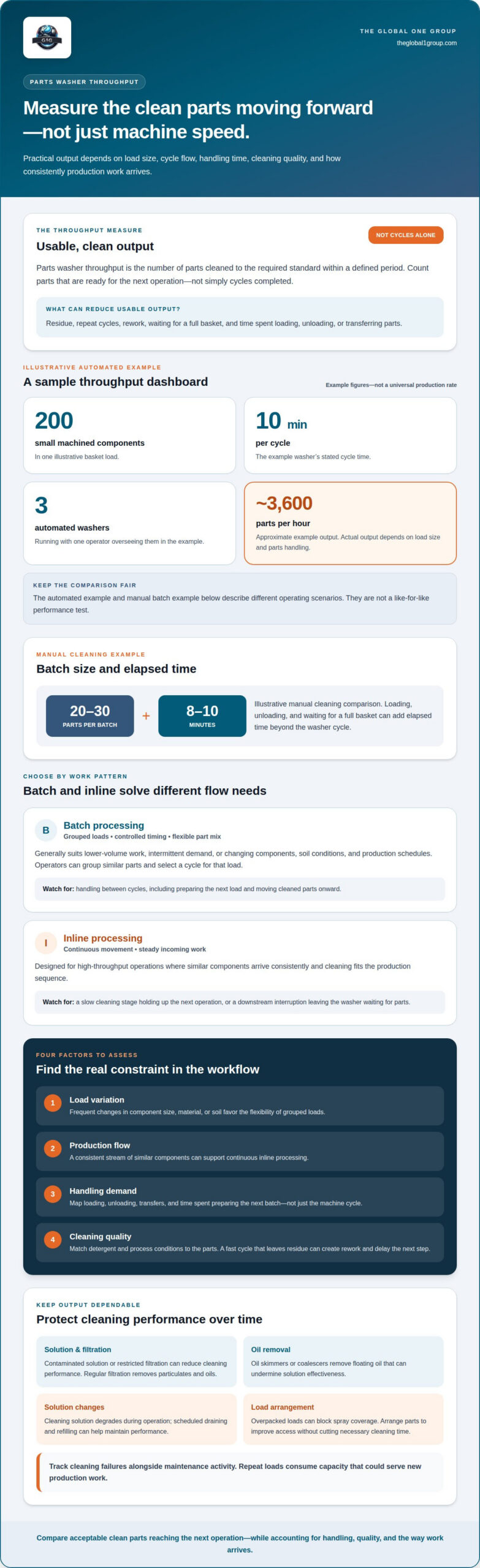
Parts washer throughput is the number of parts cleaned to the required standard within a defined period. It matters because production depends on usable, clean output, not simply the number of cycles a machine completes.
For example, an illustrative automated washer processes a basket of 200 small machined components in a 10-minute cycle. Three washers running that example could move roughly 3,600 parts per hour with one operator overseeing them. Treat those figures as an example, not a universal production rate: load size and the work involved in handling parts shape actual output.
Increasing Throughput Without Reducing Cleaning Quality
Increase output by eliminating avoidable waiting and matching the cleaning process to the parts, rather than shortening necessary cleaning time. Automating repeatable loading and cycle operations can keep washers running while reducing manual handling between loads.
Detergent concentration, temperature, contact time, and mechanical action all affect cleaning performance. Trials can help fine-tune these process parameters while maintaining quality and improving cycle flow. For example, a load that blocks spray coverage may leave parts dirty even when the cycle finishes on schedule. Better load arrangement can improve access without cutting cleaning time.
Maintenance Issues That Reduce Throughput
Contaminated solution, restricted filtration, and ineffective oil removal can reduce cleaning performance and disrupt production. Regular filtration removes particulates and oils, while oil skimmers or coalescers remove floating oil that can undermine solution effectiveness.
Cleaning solution also degrades during operation, so scheduled draining and refilling can help maintain performance. Residue buildup or poorly maintained components may lead to repeat cycles, rework, or interruptions. Each repeat load uses washer capacity that could serve new production work. Track recurring cleaning failures alongside maintenance activity to find where the process is losing usable machine time.
Automation delivers its strongest efficiency gains when it addresses a real production bottleneck. An operator overseeing three automated washers may spend less time performing manual cleaning, but loading, unloading, and material movement still affect the line’s pace. Map those tasks around the washer cycle to reveal idle gaps and handling delays.
Include quality in the throughput calculation. A fast cycle that leaves residue on parts can create rework and delay the next manufacturing step. Evaluate cleaning results alongside completed loads, then review detergent condition, filtration, and load arrangement when output falls. This connects equipment performance to the actual flow of acceptable parts.
Batch versus inline processing
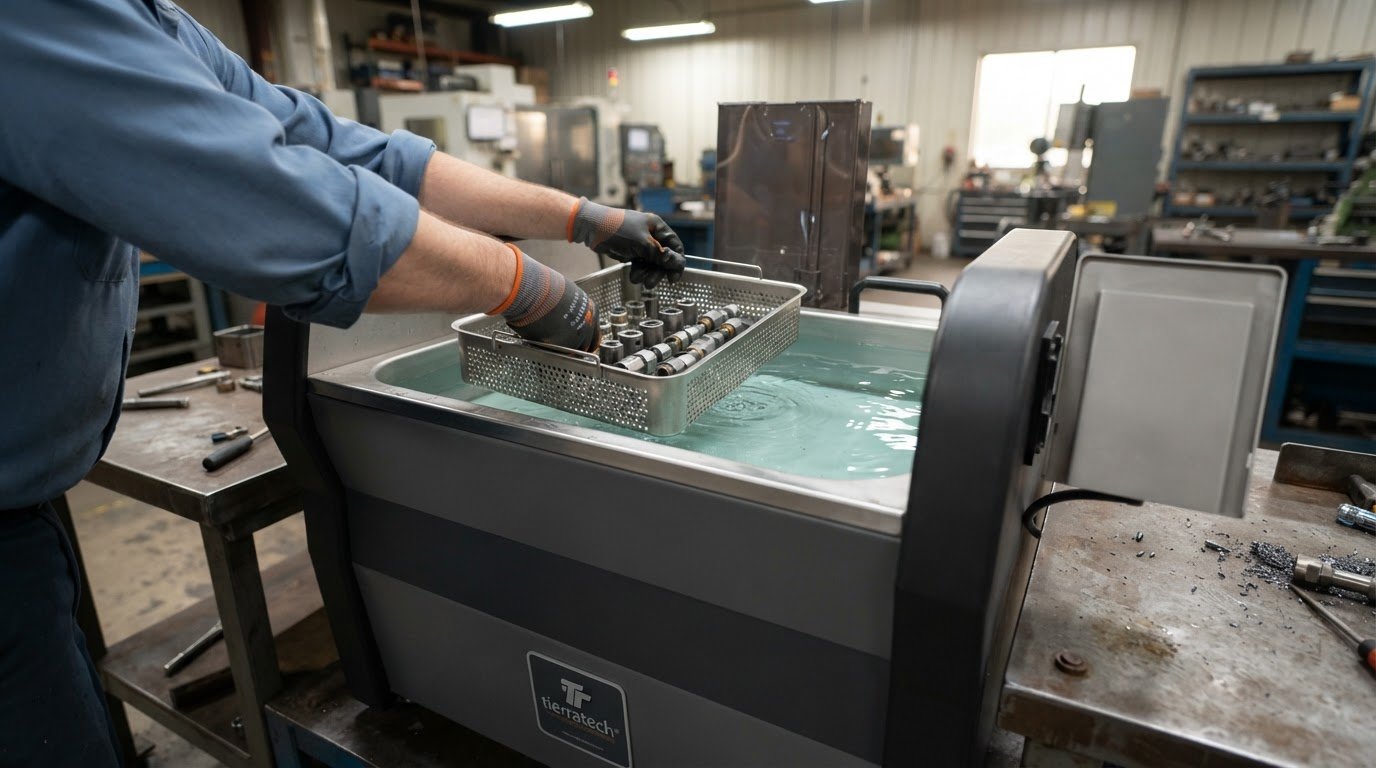
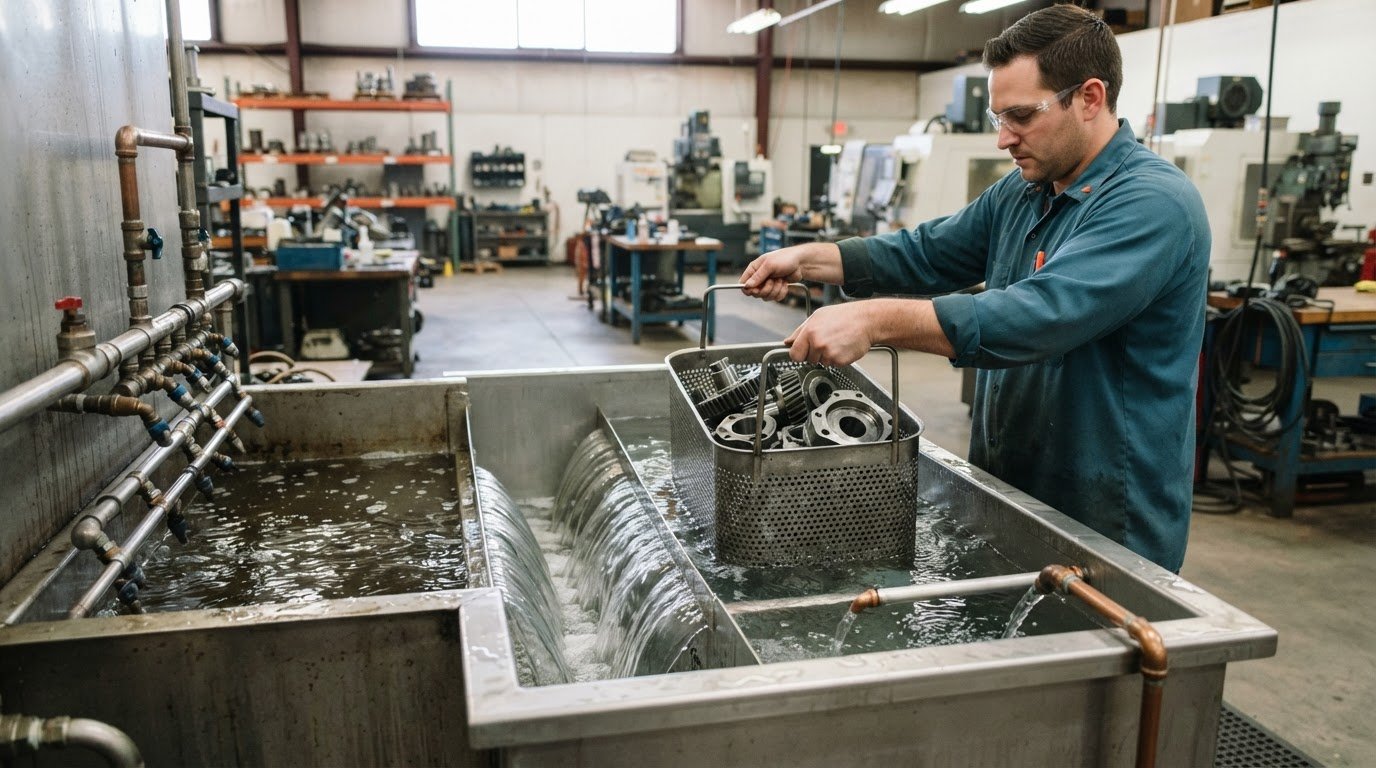
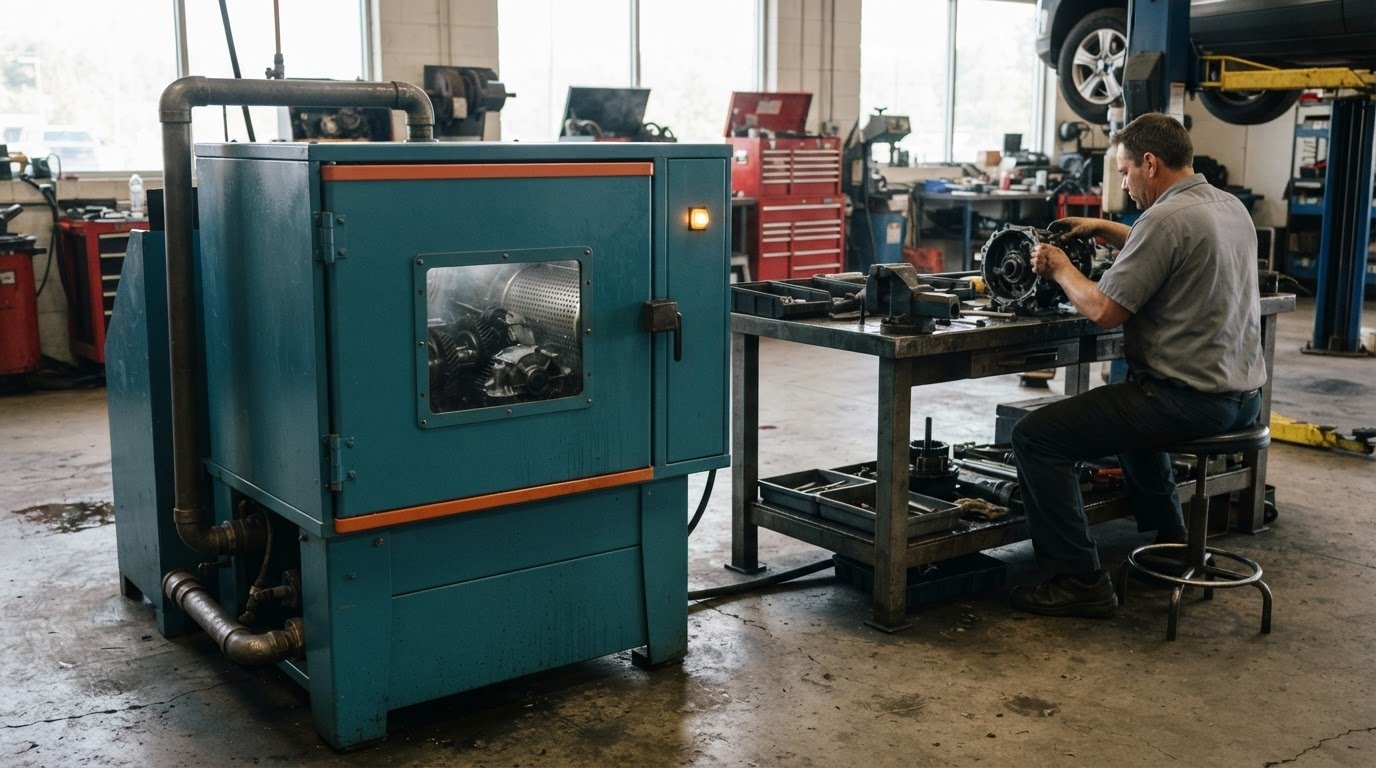
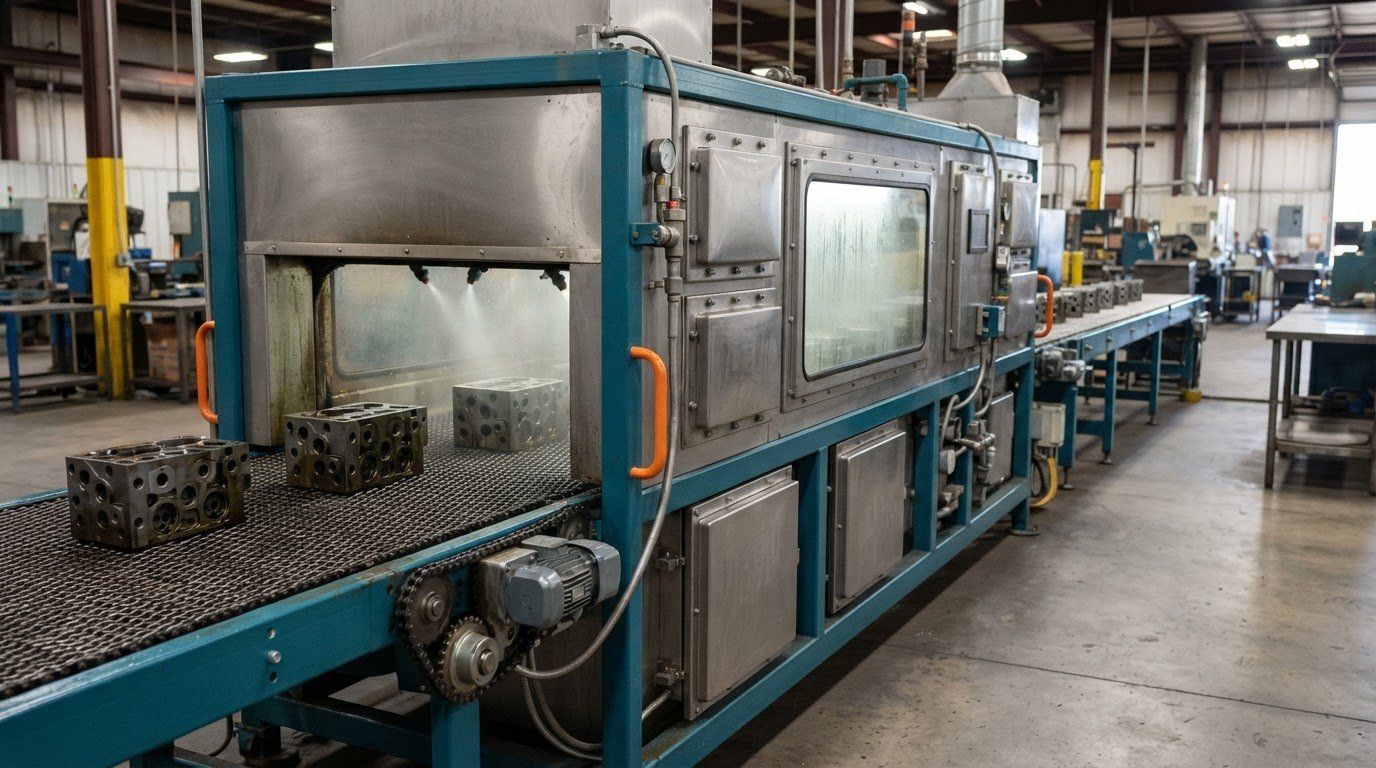
Batch washers clean grouped loads, while inline systems process components as they move through a production line. Batch processing generally suits lower-volume applications; inline processing fits high-throughput operations. The right choice depends on how work arrives, how much variation each load contains, and whether downstream equipment can accept a continuous flow.
A batch system gives operators control over load composition and timing. This flexibility helps when a manufacturing cell handles different components, soil conditions, or production schedules. Operators can group similar parts and run a cycle suited to that load, rather than sending every component through one continuous process. The trade-off is handling between cycles: someone must prepare the next load and move cleaned parts onward.
Illustrative manual cleaning comparisons show batches of 20-30 parts taking 8-10 minutes. A washer cycle is only part of the overall elapsed time, though. Loading, unloading, and waiting for a full basket can slow the movement of components. For intermittent demand or changing part mixes, batch processing can still keep cleaning aligned with actual production instead of running an underfilled line.
An inline system connects cleaning to a steady stream of incoming work. This arrangement can improve flow in high-volume operations where components arrive consistently and cleaning fits the production sequence. It also makes disruptions visible: a slow cleaning stage can hold up the next operation, while a downstream interruption can leave the washer waiting for parts.
Compare the systems based on the work pattern, not equipment labels alone:
- Load variation: Frequent changes in component size, material, or soil favor the flexibility of grouped loads.
- Production flow: A consistent stream of similar components can support continuous inline processing.
- Handling demand: Map where operators load, unload, and transfer parts between cleaning and production.
- Quality control: Match detergent and process conditions to the parts to limit residue and corrosion risk.
Precision matters in both configurations. A batch load arranged too tightly can restrict cleaning access; an inline process that moves parts too quickly can compromise the required cleaning result. Monitor cleanliness and cycle performance to determine whether the bottleneck comes from loading, the process itself, or a mismatch between washer output and production demand. Maintain consistent cleaning acceptance criteria before changing cycle settings to pursue more output.
For a facility weighing equipment and chemistry needs together, industrial parts-washing solutions provide a relevant next step in evaluating the cleaning process.
Investment decisions can also account for payback: 12-24 months are common for small shops replacing manual cleaning with a batch-process spray cabinet washer. Before settling on a cycle, automated parts washer cleaning-cycle development should include trials that vary detergent concentration, temperature, contact time, and mechanical action. A cleaning-validation protocol should specify the validation strategy, load configuration, cycle steps, critical process parameters, sampling rationale, validated analytical methods, and cleanliness acceptance criteria.
The FDA guidance document Process Validation: General Principles and Practices (2011) recommends a lifecycle concept linking process development, commercial-process qualification, and maintenance of a state of control. Continued process verification should include preventive maintenance, periodic review of process data, and continued cleaning-process monitoring.
Cycle-time predictability
Predictable cycles help production teams plan clean-part availability and avoid queues around the washer. Actual output depends on both the programmed cleaning cycle and the work surrounding it.
Factors Affecting Cycle Time and Throughput
Cycle time is the complete duration required to process a load, while throughput also depends on load size and repeatability. Soil type, grease levels, part geometry, detergent, temperature, and mechanical action all influence the cleaning method and time required.
For example, a heavily soiled load may need more contact time than lightly soiled components. Changes in part volume can also affect how operators arrange loads and how consistently cleaning reaches every surface. Solvent choice and operating practices influence process timing, too. These factors matter because a short cycle that misses cleanliness requirements can send parts back for cleaning and disrupt production plans.
Separate the programmed cycle from surrounding delays. Record when loading starts, when the washer begins processing, when the cycle ends, and when parts are ready for the next operation. This shows whether variation comes from cleaning conditions, load preparation, or material handling, rather than treating every delay as machine time.
Calculating Capacity from Load Size and Cycle Time
Estimate theoretical capacity by dividing the parts in a load by cycle duration, then multiplying by the operating time period. This calculation gives production planners a baseline for comparing washer capacity with demand.
For an illustrative load of 75 parts and a 12-minute cycle, the calculation is 75 divided by 12, then multiplied by 60 minutes. That produces a theoretical rate of 375 parts per hour before loading, unloading, or other interruptions. Use the same time units throughout the calculation, and count only parts that meet the required cleaning standard.
The formula describes ideal cycle output, not guaranteed production. For a realistic planning rate, account for time between cycles, changes in load composition, and repeat cleaning. If one load takes longer because grease or part geometry requires a different process, calculate that load separately instead of applying a single average to every component.
Consistent monitoring makes the estimate more useful. Compare planned cycles with completed loads across the operating period, then identify where the gap appears. If cycle records remain stable but clean-part output falls, examine preparation and transfer practices. If cycle times vary, review detergent condition, process settings, and methods used for different soils. This gives teams a practical basis for scheduling work and assessing whether an industrial washer can meet demand.
To make cycle targets more dependable, choose a worst-case residue for automated washer cleaning-cycle development using a risk-based approach. A factory acceptance test for an automated parts washer can include coverage testing and a cleaning cycle with soiled parts. After the cycle, inspect parts for stagnant water as part of the drying assessment, including its drying stage.
Together, these checks can help distinguish cleaning and drying variability from delays elsewhere in production.
Throughput per labor hour
Industrial parts washers have no single parts-per-hour rate. Output depends on parts per load, cycle duration, and whether loading, unloading, and handling keep pace with the machine.
Measure labor productivity as accepted, clean parts divided by direct cleaning labor hours. Include the people who prepare loads, operate the washer, move components, and handle repeat cleaning. This shows whether automation frees labor or simply shifts work to another task. For a manual example, two operators spend 45 minutes cleaning a batch of 50 hydraulic fittings. That uses 1.5 labor-hours, producing about 33 parts per labor hour before accounting for rework.
Compare that baseline with automated processes using the same labor boundary. An illustrative machining-shop example uses a 12-minute automated cycle for 75 parts, but cycle duration alone doesn’t establish parts per labor hour. The operator time spent loading, unloading, monitoring, and handling each batch also matters. If those tasks overlap with other work, record only the time devoted directly to cleaning for a fair comparison.
Automation can improve labor efficiency by letting one operator oversee multiple cleaning systems. The practical gain depends on whether the operator can manage cycle starts, unload completed loads, and prepare incoming industrial parts without creating a queue. A reported machining-shop example reduced direct cleaning labor hours by roughly 60% within the first quarter after automation. That illustrates a potential labor shift, not a universal result.
Build a useful comparison from consistent records:
- Count accepted parts: Exclude loads that need another wash or fail the required cleanliness standard.
- Track direct labor: Record operator time for washing, loading, unloading, and related handling.
- Separate machine time: Note cycle duration apart from labor so unattended operation doesn’t distort the labor-hour measure.
- Compare like with like: Group parts with similar soil and cleaning requirements, including the same aqueous or other cleaning process.
Cleaning solutions affect the work as well as the cycle. Detergent and process conditions must suit the parts and contamination; otherwise, a faster run can create residue, repeat washing, or extra inspection. Include those added tasks in labor records. For example, if a load needs a second cycle, count the additional handling and operator time rather than reporting only the first pass.
Track parts per labor hour alongside total accepted output. A washer can process more industrial parts while delivering a smaller labor-hour gain if operators spend more time staging loads or correcting cleaning problems. Review the measure across comparable production periods and pair it with cycle records and rework counts. Together, these measures help identify whether the constraint lies in the cleaning system, work sequence, or operator availability.
What is parts washer throughput and how is it measured?
Parts washer throughput measures how many parts meet the required cleanliness standard within a defined operating period. Measure accepted output, not just completed cycles, so rejected loads and repeat cleaning do not inflate the result.
Use a consistent measurement window, such as a production shift, and define which work belongs in the calculation. Count parts only after they pass the applicable cleanliness check. Then divide accepted parts by elapsed washer operating time to find the production rate. For example, a load that completes its cycle but needs another wash has not yet produced accepted output.
That rate answers only one operational question. To understand the washer’s effect on manufacturing flow, compare it with labor hours, rework, and the next operation’s demand. A line can report strong machine output while cleaned parts wait for inspection or transport. Tracking accepted output at the washer and at the next production stage shows whether cleaning increases useful flow or shifts the queue downstream.
Keep measurement boundaries consistent between reporting periods. Record the same stages each time: parts entering cleaning, completed loads, accepted parts, repeat cycles, and interruptions. If one report includes loading time and another excludes it, their rates will not support a sound comparison. Separate washer processing time from operator handling time, then report both alongside total accepted output.
Part mix matters, too. Counting small components and large assemblies as equal parts ignores their different loading and cleaning demands. Segment results by part family, soil condition, or cleaning process. For example, compare similar machined components across periods rather than combining them with a different product mix. This makes changes in the measured rate more useful for diagnosing process performance.
Use a practical reporting set that connects output to quality and workflow:
- Accepted parts: Count parts that meet the cleanliness requirement.
- Elapsed operating time: Record the same start and stop points each period.
- Labor hours: Capture direct operator time for loading, washing, unloading, and handling.
- Repeat work: Track parts that need another cycle or additional cleaning.
- Production handoff: Note whether clean parts reach the next operation without waiting.
Use these measures together to distinguish equipment limits from workflow problems. If accepted output drops while cycle records stay steady, review loading, inspection, and part transfer. If repeat cleaning rises, investigate cleaning conditions and process consistency before changing the production target. A parts washer throughput analysis becomes actionable when it connects rate, quality, and labor within the same operating period.
Discuss ways to improve cleaning throughput and align washer capacity with your production requirements.
The Global One Group: Industrial Parts Washers
The Global One Group supplies industrial parts washers, parts-washing chemistries, and replacement parts for Magido and Fountain washers. Use your throughput findings to identify whether your operation needs different washer capacity, chemistry suited to its cleaning demands, or replacement parts for existing equipment. Evaluate accepted output, cycle consistency, and labor involvement together before deciding what could address the bottleneck. Matching the cleaning setup to part types, soil, and production flow can help align washing with manufacturing needs. Replacement and maintenance components are available for Magido and Fountain equipment. Contact The Global One Group to discuss your parts-washing requirements.
Turn Your Throughput Findings Into the Next Improvement
Use production records as a baseline, then review them whenever part mix, soil conditions, or production demand changes. A disciplined parts washer throughput analysis helps identify when an established cleaning process no longer matches the work reaching the line. Focus the next review on the constraint with the clearest operational impact, whether delayed handoffs, recurring rework, or labor tied up between cycles.
Start by defining the result you need: steadier output, smoother integration with manufacturing, or a cleaning process better suited to your components. The Global One Group offers industrial parts washers, parts-washing chemistries, and replacement parts for Magido and Fountain washers. Bring your production needs and current cleaning challenges to The Global One Group to discuss a practical direction.
Contact The Global One Group to discuss your parts-washing requirements and explore the next improvement. A clear baseline gives your team a stronger starting point for building a more reliable flow of clean parts.
Frequently Asked Questions
How do batch and conveyor parts washers compare in throughput?
Batch washers process grouped loads, while conveyor washers move parts through cleaning as production advances. A repair shop handling varied components may benefit from batch flexibility, while a line producing a steady stream of similar parts may make better use of conveyor flow. Compare how each setup fits changeovers, part presentation, and downstream timing. Continuous conveyor movement only helps if the next operation can accept parts at a matching pace.
How do labor, loading, unloading, and drying affect effective throughput?
These factors determine when cleaned parts are actually ready for the next operation. If an operator spends time arranging each load or clearing completed parts, the washer may wait between cycles. Drying can extend the time before parts are usable, especially when the next process requires dry components. For example, a schedule that counts cycle completion but ignores unloading and drying may overstate available output and leave the next workstation short.