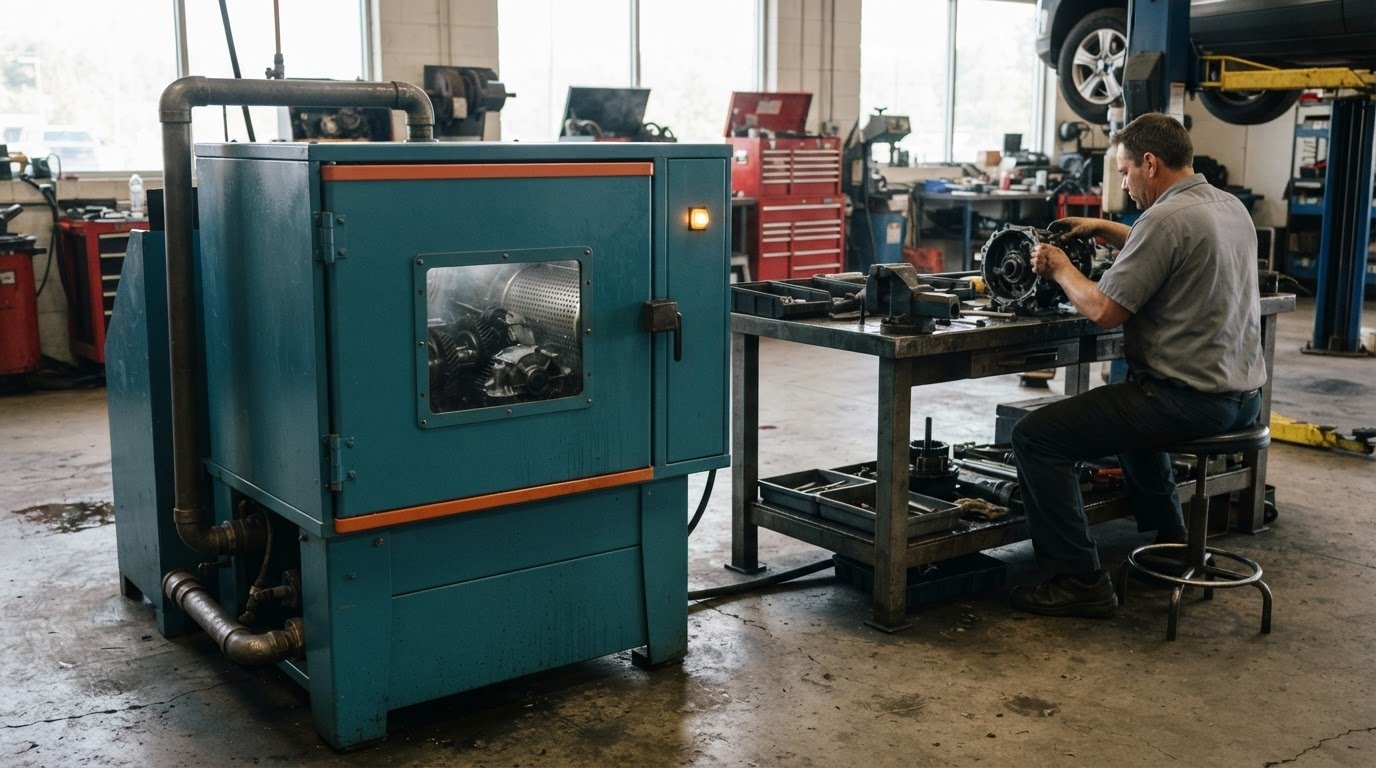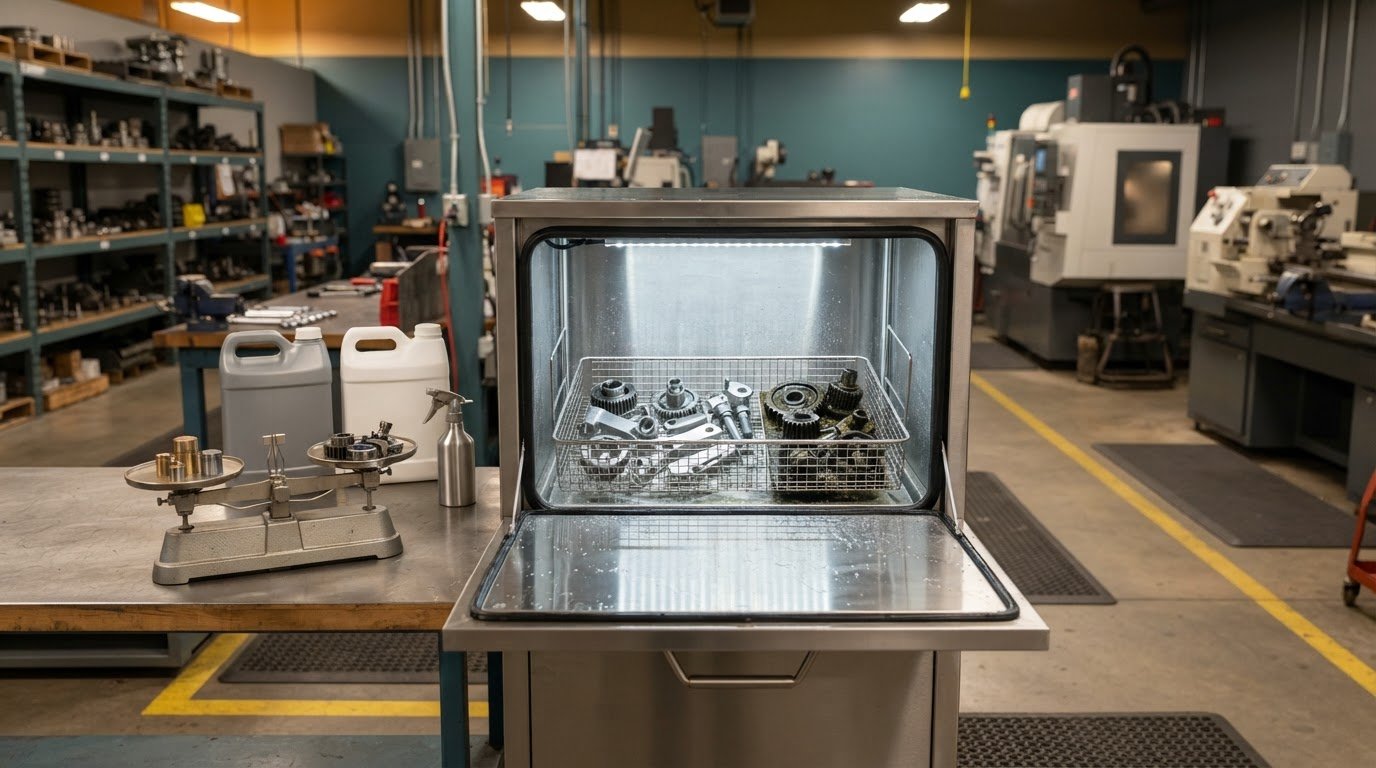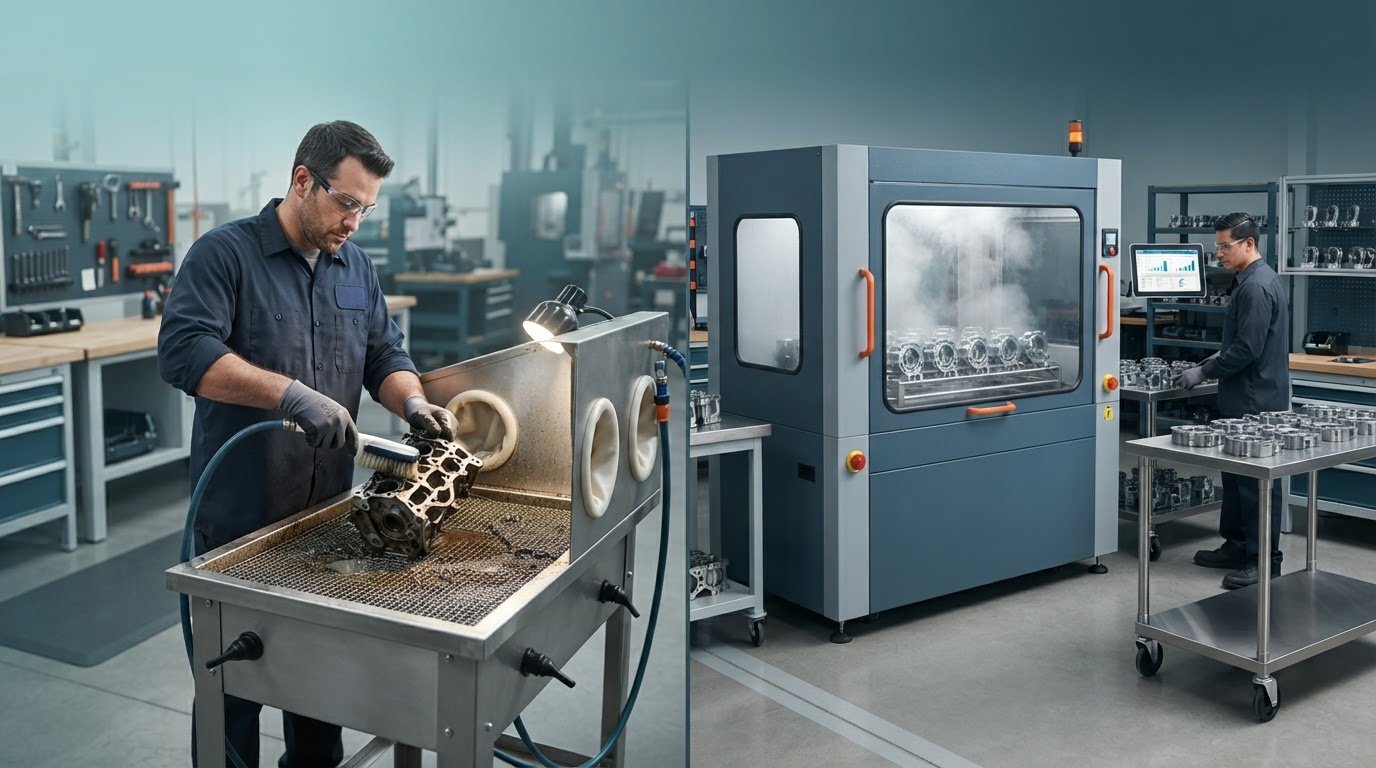
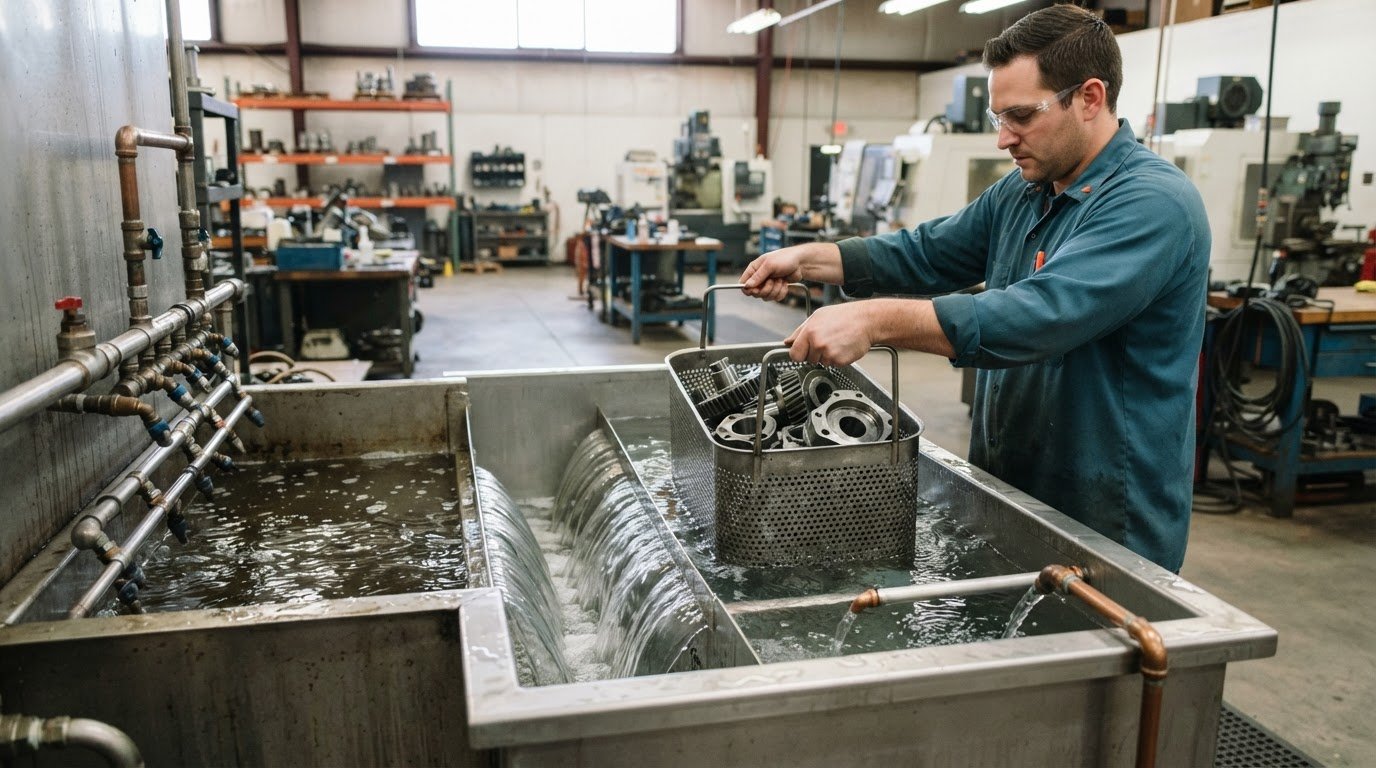
Cleaning time has no single fixed duration. Effective parts cleaning process optimization matches the cycle to the part’s geometry and material, the contamination, the cleaning method, and the required cleanliness. In water-based cleaning, time works alongside mechanical action, chemical concentration, and temperature, so changing one setting can affect the result.
A longer cycle isn’t automatically wasteful, and a shorter one isn’t automatically efficient. The right balance depends on what the process must remove and whether the part is suited to aqueous or solvent cleaning. This article explains how to assess cycle time, reduce water use through spray and rinse choices, and identify when equipment upgrades can improve performance. It also shows how process analysis and cleaning-method selection can reduce wasted time and resources without compromising the cleanliness required by the next production step.
Key Takeaways
- Set cycle time around the required cleanliness, part geometry, material, contamination, and cleaning method rather than shortening the cycle by default.
- Match cleaner chemistry to the metal and soil, and account for whether the system uses immersion or pressure spray.
- Review spray impact and rinse configuration to find practical ways to reduce water use without compromising the final rinse.
- Ultrasonic upgrades can strengthen cleaning action in immersion systems, but basket design, filtration, and loading also affect results.
- Document the existing process and assess upstream and downstream steps before changing settings; the right choice between aqueous and solvent cleaning depends on the part and residue requirements.
How Long Does the Parts Cleaning Process Take?
There’s no single cycle time for every part. The required duration depends on part geometry, material, contamination, cleaning method, and required cleanliness. Water-based cleaning has four interacting variables: time, mechanical action, chemical concentration, and temperature. A short wash may leave soil behind if exposure is insufficient, while a longer cycle can sometimes achieve the same result with less energy. Effective parts cleaning process optimization balances these factors against the cleanliness target.
Typical equipment and operating costs vary with the system and its use. Equipment pricing depends on the case and is provided after a quote request; operating costs depend on water, energy, cleaning chemistry, cycle time, and maintenance.
Start with the soil and the material it coats. Oil and grease often call for an alkaline cleaner, while acidic cleaners can remove scale or oxides. The chemistry must target the contamination without damaging the part’s surface. Aluminum and other sensitive metals may benefit from silicated cleaners. Zinc-plated steel baskets can lose their finish in alkaline cleaners, contaminating both the bath and the load. Basket material is therefore part of chemistry selection, not an afterthought.
Next, match the cleaner to the equipment. Immersion cleaning suits complex parts with blind holes or undercuts, where spray may not reach every recess. Pressure-spray systems rely on spray pressure, volume, and nozzle distance to deliver impingement. A chemistry that works in one setup may perform differently in another. Test the cleaner against the actual soil and part material, using production-representative parts where possible.
Control concentration instead of relying on guesswork. If cleaning performance drops, assess whether the cleaner’s composition and concentration still suit the contamination. When reducing concentration, start at the high end of the product’s stated use range, then lower it in small increments while evaluating cleanliness. Titration can estimate an acid or alkaline component, but contaminants may distort the relationship between that measurement and cleaner strength. Temperature matters too: excessive heat can harden oils, grease, or carbon, while low temperatures can reduce a chemistry’s solvency.
Container and basket design affect exposure, drainage, and treatment time. Perforated galvanized crates can block spray pressure or ultrasonic waves from reaching parts inside. Round-wire baskets can improve drainage compared with perforated sheet-metal crates, helping limit carryover and drying delays. Tank and basket layout also affect how cleaning medium reaches the load. Position parts to expose contaminated surfaces and allow liquid to drain.
Set wash-cycle time to meet the cleanliness requirement, then assess the result rather than shortening the cycle by default. An insufficient wash can make soil removal harder; an insufficient rinse can leave detergent residue. Stains may signal changed contamination or an unsuitable bath. A documented parts cleaning process optimization review adjusts time alongside mechanical action, concentration, and temperature, then records each change to identify which setting improved the result.
Reducing water use with spray nozzles and cascade rinsing
Reduce water, energy, chemical use, and operating costs by directing rinse water where it removes soil, reusing suitable rinse streams, and matching mechanical action to the contamination. Review nozzle performance, rinse sequence, and process settings together, since each affects resource use and cleaning results.
Spray Impingement and Nozzle Distance
Spray impingement is the force a cleaning jet delivers to a part’s surface. It depends on pressure, volume, and nozzle distance. Moving a nozzle closer can increase impingement, helping direct the spray at contamination instead of relying on excess water or longer exposure. Spray cleaning works especially well for large, flat workpieces, where the jet can wash soil from exposed surfaces.
Cascade Rinsing and Water Use
Cascade rinsing moves water through stages so cleaner water reaches the final rinse, while earlier stages use water that has already contacted parts. This counterflow method can reduce water consumption and keep the final rinse cleaner. High-pressure spray nozzles can also rinse parts above a catch tank, allowing water to be collected for reuse or discharge.
The U.S. Environmental Protection Agency suggests high-pressure spray nozzles as a way to reduce water use in parts cleaning. Aim spray coverage at the workpiece and collect runoff in a catch tank where the process permits reuse. For particle contamination, review filtration, chamber cleanliness, and part placement as well. Poor placement can create spray shadows, while particles left in the chamber can recontaminate cleaned surfaces.
Tank cleaning offers another opportunity. Rotating spray balls can replace static spray balls, directing cleaning action across tank surfaces instead of concentrating it in fixed areas. This can improve coverage inside the tank. The right arrangement depends on tank geometry and cleaning method, so evaluate the spray pattern and resulting coverage rather than increasing water flow by default.
Spray, flooding, and spray-flooding processes can work together. Spray targets exposed surfaces; flooding immerses parts in cleaning medium; combining them can improve chemical contact across different geometries. Ultrasonic action adds mechanical energy in immersion systems. Select the method according to contamination and part shape, then adjust temperature and cycle time to support the cleaner’s performance.
Drying also belongs in the water-use review. Poor drainage can carry rinse water forward and extend drying, so inspect how parts sit in baskets and whether liquid can drain freely. A process review that connects nozzle placement, rinse flow, tank cleaning, and drying can identify avoidable resource use. Review parts-cleaning process options alongside those operating conditions.
Equipment modernization and ultrasonic upgrades
Modernization targets equipment limits that restrict cleaning performance or consume resources without improving results. A retrofit may add or upgrade ultrasonic equipment, but the change must suit the part geometry, contamination, cleaning agent, and cleanliness requirements. For example, a system handling parts with recesses may need stronger immersion-based mechanical action than a spray-only process can provide. Define production demands first, then assess whether an upgrade addresses the actual cleaning constraint.
Ultrasonic cleaning uses collapsing cavitation bubbles to generate shockwaves that dislodge dirt, oil, and other contaminants. The bubbles form in the cleaning liquid as ultrasonic energy acts through the immersion bath. This adds mechanical action throughout areas the fluid can reach, making ultrasonic equipment useful for parts with detailed surfaces or features that are difficult to clean with direct spray. The cleaning agent still needs to suit both the contaminant and the part material.
Cavitation cleaning works through the repeated formation and collapse of bubbles, not a single impact. The resulting shockwaves disturb contamination on the part surface and help release soil into the bath. Ultrasonic energy increases impingement in immersion systems, but it doesn’t replace proper loading, suitable chemistry, or bath management. If the liquid carries excessive soil, cleaning effectiveness can decline; filtration and bath condition remain important considerations.
Assess the full machine before adding ultrasonic capability. Pumps move cleaning media, filters remove captured particles, and sensors help monitor process conditions. Worn or poorly functioning components can limit the benefit of a retrofit, even when the ultrasonic unit operates properly. Include those components in routine inspections and replace them when necessary. A clogged filter, for example, can leave particles in circulation and undermine the cleanliness target.
Part carriers also affect ultrasonic action. A basket that shields surfaces can restrict how cleaning energy reaches the load, while crowded parts can block liquid movement around contact points. Arrange parts to expose contaminated surfaces and avoid unnecessary contact between components. For mixed loads, confirm that the most demanding part receives adequate cleaning without exposing other materials to an unsuitable cleaning agent or process condition.
After an upgrade, tune operating parameters as a coordinated system. Evaluate cleaning time, temperature, chemical concentration, and mechanical action together, then compare cleaned parts with the required result. If performance changes, review the bath, filter condition, load arrangement, and equipment operation before extending the cycle. This helps determine whether ultrasonic modernization solves the production bottleneck or whether another process constraint still limits cleaning quality and throughput.

Systematic analysis of cleaning processes and the manufacturing environment
Cleaning performance depends on more than the washer. Assess the manufacturing process before changing equipment, chemistry, or cycle settings.
Testing Parts and Cleaning Processes
Process testing evaluates representative parts under production conditions to identify a cleaning method that meets the required result. Document the current sequence, parameters, and times, then test parts carrying the actual contamination. Assess the cleaning equipment alongside upstream and downstream steps, since machining residue or later handling can affect results. Involve quality, design, and production teams to align cleanliness expectations and avoid solving one department’s problem by creating another.
Material compatibility matters during testing. Compare the cleaner’s effect on the soil with its effect on the part and machine materials. Check for residue after washing, rinsing, and drying, then record each process change. This creates a clear basis for troubleshooting and helps distinguish a chemistry issue from a production or handling source.
Cleaning Steps and Result Troubleshooting
An effective process links soil removal, rinsing, drying, and protected handling to the next manufacturing step. Define the required cleanliness, select the cleaning method and chemistry, set operating parameters, and evaluate the finished part. Common causes of poor results include a clogged filter, particles in the chamber, unsuitable filtration, and contamination trapped by part placement. Inspect these points when particulate cleanliness falls short.
Stains can indicate that the contaminant load or cleaning-bath composition has changed. Detergent residue can point to insufficient rinsing, while thin-film cleanliness problems call for reviewing rinse-water quality, bath treatment, process sequence, and drying. Examine residual particles under a microscope when needed: chips and burrs have different origins, and burrs can signal an upstream manufacturing issue. Document small adjustments to isolate causes.
Safety, Environmental, and Change Risks
In the United States, facilities need to assess worker-safety and environmental requirements that apply to their cleaning chemicals, equipment, emissions, wastewater, and waste handling. The relevant obligations depend on the process and materials in use. A chemical or equipment change can affect worker exposure, part compatibility, bath condition, and waste streams, so evaluate those effects before putting a revised process into production.
Manage changes with a controlled test on representative parts. Compare the new chemistry or settings against the documented baseline, inspect part and equipment materials, and record rinse, drying, and residue results. Include operators and relevant specialists in the review, then train staff on revised settings and bath treatment. Pass operating and maintenance knowledge to new personnel to keep the process consistent.
Cleaning-system service life also depends on equipment condition and layout. Inspect pumps, filters, and sensors regularly, and replace components when necessary. For clean-in-place systems, an audit should review pipework, valves, pumps, instrumentation, and controls. A decentralized design can shorten heated-chemical travel through long pipes. Audit for leaks and dead legs, then document changes to support reliable operation.
Aqueous and solvent cleaning
Aqueous and solvent methods remove contamination through different mechanisms, so the right choice starts with the part, soil, and production requirement. Compare how each method handles the target residue, drying, material compatibility, and throughput before selecting equipment or chemistry.
There’s no universal cost or effectiveness ranking for aqueous, solvent, ultrasonic, and vapor degreasing. Compare cycle time, energy, water and chemical use, drying needs, bath maintenance, and required cleanliness for each application. The best fit removes the soil without damaging the component or slowing production.
Aqueous cleaning combines water with water-soluble chemical components, including surfactants, acids, and alkaline inhibitors. Alkaline cleaners commonly degrease, while acidic cleaners descale or remove oxides. This method serves large part volumes as well as fine or micro-cleaning applications. Rinse cycles remove detergent and loosened soil, so rinse quality affects the final surface condition.
Solvent cleaning suits parts that can’t retain water-based contaminants or residue. Solvent cleaners tend to dry faster than aqueous processes, while aqueous cleaning can be quicker than soaking parts in a solvent tank for a few hours. That difference matters when drying time constrains throughput, but cycle speed alone doesn’t settle the decision. Soil, part material, and the cleanliness target still govern performance.
Geometry shapes the method, too. Immersion cleaning generally suits components with blind holes, undercuts, and other features that direct spray may miss. Pressurized flow uses pumps and submerged nozzles to create currents across the parts. Spray impingement, ultrasonic energy, fluid turbulence, and vapor or vacuum degreasing can each supply mechanical action. Match the action to where contamination collects.
Ultrasonic energy increases impingement in immersion systems, helping remove dirt and oil from immersed parts through cavitation. It can complement aqueous or compatible cleaning agents, but the chemistry still needs to work on the soil and suit the part and machine materials. Test representative contaminated parts to assess actual cleaning performance, including on difficult surfaces and internal features.
Develop the process around the application, not a generic label. For oily residue, an alkaline aqueous cleaner may fit; for scale or oxides, an acidic cleaner may be appropriate. Sensitive metals require compatible chemistry, and cleaners should target contamination without attacking the base material. Supercritical carbon dioxide can remove non-polar oils and greases from fine cracks and pores. Some systems combine supercritical and liquid carbon dioxide for different contamination types.
Compare cleaning results alongside resource demands. Track how the selected method affects rinse requirements, drying, bath condition, and production flow. Review parts-washing chemistries as you match cleaning chemistry to the application.
The Global One Group: Parts washing, chemistries
The Global One Group supplies industrial parts washers and specialized parts washing chemistries for operations assessing cleaning equipment, cleaning agents, or process requirements. Consider its products when changes in contamination, part material, or production demands call for a fresh look at washer or chemistry selection. The right equipment and cleaning agent must suit the parts and soil in your process.
The Global One Group offers industrial parts washers, parts washing chemistries, and replacement parts for Magido and Fountain equipment. For a cleaning setup review or compatible replacement parts for Magido or Fountain equipment, explore the products that fit your operation.
Contact The Global One Group to discuss your parts washing, chemistry, or equipment-parts needs.
Make the Next Cleaning Decision Count
Put your next process change to work against a clearly defined production need. Choose a measurable result, such as reducing unnecessary rinse demand or removing a persistent residue, then use that target to guide equipment and chemistry decisions. This keeps parts cleaning process optimization tied to actual shop-floor performance, not change for its own sake.
When your current setup no longer matches your parts, contamination, or production demands, bring those requirements to The Global One Group. The company offers industrial parts washers, parts washing chemistries, and replacement parts for Magido and Fountain equipment. Contact the team to discuss the products relevant to your operation.
Contact The Global One Group to discuss your parts-cleaning requirements. Take the next step with a clear objective and keep your process moving toward more efficient operation.
Frequently Asked Questions
How do you measure and optimize parts cleaning performance?
Measure cleaning performance against consistent production results, not cycle time alone. Track first-pass acceptance, rework, cycle duration, and resource use for comparable part loads. For example, compare the same part family under similar contamination conditions before and after a process adjustment. If cleaning passes but rework remains high, investigate handling or downstream issues before changing the wash recipe. This reveals which constraint actually limits performance.
Which parts cleaning methods work best for different materials and contaminants?
The best method depends on the part’s material, geometry, contamination, and next production step. A water-sensitive component may need a process that avoids water residue, while parts with recesses need cleaning action that reaches beyond exposed surfaces. For mixed materials, assess the chemistry’s compatibility with every part in the load. Test representative components and inspect them against the cleanliness required by their next operation.
What cleaning parameters should be optimized, such as temperature, concentration, time, and agitation?
Optimize parameters through controlled trials that connect each setting to a defined cleaning result. Record the starting recipe, change one setting at a time, and compare representative parts after each adjustment. This makes cause and effect easier to identify. For example, if a temperature change improves soil removal but alters the part surface, return to the baseline and test a different parameter rather than stacking untracked changes.
How should cleaning baths be monitored, maintained, and replaced?
Monitor bath condition for floating oil, discoloration, or declining cleaning results, and record operator observations. Track replenishment and maintenance so the team can distinguish normal bath aging from a sudden contamination change. Removing and replacing smaller portions can extend bath life compared with discarding the entire bath. Maintain oil separators and filtration so accumulated contaminants don’t keep circulating through the cleaning system.
How can parts cleaning be validated with measurable cleanliness standards?
Validation starts by translating the downstream requirement into a clear pass-or-fail acceptance criterion. Use a repeatable inspection method on representative parts, and record results alongside the process recipe. For particle concerns, microscopy can help distinguish chips from burrs, directing corrective action toward either cleaning or an upstream operation. Keep acceptance criteria consistent across quality, production, and design teams so a passing result means the same thing throughout manufacturing.