A hose can look sound and still be due for replacement. For a household washing machine, replace rubber supply hoses every 5 years, and inspect them every 3-6 months for bulges, cracks, leaks, or loose connections. A monthly parts washer service guide should also make clear that routine cleaning and hose replacement are separate maintenance tasks.
Monthly care helps clear hidden buildup, but it won’t resolve a damaged hose or a recurring mechanical fault. This guide explains the hose replacement schedule, the basic monthly cleaning routine, and the warning signs that call for professional attention. You’ll also see how regular checks fit into a practical maintenance plan, so crews can address developing problems before they disrupt the workday.
Key Takeaways
- Schedule an empty washer cleaning cycle monthly to help clear hidden buildup, and follow the owner’s manual for approved cleaning products.
- Plan to check the drain area and pump filter every 3 to 4 months; unplug the washer before inspection.
- Include a level check every 6 months, and investigate persistent vibration that disrupts operation.
- Allow the washer interior to dry between loads, and use HE-compatible detergent in high-efficiency machines to help limit suds and residue.
- Bring in a repair professional for recurring leaks, slow draining, or ongoing vibration that routine maintenance doesn’t resolve.
1. Monthly washer cleaning cycles
For a household washing machine, run an empty cleaning cycle once a month. Use a cleaning tablet or, if the owner’s manual permits, two cups of white vinegar. Never combine vinegar and bleach. Check the manual first, since cleaning agents can affect some washer parts over time.
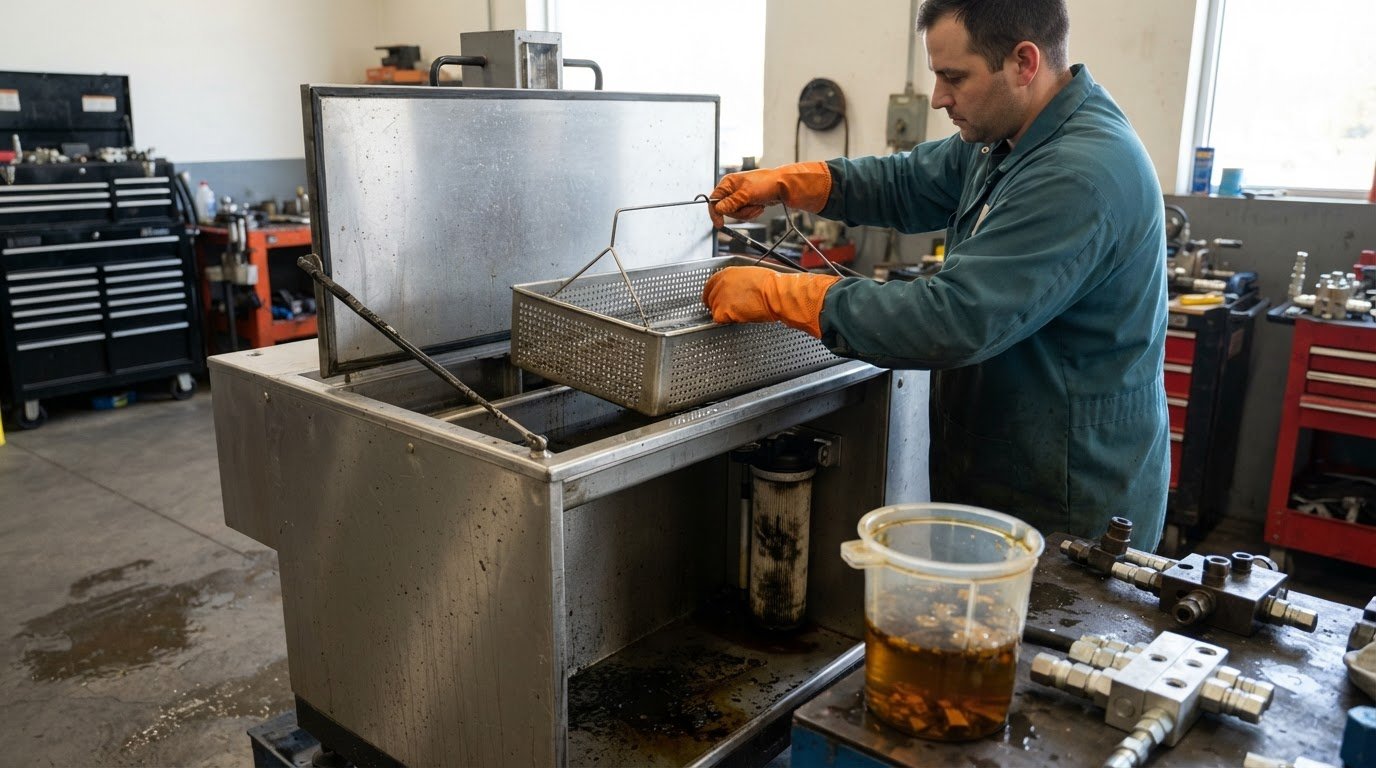
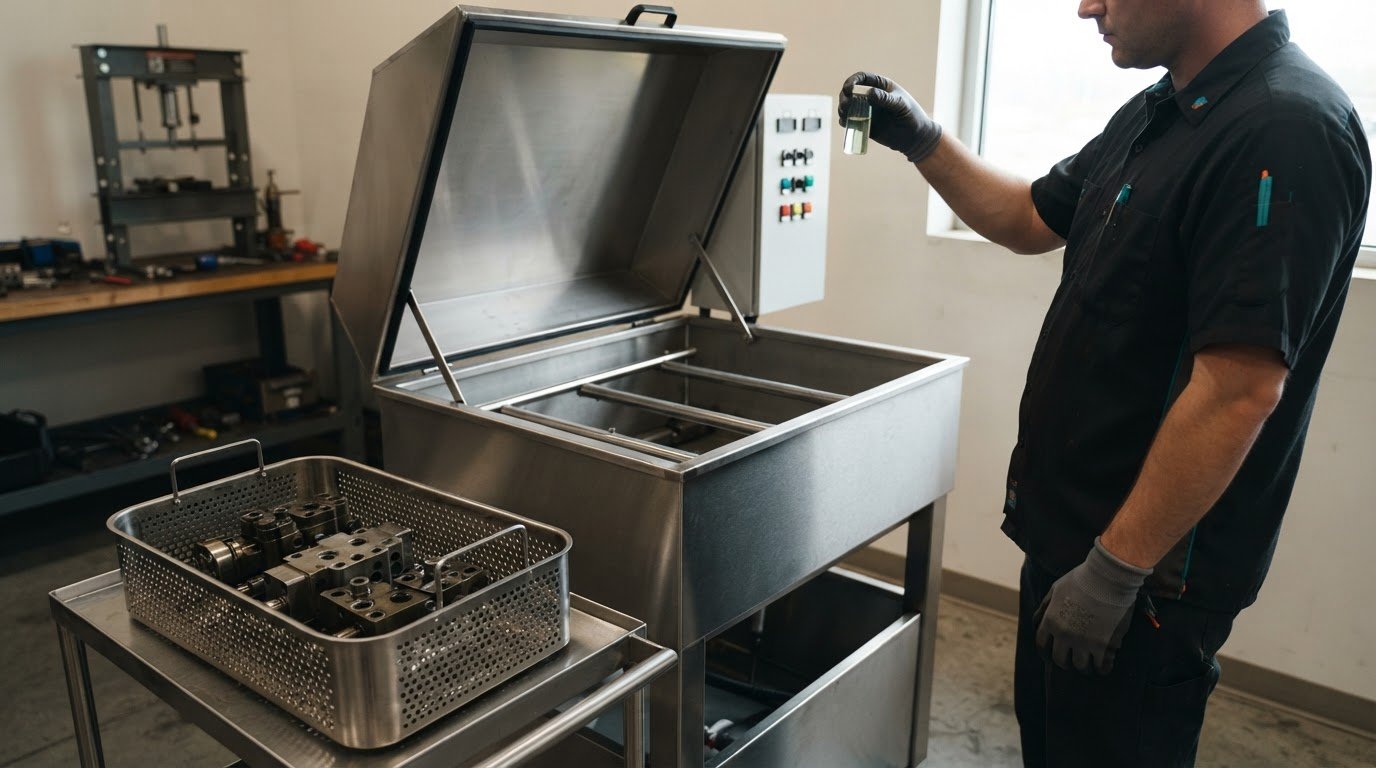
Industrial parts washers need a different monthly service approach. The work depends on the equipment, cleaning chemistry, and operating conditions. Assess these factors rather than applying household washer instructions to industrial equipment. A monthly parts washer service guide should make this distinction clear.
For a parts washer, select safety precautions and personal protective equipment based on the equipment instructions, the cleaning solution’s safety data, and the hazards of the task. The right PPE depends on the chemistry and work being performed.
Used parts washer solvent and sludge require handling based on their contents and applicable United States requirements. A service provider determines the appropriate storage and disposal process from the waste characteristics and relevant instructions. Don’t assume household drain or trash disposal is suitable.
OSHA and EPA requirements can affect worker protection, waste handling, and disposal. The applicable steps depend on the hazards, cleaning chemistry, and waste involved, so a professional should assess those conditions for the service.
Monthly parts washer service can include assessing the machine’s condition, cleaning needs, and cleaning solution. The exact work depends on the washer and chemistry in use. Replace the solution based on its condition and performance, following equipment or chemistry guidance rather than assuming a universal schedule.
For a front-load household washer, wipe the door gasket monthly with equal parts water and vinegar only if the manual allows it. Wipe the bottom of the seal after each load, then leave the door open so the interior can dry. Clean detergent dispensers as needed, removing leftover product and residue before they accumulate.
Clean a household washer’s drain filter or pump trap about every three months. Unplug the machine before accessing the drain pump filter, and check for trapped debris, damage, or slow draining. A filter that remains obstructed or a washer that drains slowly may need repair, not another cleaning cycle.
Use an empty hot-water cycle for drum cleaning when the washer’s instructions support it. In hard-water areas, a cleaning cycle every two weeks may help manage deposits. For ordinary loads, use the detergent type and amount specified for the machine; excess detergent can leave residue that monthly cleaning must then address.
2. How often should I replace washer hoses?
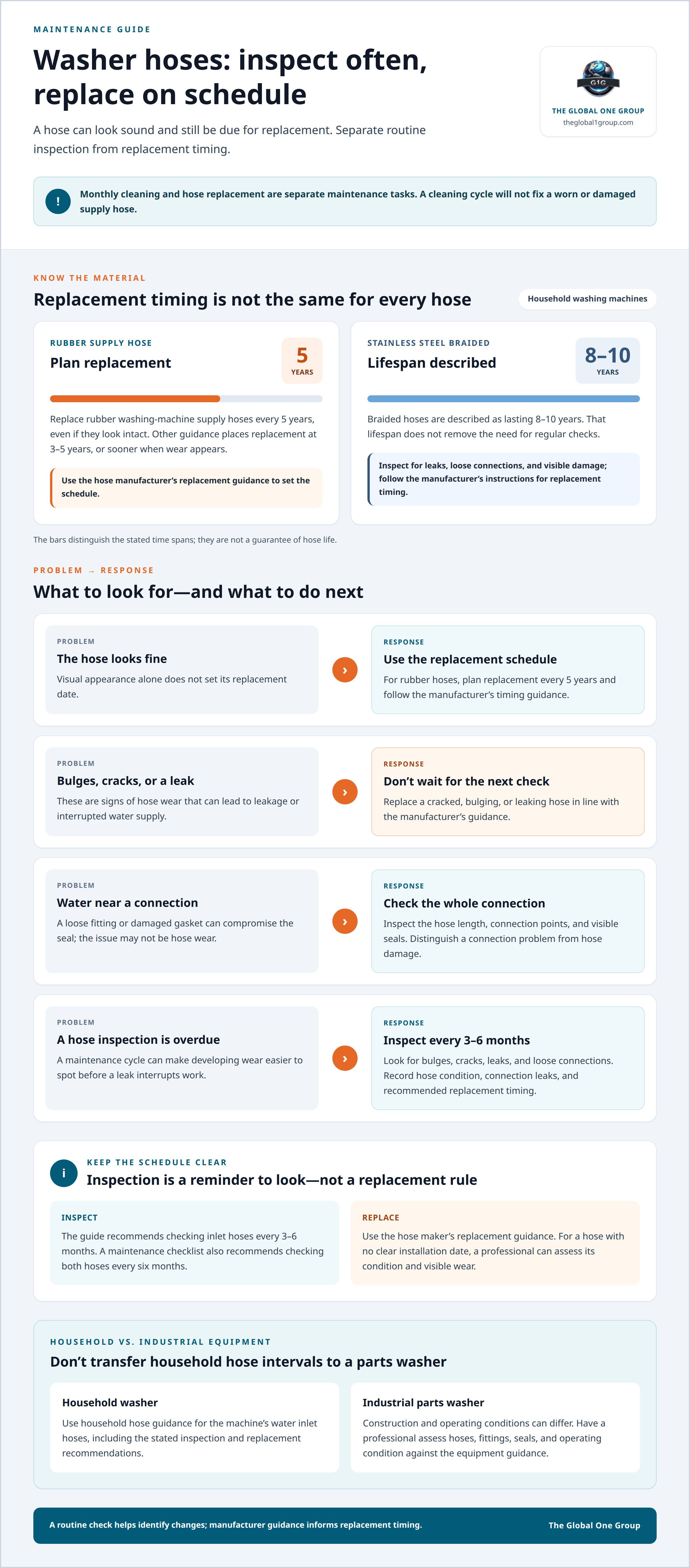
Replace rubber washing-machine supply hoses every 5 years, even when they look intact. Other maintenance guidance places rubber hose replacement at 3-5 years, or sooner when wear appears. Use the hose manufacturer’s replacement guidance to set the schedule. For an older hose with no clear installation date, a professional can assess its condition and recommend replacement based on visible wear.
Inspect water inlet hoses every 3-6 months for bulges, cracks, leaks, and loose connections. A maintenance checklist also recommends checking both hoses every six months. These schedules fit within a regular inspection routine. A professional checks the full hose length, connection points, and visible seals, then identifies signs that could lead to leakage or interrupted water supply.
Inspect connection areas closely. A loose fitting or damaged gasket can compromise the seal, while a leak may leave water around the washer. Distinguish a connection problem from hose wear. If a hose is cracked, bulging, or leaking, don’t wait for the next scheduled inspection. Replace it according to the manufacturer’s guidance.
Stainless steel braided washer hoses are described as lasting 8-10 years, but that lifespan doesn’t remove the need for inspection. Check braided hoses for leaks, loose connections, and visible damage during the same 3-6 month inspection cycle. The material and apparent condition inform the assessment, while the manufacturer’s instructions guide replacement timing.
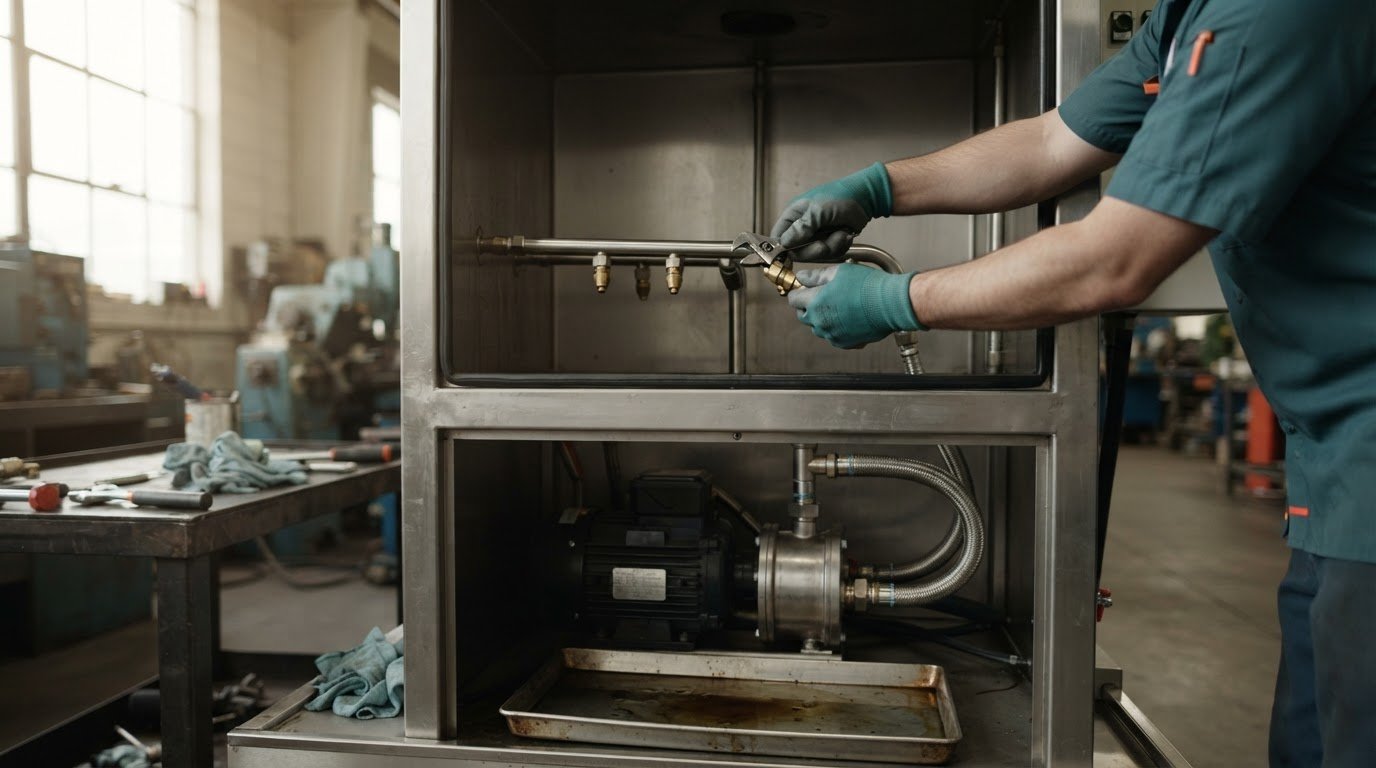
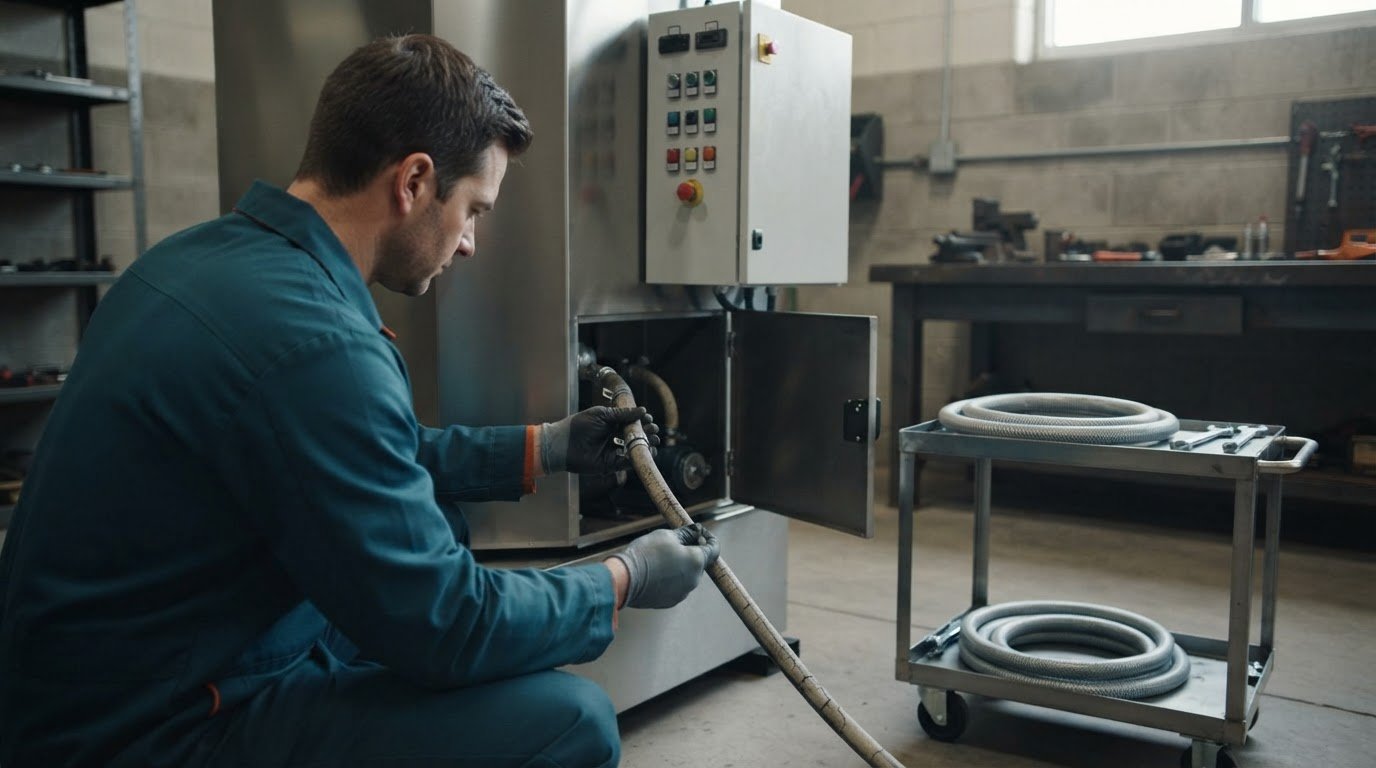
Don’t confuse a laundry washer’s water inlet hose with a parts washer’s process or supply connections. Their construction and operating conditions can differ, so household hose intervals shouldn’t automatically dictate industrial equipment maintenance. For an industrial unit, a professional should assess its hoses, fittings, seals, and operating condition against the equipment guidance. That distinction protects maintenance planning and operational efficiency.
During a service review, record hose condition, connection leaks, and recommended replacement timing. A cleaning cycle or filter check won’t fix a worn water supply hose. Include hose inspections in the maintenance plan and act promptly if damage is found. This turns a visual check into a clear maintenance decision instead of waiting for a leak to interrupt operations.
For production cleaning equipment, consider industrial parts washer options when household laundry equipment doesn’t fit the task. The correct equipment category matters: washer hoses need maintenance suited to their machine, connections, and operating demands.
Use an inspection as a reminder to review the hose maker’s instructions, not as a reason to extend a replacement interval. Check water inlet hoses for bulges, cracks, leaks, or loose connections, and follow the manufacturer’s guidance on replacement timing. The guide recommends inspecting washing-machine inlet hoses once or twice a year. Regular checks offer opportunities to notice changes and consider them alongside the manufacturer’s advice. If you find a concern, decide on replacement in line with that guidance. An inspection schedule is a reminder to look, not a separate rule for when a hose must be replaced.
3. Washer leveling and vibration
Check a washing machine’s level every 6 months. A professional assesses whether the appliance sits steadily and whether uneven placement contributes to vibration during washing. Repeated movement can disrupt operation and put added stress on connections. A level check belongs in scheduled maintenance, not only after the machine starts shifting.
When vibration occurs, distinguish leveling issues from load-related causes. An uneven floor, unstable footing, or overloaded drum can produce similar symptoms. Consider when the movement happens, whether it occurs during particular cycles, and whether the machine remains steady between loads. These observations help identify the cause instead of treating every vibration as a leveling fault.
Overloading prevention also matters. A load that exceeds the appliance’s stated capacity can distribute unevenly, especially when bulky items shift during washing. The professional can review the washer’s operating guidance and the reported load pattern. For example, recurring vibration with bulky laundry may point to loading conditions, while movement during different loads may signal a stability issue.
A proper leveling assessment looks beyond the front of the machine. Check how the appliance sits on the floor, whether its feet are stable, and whether movement continues during operation. If the washer is close to a wall, check the clearance behind it: contact with the wall can add noise or vibration. Distinguish wall contact from an unstable base.
Household assumptions don’t automatically apply to an industrial parts washer. Equipment design and installation conditions differ, so assess the machine according to its setup and operating demands. Check whether it remains stable during its normal cleaning process and whether vibration coincides with a particular operating condition.
Persistent vibration deserves attention if a level check doesn’t resolve it. Inspect the unit’s support, note when the movement occurs, and assess whether the drain pump or another component needs closer evaluation. Slow draining alongside unusual movement, for example, gives more than one symptom to consider. Don’t treat a recurring mechanical issue as routine cleaning.
Record the date of each 6-month level check and the conditions that produced vibration. Include whether the washer was empty or loaded, which cycle was running, and whether the machine moved or made contact behind it. That service history gives a repair professional a clearer starting point. It also helps distinguish a one-time load imbalance from a recurring appliance stability problem.
4. Should I leave my washer door open?
Yes. Leave a front-loading washing machine’s door open for at least 30 minutes after each cycle. That gives moisture inside time to escape instead of staying trapped around the drum. If the laundry room has limited airflow, leave the door open longer until the interior feels dry. Remove wet clothes when the cycle ends, rather than letting them sit inside.
Use HE-compatible detergent in a high-efficiency washer. HE machines use less water, so standard detergent can create excess suds and leave residue. The recommended amount for an HE washer is 1-2 tablespoons per load. Follow the washer and detergent instructions, and don’t add extra detergent simply because clothes look heavily soiled.
Load size affects how detergent moves through a wash. A small load doesn’t automatically need the same amount as a full load, so follow the washer and detergent directions when adjusting the amount. Too much detergent can leave buildup inside the machine or dispenser. Too little may not suit the load or product instructions.
Check the detergent dispenser for residue and debris when adding detergent. Dried product in the drawer can interfere with dispensing during a later cycle. Use the compartment intended for the product, and don’t fill above its marked line. If detergent remains after washing, note the product, amount, and cycle to help troubleshoot.
Door position and detergent use work together in routine care. After a cycle, remove wet laundry and keep the front-load door open for at least 30 minutes. Use the correct HE detergent and measured amount for each load. These steps help limit trapped moisture and detergent residue without adding unnecessary product or extending a cleaning cycle.
Household detergent advice doesn’t transfer directly to an industrial parts washer. The cleaning chemistry must suit the machine and the task; laundry detergent isn’t a substitute. The cost of parts washer service depends on machine size, solvent type, equipment condition, and scope of work. Request a quote based on those factors.
For an HE washer, keep the routine simple: measure 1-2 tablespoons per load, remove wet clothes promptly, and leave the door open for at least 30 minutes. If residue persists in the dispenser or inside the drum, review detergent choice and amount before adding another cleaning product. Keep the washer’s own instructions as the reference for product use.
Make opening the lid or door part of the routine after every load, not just when the washer seems damp. The maintenance checklist recommends leaving the lid or door open after each load so the interior can dry. This applies to either style of closure.
Keep detergent choice in mind as a separate part of washer care. Use HE-compatible detergent in high-efficiency washing machines to avoid excess suds and residue. Together, these habits address two distinct concerns: letting the interior dry after washing and choosing detergent suited to an HE machine. Follow both recommendations consistently.
5. When to contact a professional repair service
Stop relying on routine cleaning when a parts washer develops a recurring fault. A leak, persistent drainage problem, unusual vibration, or decline in cleaning performance after a cleaning cycle needs assessment. Repeating the same cleaning step won’t fix a damaged component. Record when the symptom occurs and what the machine was doing.
Assess rubber hoses if they show cracks, bulges, loose connections, or leaks. A leaking connection may indicate hose wear or a seal problem. Don’t dismiss visible damage as ordinary buildup. Note the affected area and whether the leak returns during normal operation.
Contact a repair professional if the machine repeatedly fails to drain, stops during operation, or makes a new mechanical noise. A blocked filter may explain some drainage problems, but recurring symptoms can signal a deeper fault. Describe when the issue starts, whether it repeats, and what changed before it appeared.
Monthly professional service and in-house maintenance have different purposes. In-house checks track visible condition and routine performance, while professional service assesses recurring faults, equipment condition, and repair needs. A monthly visit doesn’t replace prompt attention to a leak or malfunction between scheduled checks.
When comparing service plans, focus on the work each covers. Compare inspection scope, cleaning tasks, solution assessment, parts review, and the findings documented after service. A plan should clarify which recurring symptoms require repair assessment, rather than treating every issue as routine cleaning.
Household washer care has limits, too. Detergent buildup in a drawer, a damp rubber door seal, or residue after washing may call for routine cleaning and attention to the manual. Leave the door open after a cycle so the interior can dry. If the problem persists after you follow the manual, arrange an appliance assessment.
Before a professional visit, record the machine’s symptoms and operating context. Note whether the fault appears during a specific cycle, after extended use, or with a particular load. Include recent cleaning, filter checks, or changes in performance. These details help focus the assessment and avoid repeating steps that haven’t fixed the problem.
Keep the distinction clear: remove loose debris only through the established maintenance process, and don’t treat persistent mechanical symptoms as housekeeping. A repair assessment makes sense when cleaning, routine checks, or an adjustment fails to resolve the issue. Escalate recurring leaks, drainage faults, or abnormal operation instead of waiting for the next monthly review.
The Global One Group: Industrial Parts Washers
The Global One Group supplies industrial parts washers, parts washing chemistries, and replacement parts for Magido and Fountain equipment. Turn to the team when household washer maintenance no longer fits the equipment or cleaning task, or when you need compatible parts for Magido or Fountain machines. Matching the washer and chemistry to the job supports a practical maintenance plan focused on the parts being cleaned.
Use your service findings to identify the issue, whether it’s recurring residue, cleaning performance, or a need for compatible equipment or parts. This gives the discussion a clear operational starting point and keeps routine household washer care distinct from industrial parts washing.
Contact The Global One Group to discuss industrial parts washers, parts washing, chemistries, or Magido and Fountain parts.
Put Maintenance Insight to Work
Make the next maintenance decision part of the operating plan, not a last-minute response. Consistent service records help teams spot patterns across shifts, communicate equipment concerns, and prioritize attention around production demands. Routine observations then provide a practical basis for planning work.
Use this monthly parts washer service guide as a starting point for a maintenance discussion focused on your equipment, cleaning task, and operating conditions. A targeted conversation can clarify which issues belong in routine upkeep and which require an equipment or repair decision. Keep that distinction clear as your process evolves.
When you’re ready to discuss your parts-washing needs, contact The Global One Group.
Take the next step with a clear view of the issue and keep your operation moving with purpose.
Frequently Asked Questions
Is hot water or cold water better for cleaning cycles?
Use the washer’s designated cleaning cycle and follow the manual’s water-temperature instructions. For routine laundry, choose a temperature suited to the garment-care label and detergent directions. A cold-water wash may work for everyday loads, while the washer’s cleaning program may specify another setting. Don’t override the machine’s instructions; the right temperature depends on the cycle and washer design.
What should you do if odor or residue keeps coming back after cleaning?
Look for a recurring cause instead of repeating the same cleaning step. Check whether odor returns after a particular cycle or residue appears in the dispenser or on freshly washed items. Note when it happens and whether the washer drains normally. Review the manual for approved cleaning and detergent guidance. If the problem persists, arrange a professional assessment to identify a drainage or component issue.