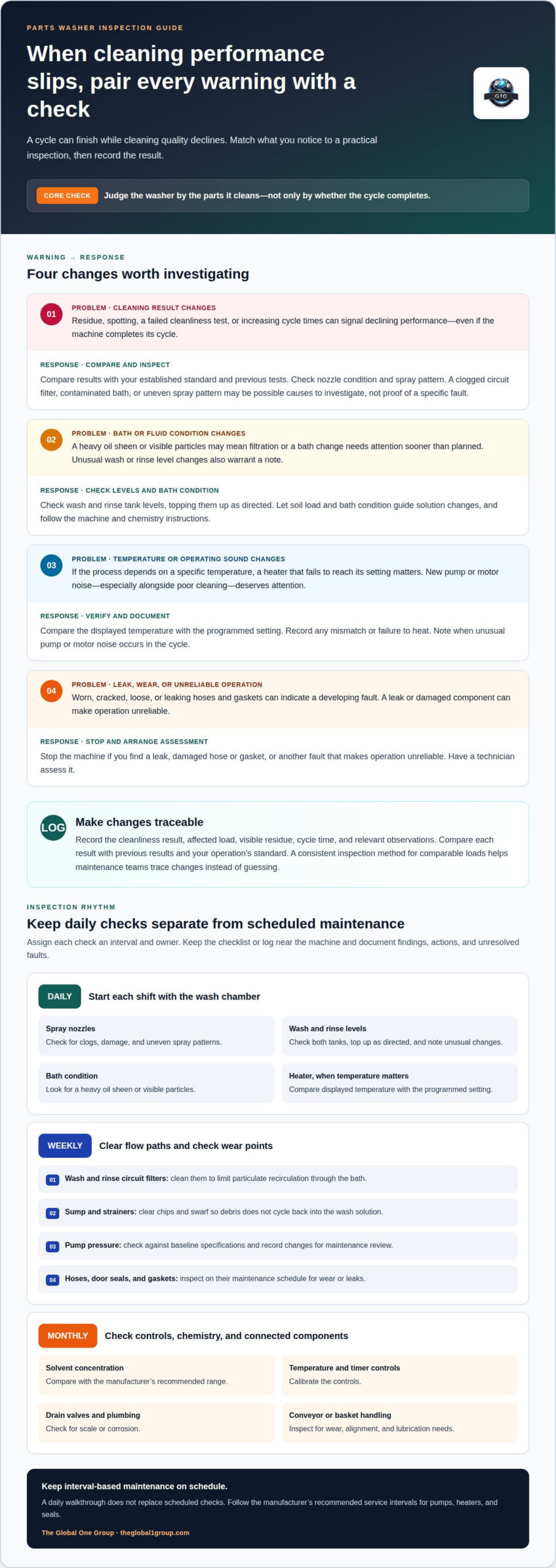
A parts washer can keep running even as its cleaning performance slips. A practical daily parts washer inspection list covers spray nozzles, wash and rinse fluid levels, bath condition, and heater function when the process depends on a set temperature. Check hoses and gaskets at their scheduled intervals, too. Wear or leaks can signal a developing fault.
A familiar cycle should produce consistent results. If cycle times increase, parts show residue or spotting, cleanliness failures recur, or the pump or motor makes unusual noise, don’t treat the change as routine. Stop the machine if you find a leak, damaged hose or gasket, or another fault that makes operation unreliable, then have a technician assess it. This guide explains the daily checks, how to record warning signs, and where weekly hose and gasket inspections fit, so your team can catch problems before they disrupt production.
Key Takeaways
- Check spray patterns, wash and rinse fluid levels, bath condition, and heater function each day to catch changes before they affect cleaning.
- Compare cycle performance with cleanliness test results, and investigate residue, spotting, longer cycles, repeated inspection failures, or unusual pump and motor noise.
- Inspect hoses and gaskets on their maintenance schedule; wear, cracks, looseness, or leaks can signal a problem that needs attention.
- Use separate daily, weekly, monthly, and quarterly or annual checks, and record results in a log near the machine.
- Review safety-critical signs such as electrical problems, corrosion, and damaged components, and stop operation when a fault makes the washer unsafe or unreliable.
Cleanliness testing and inspection failures
Judge a parts washer by the parts it cleans, not just by whether its cycle finishes. Compare cycle performance with cleanliness test results and your operation’s standards. Record each test result and compare it with previous results. A completed cycle that leaves residue or spotting still indicates a cleaning failure.
Use the same inspection method for comparable loads. A changed result can point to a clogged circuit filter, contaminated bath, or uneven spray pattern. Treat these as possible causes to investigate, not proof of a specific fault. Record the affected load, visible residue, cycle time, and test result. These details help maintenance teams trace changes instead of guessing.
- Compare each cleanliness result with the established standard. A failed test means the washer needs investigation before the same cleaning process continues without review.
- Track cycle time and repeat inspection failures. Increasing cycle times or more frequent failed inspections can point to declining performance, especially when parts also show residue or spots.
- Listen for unusual pump or motor noise. Record when the sound occurs in the cycle; a new noise alongside poor cleaning deserves prompt attention.
- Check the final parts for visible residue and spotting. These signs can indicate that the cleaning result has changed, even when the machine completes its programmed cycle.
- Clean the commercial washer drain pump filter monthly. A clogged filter can interfere with drainage, so include the monthly cleaning in the maintenance log.
- Clean the dryer lint screen after every drying cycle. Clear lint supports airflow, while a clogged screen can restrict it; clean the vent hose quarterly as a separate task.
- Inspect refrigerator drawers, shelves, handles, dispensers, coils, and interior components. Clean these surfaces and check around and beneath the appliance for visible debris or condition changes.
- Inspect dishwasher internals, plumbing connections, drain, and catch basin. Clean the filter according to the appliance instructions, then run a short test cycle to check heating and door-seal leaks.
Checks for dryers, refrigerators, and dishwashers apply to those appliances, not industrial parts washers. Keep their tasks separate in the maintenance log so household-style cleaning steps don’t replace washer performance checks. Log cleanliness results alongside cycle observations, including the date, load, visible condition, and any repeat failure. These records give technicians a clearer starting point when performance shifts and support warranty documentation without assuming coverage.
Daily nozzle, fluid-level, bath-condition, and heater checks
Start each shift by checking the wash chamber. Inspect spray nozzles for clogs, damage, or uneven patterns. A blocked nozzle can leave parts unevenly cleaned even when the cycle runs normally. Check wash and rinse tank levels, top them up as directed, and record unusual changes rather than relying on memory.
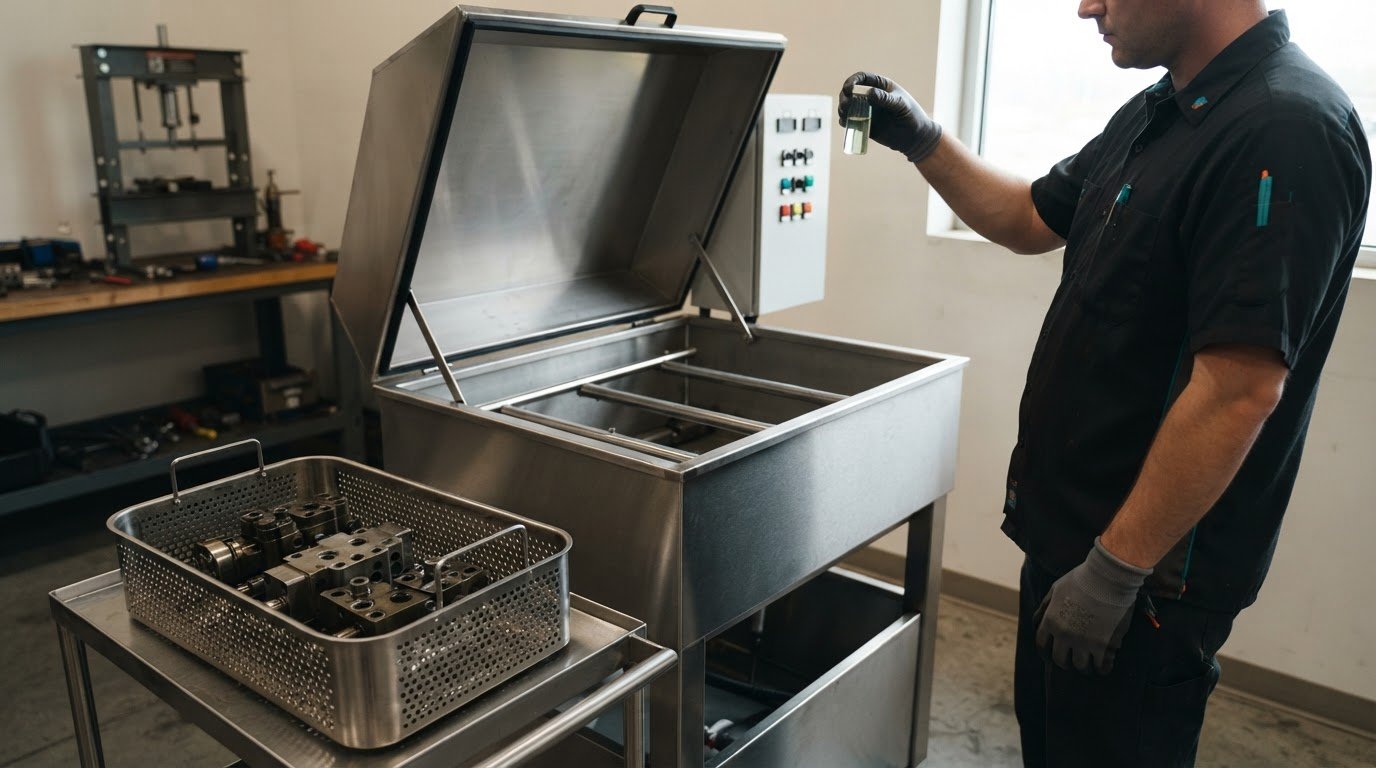
Look for a heavy oil sheen or visible particles on the bath. These signs can mean filtration or a bath change needs attention sooner than planned. How often should parts washer cleaning solution be changed? Follow the machine and chemistry instructions, and change the bath when contamination or cleaning results show it is no longer effective. Soil load and bath condition should guide the decision.
Confirm the heater works when the wash process depends on a specific temperature. Compare the displayed temperature with the programmed setting, then record any mismatch or failure to heat. Monthly checks should include comparing solvent concentration with the manufacturer’s recommended range and calibrating temperature and timer controls. These checks help distinguish a daily operating issue from a control or chemistry problem.
- Clean wash and rinse circuit filters weekly. This limits particulate recirculation through the bath.
- Clear sump debris and strainers weekly. Chips and swarf can otherwise cycle back into the wash solution.
- Check pump pressure against baseline specifications weekly. Record a change for maintenance review.
- Inspect door seals and gaskets weekly. Wear can contribute to leaks, pressure loss, or inconsistent temperature.
- Assign each check an interval and owner. Keep the maintenance checklist or log near the machine and document findings, actions, and unresolved faults.
Monthly tasks also include checking drain valves and plumbing for scale or corrosion, and inspecting conveyor or basket-handling mechanisms for wear, alignment, and lubrication needs. Keep each task on its schedule: a daily walkthrough cannot replace interval-based checks. Follow the manufacturer’s recommended service intervals for pumps, heaters, and seals.
Check that the parts washer is stable and securely positioned during operation. If it shifts, vibrates abnormally, or appears out of level, record the condition and have a technician assess it. Leveling checks for washers and dryers apply to household appliances, where they are scheduled every six months or after the appliances are moved. A kitchen checklist does not replace industrial machine checks.
Washer-extractors and tunnel washers use different operating processes from parts washers. Keep their inspection records and equipment-specific procedures separate; don’t transfer parts-washer settings or intervals to those machines. For parts washer chemistry and cleaning needs, review parts washing chemistry options as part of maintaining a suitable bath.
Inspecting washer hoses and gaskets
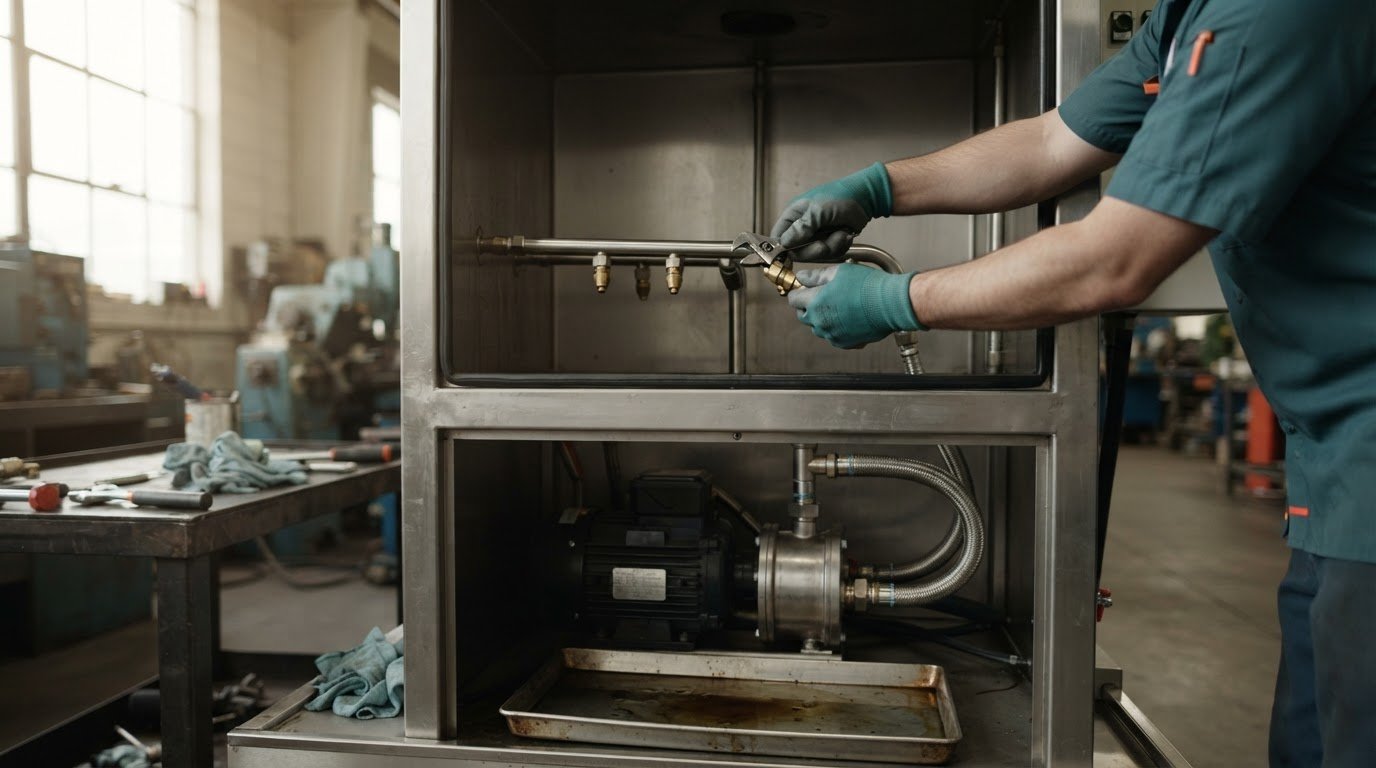
Inspect hoses, fittings, door seals, and gaskets for wear before a leak disrupts operation. Look for cracks, bulges, abrasion, loose connections, corrosion, or moisture around joints. Check the hose length, bends, and contact points, since rubbing against a frame can damage the outer surface. Record defects and the location before maintenance work begins.
OSHA workplace safety requirements address hazards in the work area, including electrical and mechanical risks. A maintenance interval alone is not an OSHA rule. The U.S. Environmental Protection Agency lists wear or malfunction, electrical-circuit problems, cracks, looseness, and corrosion protection among maintenance checks. Follow the machine’s maintenance instructions alongside workplace safety procedures.
Inspect door seals and gaskets weekly for wear that could cause leaks, pressure loss, or temperature inconsistency. Check the full sealing surface, including corners and contact edges. Look inside the chamber for residue trails starting near a seal. A damaged gasket may let wash fluid escape or weaken the chamber seal during heating and washing. Stop operation if a leak creates an unsafe condition.
- Examine hose bodies and fittings. Check for cracking, swelling, stiffness, abrasion, mineral buildup, and loose connections.
- Inspect the seal contact surface. Look for cuts, flattening, hardening, gaps, or residue trapped between mating surfaces.
- Check around the machine. Look beneath hose connections and around the door for fresh drips or pooled fluid.
- Document each defect. Record the affected hose or seal, location, observed condition, and maintenance action.
Hose inspection intervals depend on the task and maintenance schedule. One maintenance guide recommends quarterly checks of hoses and fittings; another schedule calls for checking hoses every six months for wear, cracking, and mineral buildup. Set a clear interval for each task, follow the washer’s maintenance instructions, and record the date. Do not keep operating a visibly damaged hose just because an inspection is not yet due.
Replace hoses every three to five years, even if they appear intact. A visual check can reveal surface wear but not every weakness inside a hose. Track installation or replacement dates so service intervals don’t depend on memory. If you find a leak, loose fitting, or damaged door seal, keep the washer out of operation until a qualified technician assesses the fault and restores a sound connection.
Monthly maintenance should include checking drain valves and plumbing for corrosion or scale that could contribute to leaks or blockages. Keep these tasks separate from quarterly hose and fitting inspections. A checklist with distinct intervals helps crews document the right inspection, identify repeat failures, and act before a small leak reaches nearby electrical components.
How to inspect parts washer brushes, hoses, pumps, and nozzles?
Follow the machine’s maintenance instructions to set safe inspection conditions before examining moving or pressurized components. Check brushes for worn, bent, loose, or missing bristles, and look for buildup that could limit contact with parts. A brush that no longer reaches the work surface may produce uneven cleaning. Record its condition and the affected assembly.
Inspect hoses every six months for wear, cracking, and mineral buildup. Examine their full visible length, including bends, fittings, and contact points with machine surfaces. Look for dampness or loose connections around joints. Note the location of any damage, then follow the washer’s maintenance procedure before returning the equipment to operation.
- Check pump pressure weekly against baseline specifications. Record the reading and any change from the machine’s established baseline.
- Inspect the pump for wear or malfunction. Note unusual vibration, leakage, or changes in operation for maintenance review.
- Examine nozzles for blockage or damage. Confirm their openings remain clear and the spray reaches the intended area during the operating check.
- Review brush mounting and movement. Check that each brush remains secure and contacts parts as designed.
The U.S. Environmental Protection Agency lists wear or malfunction, electrical-circuit problems, cracks, looseness, and corrosion protection among maintenance checks. Apply these inspection points to visible pump, hose, brush, and nozzle components. Don’t open electrical enclosures or dismantle assemblies during a routine visual check. Use the machine’s service procedure and qualified maintenance personnel for repairs.
For a nozzle check, compare the spray pattern with the machine’s normal operation. A weak or uneven pattern may point to an obstruction, wear, or an issue elsewhere in the fluid circuit. Record which nozzle or area has changed and note any effect on cleaned parts. This helps maintenance teams narrow the inspection instead of replacing components without a clear diagnosis.
Keep a clear record for each component, including the inspection date, observed condition, pressure reading when checked, and action taken. A recurring hose defect or repeated pump-pressure change needs follow-up beyond a single log entry. Escalate cracks, loose fittings, electrical concerns, or malfunctions that affect reliable operation to a technician. Keep the machine out of service if continued operation could worsen the fault or create an unsafe condition.
Follow the same inspection sequence each time: review the maintenance instructions, examine accessible components, document findings, and send defects for corrective work. Consistent records help operators compare changes between inspections and let technicians focus on the affected part instead of repeating basic checks.
What safety checks are required for parts washers?
Build safety checks around the washer’s design, cleaning chemistry, and operating instructions. Before each shift, check the area for leaks, spills, blocked access, or damaged guards. Confirm doors and covers close properly, and keep the surrounding floor clear. Address a new leak or exposed component before routine operation continues.
Check accessible electrical components for visible damage, loose connections, or corrosion. Keep inspections visual unless the person performing them is qualified and the machine’s service procedure permits more. Don’t touch wiring or open an electrical enclosure during a routine walkthrough. Stop operation and escalate a damaged cable, unusual electrical behavior, or moisture near electrical equipment.
- Inspect guards, doors, and interlocks. Confirm they move and close as intended; report a damaged guard or a door that won’t stay secured.
- Look for leaks and spills. Check beneath the washer, around fittings, and near the tank before starting a cycle.
- Review hoses and seals. Cracks, loose fittings, or fluid escaping near a door seal can create exposure and equipment risks.
- Check the control panel. Note warning indicators, damaged controls, or unexpected behavior, and follow the machine’s shutdown procedure if a fault appears.
- Keep walkways clear. Remove obstructions around loading and unloading areas so operators can approach and leave the machine safely.
Control cleaning chemistry separately. Read the product label and safety data sheet before handling or adding chemicals. Keep containers identified and closed as directed, and follow the handling precautions for the chemistry. Don’t mix products or improvise a spill response. Follow the site’s spill procedure and route exposure concerns through the established response process.
During operation, watch for fluid escaping the chamber, abnormal movement, unusual noise, or a cycle behaving differently. If a fault presents a hazard, stop the washer using its normal controls. Keep it out of service until a qualified technician assesses the issue and completes the necessary corrective work. Don’t bypass a guard or interlock to maintain production.
Document each safety finding with the machine, location, observed condition, and action taken. Separate immediate hazards from routine maintenance items so crews address urgent issues first. Train operators on the specific washer’s controls, shutdown procedure, and chemistry handling instructions. A consistent record gives the next shift clear information instead of an unresolved warning. Explore industrial parts washer options when equipment selection is part of your safety review.
The Global One Group: Industrial Parts Washers
The Global One Group supplies industrial parts washers, parts washing chemistries, and replacement parts for Magido and Fountain equipment. Turn to the company when inspection findings point to a need for washer equipment, cleaning chemistry, or compatible parts. Matching the washer and chemistry to the cleaning task keeps maintenance decisions grounded in your process and equipment needs.
For recurring cleaning failures, persistent bath issues, or parts needs involving Magido and Fountain equipment, The Global One Group offers a relevant next step. Share your washer or parts requirement and the operating challenge you’re addressing to focus the conversation on the right category of support.
Contact The Global One Group to discuss your industrial parts washer needs.
Make Every Inspection Drive the Next Decision
Make the daily parts washer inspection list a working record, not just a box-ticking exercise. Use inspection trends to spot recurring problems, identify delayed follow-up, and improve how your team hands off maintenance issues between shifts. Clear records help technicians focus on fault patterns and support informed decisions about equipment and cleaning processes.
When a recurring issue points beyond routine checks, make the next step deliberate. Gather the machine details and inspection notes so the discussion starts with the operational problem your team needs to solve. The Global One Group can help with parts washer-related needs. Contact The Global One Group to discuss your requirements and determine a practical next step. Keep the process moving with clear records, timely attention, and a maintenance routine your team can sustain.
Frequently Asked Questions
When Should You Stop And Call A Tech?
Stop the washer and call a technician when a fault creates a safety risk or disrupts reliable operation. Examples include a fluid leak near electrical components, damaged guards, exposed wiring, or a malfunctioning control. Don’t bypass an interlock or keep running a machine that behaves unpredictably. Record the warning, affected component, and operating conditions so the technician can assess the issue efficiently.
What should a daily parts washer inspection checklist include?
A daily parts washer inspection list should cover visible nozzle condition, fluid levels, bath appearance, heater function when temperature matters, and leaks or unusual machine behavior. Leave space for the operator to record findings and flag unresolved problems. Schedule weekly, monthly, and deeper maintenance tasks separately so the daily checklist stays focused and doesn’t replace component checks.
How do you inspect a parts washer before use?
Before starting a cycle, check the washer and immediate work area for leaks, damage, or obstructions. Confirm doors and covers close as intended, then inspect accessible hoses and connections. Review the control panel for warnings and make sure the load is positioned properly in the chamber. If you find a visible defect or unexpected warning, pause and follow the site’s maintenance process.
How to check parts washer fluid level and condition daily?
Use the washer’s operating instructions to identify the correct wash and rinse tank levels, then check the actual levels before use. Top up a low tank as directed. Under good lighting, inspect the bath for a heavy oil sheen, suspended particles, or settled contamination. Record changes from its normal appearance: soil load and cleaning results help determine whether filtration or a bath change needs attention.
How to check parts washer temperature and pressure?
For a temperature-dependent wash, confirm the heater works and the displayed temperature reaches the programmed setting. Record any mismatch instead of adjusting controls without authorization. Check pump pressure against the machine’s baseline during its scheduled weekly inspection, rather than treating it as a daily requirement. A changed reading can help maintenance teams investigate, especially when paired with weak spray coverage or altered cleaning results.
What signs indicate a parts washer needs maintenance or repair?
Look for a new leak, cracked hose, loose fitting, damaged seal, unusual pump or motor noise, or a cycle taking longer than usual. Residue on cleaned parts, spotting, and repeated cleanliness failures also signal a change worth investigating. A symptom can have several causes, so document when it occurs and what else changed. Escalate faults that affect safe, reliable operation.
How should daily parts washer inspections be documented?
Record the inspection date, machine identification, operator, observed condition, and any action taken. For performance concerns, include the affected load, cleanliness result, cycle observation, or relevant temperature reading. Clearly flag unresolved defects and assign them through the site’s maintenance process. A consistent log shows the next shift what changed and gives a technician useful context rather than an isolated report.