Routine maintenance is the difference between catching wear early and letting a small fault disrupt cleaning. Preventative maintenance for parts washers should cover pumps, motors, spray nozzles, filters, and cleaning solution, with worn or clogged parts replaced when they no longer perform properly. Daily checks take five minutes, and a maintained washer has an estimated service life of 15 to 20 years, compared with 5 to 7 years for one that receives no upkeep.
Focus on the components that keep cleaning pressure, flow, and coverage consistent. Pump or motor problems can reduce performance, while blocked nozzles and loaded filters can leave residue on parts and force crews to repeat work.
This guide explains what to inspect and replace, how to track washer performance, and how to keep cleaning solutions and nozzles working effectively. You’ll also learn how to build a maintenance routine around operating hours and production demands, so your team can spot declining performance before it becomes a workflow bottleneck.
Key Takeaways
- Inspect baskets, filters, strainers, and fluid levels to catch buildup before it reaches the pump or cleaning zone.
- Set service intervals around operating hours and production demands, rather than relying on a calendar alone.
- Watch for changes in pump pressure and motor current to spot declining performance early.
- Flush and inspect spray nozzles to maintain consistent coverage of parts, pockets, and passages.
- Keep cleaning solution effective with regular filtration, tank clean-outs, and scheduled replacement.
Filtering and recycling water and cleaning solutions
For aqueous washers, remove captured debris, filter the solution, manage floating oil, and schedule solution replacement. For solvent washers, remove accumulated debris and filter the fluid before recirculating it. Follow the cleaning chemistry’s handling instructions.
-
Inspect Chip Baskets, Filters, Strainers, and Nozzles
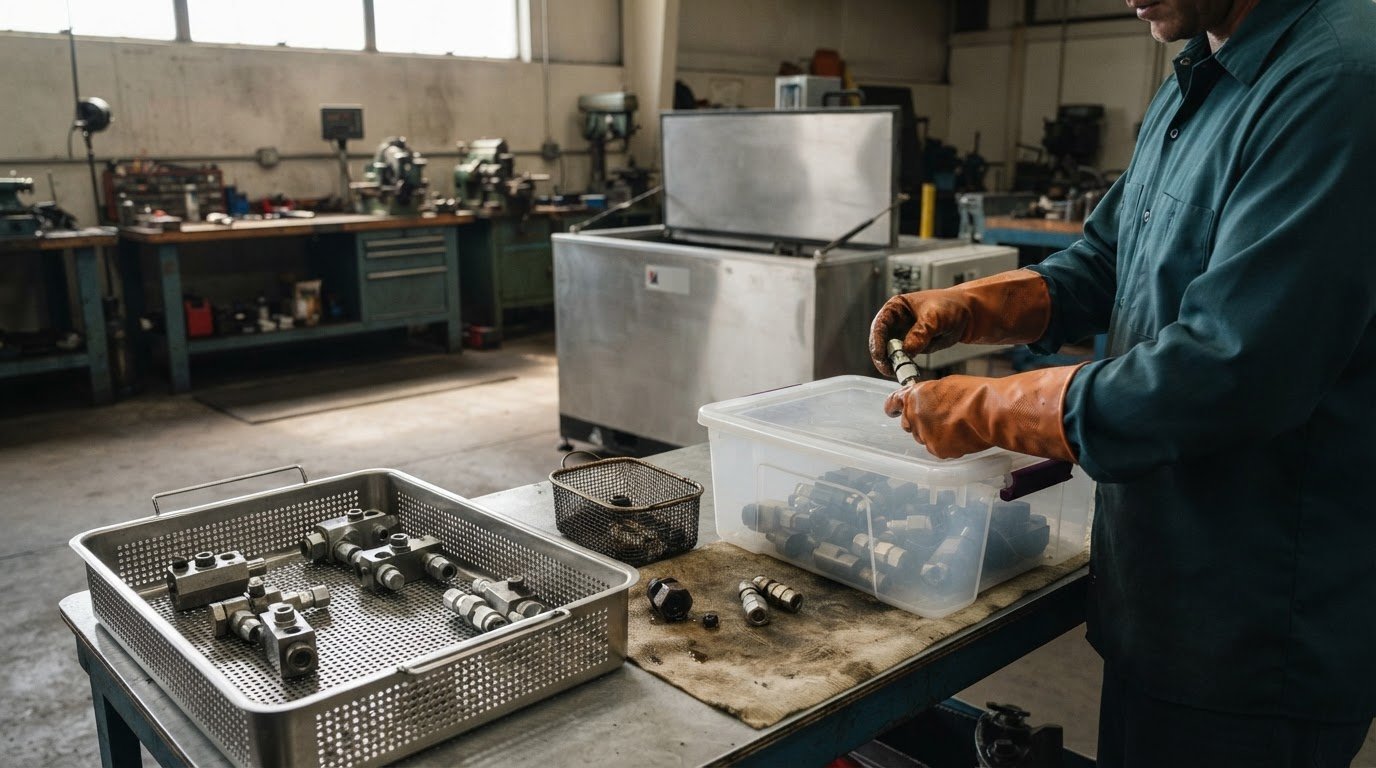
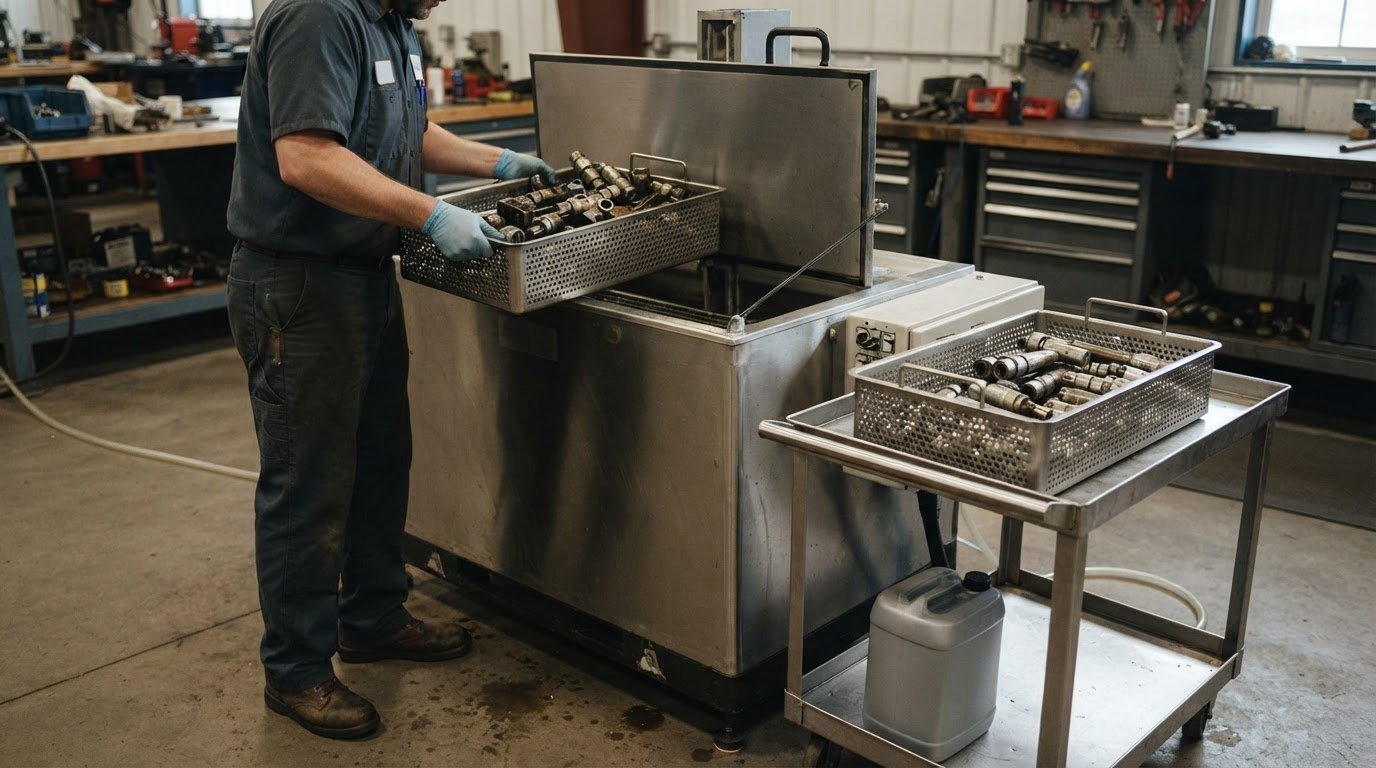
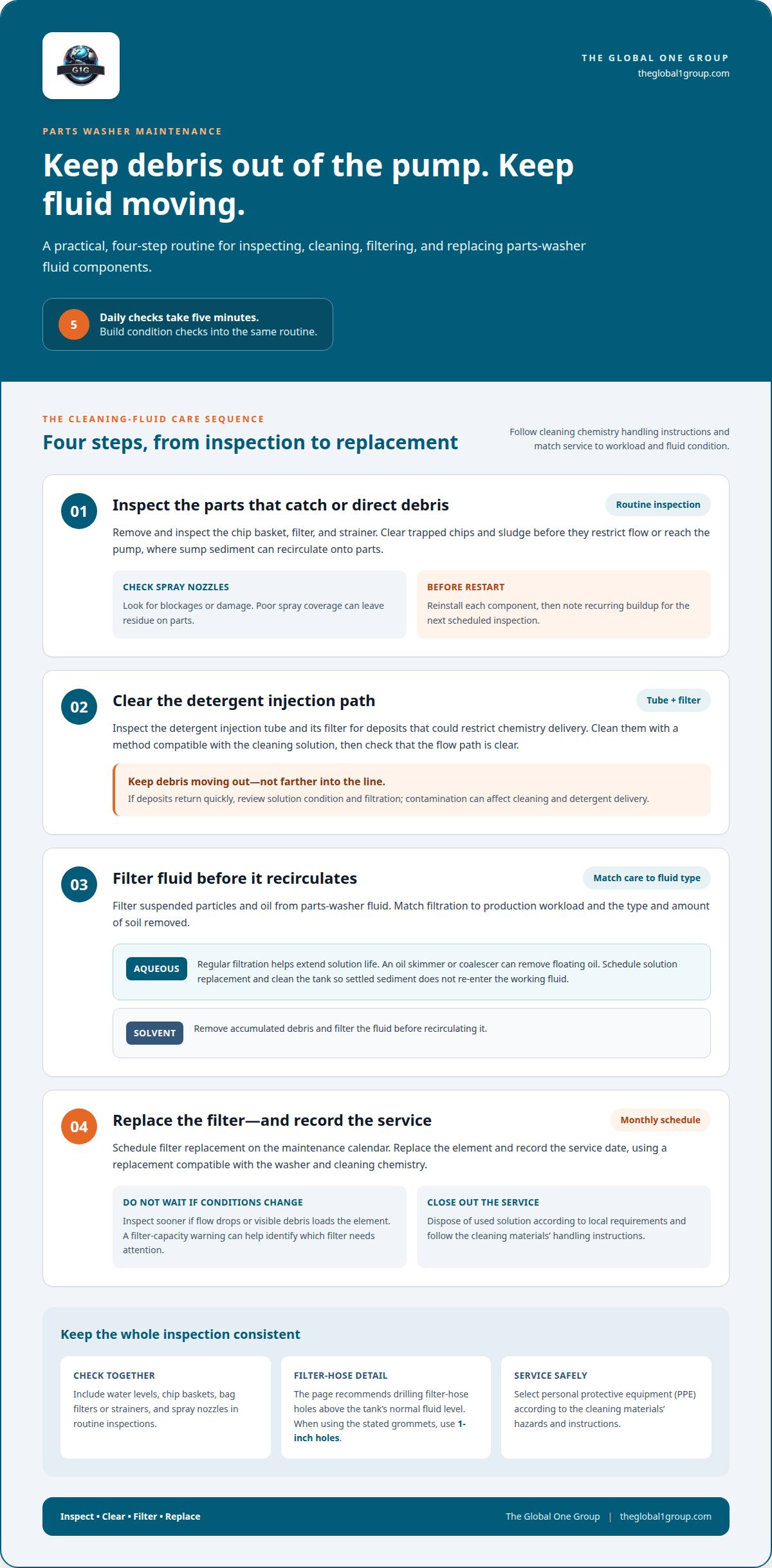
Remove and inspect the chip basket, filter, and strainer for trapped chips, sludge, and restricted flow. Clear debris before it reaches the pump, where sump sediment can recirculate onto parts. Check spray nozzles for blockages or damage, since poor coverage can leave residue. Reinstall each component before restarting the washer, and note recurring buildup for the next scheduled inspection.
-
Clean the Detergent Injection Tube and Filter
Inspect the detergent injection tube and its filter for deposits that could restrict chemistry delivery. Clean them using a method compatible with the cleaning solution, then check that the flow path is clear. Avoid pushing debris farther into the line. If deposits return quickly, review the solution condition and filtration routine, since contamination can affect both cleaning and detergent delivery.
-
Filter Parts-Washer Fluid
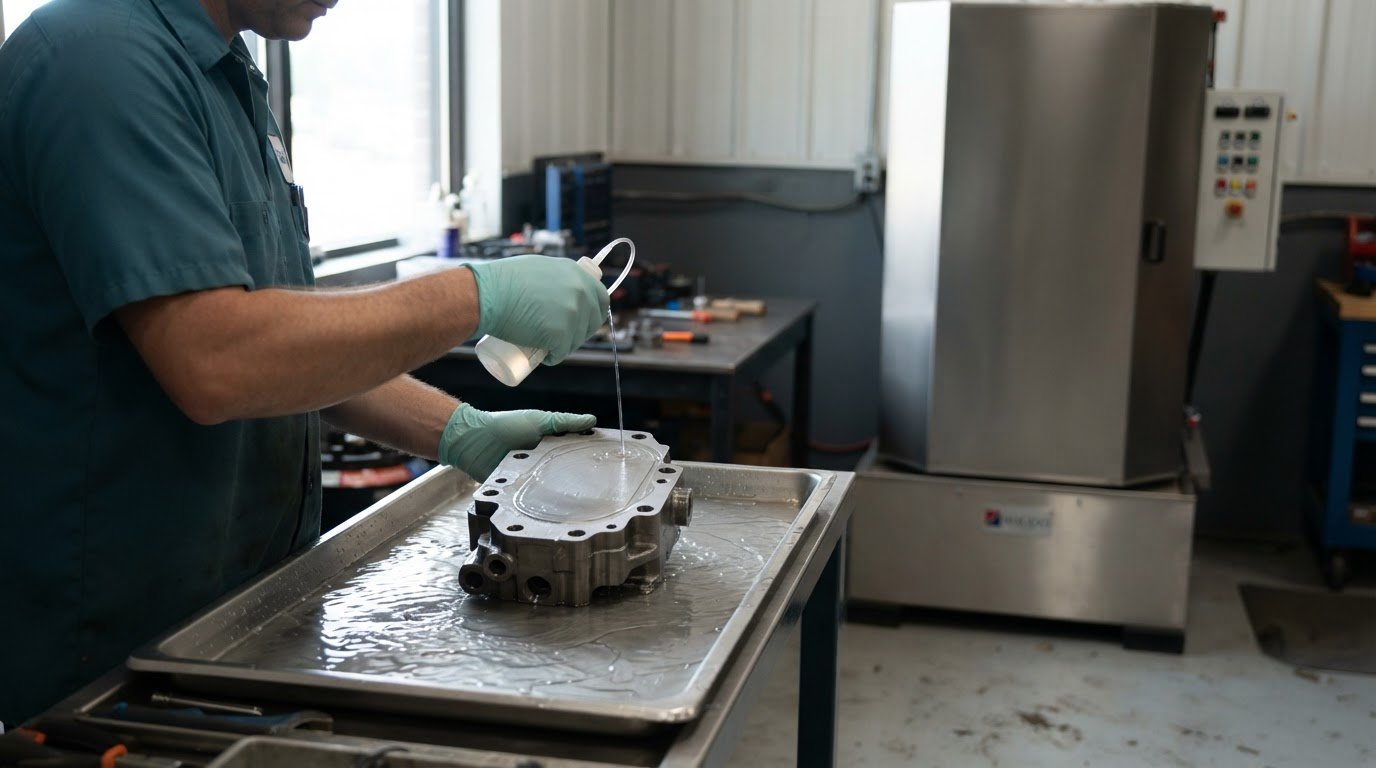
Filter parts-washer fluid to remove suspended particles and oil before it recirculates through the system. In aqueous washers, regular filtration helps extend solution life, while an oil skimmer or coalescer can remove floating oil. Match filtration to the production workload and the type and amount of soil removed. Clean the tank during scheduled service so settled sediment doesn’t re-enter the working fluid.
-
Replace the Filter Monthly
Schedule filter replacement on the maintenance calendar, then replace the element and record the service date. Don’t rely on the calendar alone: inspect the filter sooner if flow drops or visible debris loads the element. A filter-capacity warning can help identify which filter needs attention. Use a replacement compatible with the washer and cleaning chemistry, and dispose of used solution according to local requirements.
Include water levels in routine parts-washer inspections alongside chip baskets, bag filters or strainers, and spray nozzles. Checking these items together can help make condition checks part of the same maintenance process, rather than limiting attention to filtration components alone. The page recommends drilling filter-hose holes above the tank’s normal fluid level. When using the stated grommets, use 1-inch holes for the filter hoses.
Handle cleaning materials according to their hazards and instructions. Follow the cleaning materials’ hazard information and instructions when selecting personal protective equipment (PPE). Parts-washer filter-maintenance warnings can make servicing more visible and consistent, helping staff recognize when attention is due. Keep warnings clear and relevant to the equipment so maintenance needs are easy to identify and address.
Maintenance schedules based on operating hours
Build the service calendar around operating hours, production volume, and solution condition. A washer running four hours daily has different maintenance demands from one running 12 hours daily.
-
Gather Scheduled Maintenance Materials and Wear Items
Before each scheduled shutdown, review the machine’s service records and prepare replacement elements and wear items identified during earlier inspections. Include the correct filter element and any consumables needed for the planned work. Match each item to the washer and cleaning chemistry, since an incompatible part can interrupt operation or compromise cleaning. Record what the team used so the right materials are ready for the next service.
-
Drain and Replace the Solution
Schedule solution drainage and replacement according to workload and signs of degradation, not just the calendar. Aqueous cleaning solution can lose effectiveness as oil and particulates accumulate, so regular filtration and planned replacement help maintain cleaning performance. Add tank service to the schedule, drain the used solution, and refill according to the chemistry’s instructions. Dispose of used solution in accordance with local requirements.
-
Schedule Maintenance Around Production
Place inspections between production runs or during planned downtime to avoid an unplanned stop. Use daily, weekly, monthly, or quarterly checks according to equipment use and workload. A daily check takes five minutes. For production-based prompts, a washer’s PLC can trigger maintenance at a shop-selected count, such as 10,000, 20,000, or 50,000 parts. Choose the count based on actual soil and operating conditions.
-
Plan Biannual and Annual Service
Add biannual and annual service reviews to the production calendar, then adjust the work plan for actual operating hours and maintenance records. For a washer running 12 hours daily, the schedule recommends quarterly servicing every six weeks and monthly maintenance every two weeks. A machine running four hours daily can use a three-month interval for quarterly servicing. Treat those intervals as workload-specific planning examples, not one schedule for every washer.
At each review, compare completed checks, solution changes, and recurring wear. That record helps the maintenance team identify overdue tasks and plan repairs before they disrupt production. Keep the next service date visible to operators, and align scheduled work with the machine’s usage pattern. For a washer that needs a suitable cleaning chemistry, review parts-washing chemistry options as part of the maintenance plan.
Consistent drainage and refill cycles help limit aqueous solution degradation. Usage-based inspections and PLC prompts also support planned maintenance and help prevent unexpected production downtime.
What parts are usually examined and replaced during regular maintenance checks?
For a practical US maintenance program, record inspection dates, operating hours, filter changes, solution replacement, observed faults, and corrective work. Inspect filtration, pumps, motors, nozzles, heaters, and dryers according to washer use.
Common warning signs include falling pump pressure, rising motor current, blocked nozzles, scale, and poor drying. Monitor pump pressure and motor current, and schedule service or replacement when readings move outside the machine’s normal operating range.
- Track filtration and solution condition. Record filter changes, solution replacement, and tank clean-outs alongside the operating hours. Regular filtration removes particulates and oils from aqueous solution, helping extend its service life. Match filtration to production workload and the type and amount of soil. Check oil skimmers or coalescers for floating oil, then note recurring contamination that may call for a different maintenance interval.
- Check rinsing and residue. Add a post-cleaning rinse when detergent residue remains on a component after washing. Inspect parts after cleaning, especially those with blind holes, pockets, or passages, because trapped contamination can remain even when exterior surfaces look clean. Adjust part orientation, spray coverage, or fixturing to help cleaning reach hidden surfaces. Record repeat residue problems by component type.
- Inspect heating and drying components. Check heaters and dryers for scale, debris, visible wear, and signs of heating-element failure. Also note insufficient drying capacity, since moisture can remain even when a part looks clean. Document the observed condition and corrective work in the machine’s service record. Repeated heating or drying problems can point to a maintenance issue that deserves attention before the next production run.
- Match ultrasonic capacity to the parts. Choose an ultrasonic cleaner by the dimensions and shape of the components, including the space needed to load them. Blind passages and intricate surfaces may need a cleaning process that reaches beyond direct spray. Compare tank capacity, cleaning output, and operating requirements with the parts mix. Purchase price varies with capacity and equipment features, so assess process needs rather than relying on a headline figure.
- Document cleaning-related product problems. Log parts that fail inspection after washing, the residue or debris found, and the cleaning conditions at the time. Poor cleaning can contribute to product failures that manufacturers may need to address. A dated record of inspections and corrective actions helps connect a defect to possible cleaning-process issues. Preventive work can reduce downtime by identifying clogged filters, worn parts, or declining cleaning performance before a breakdown interrupts production.
Pump pressure and motor current monitoring
Track pump pressure and motor current against the washer’s established operating baseline. Changes in these readings can reveal circulation problems before cleaning performance drops.
- Record pump pressure and motor current during normal operation, along with the date and machine condition. Parts-washer pumps circulate cleaning solution at the pressure and flow rate needed for effective cleaning. Compare each reading with the established baseline and the motor nameplate rating. A gradual change warrants attention, especially if it coincides with weaker spray, residue on parts, or longer cleaning cycles.
Use the same measurement points and operating conditions for every check. Consistent readings make trends easier to interpret than isolated measurements.
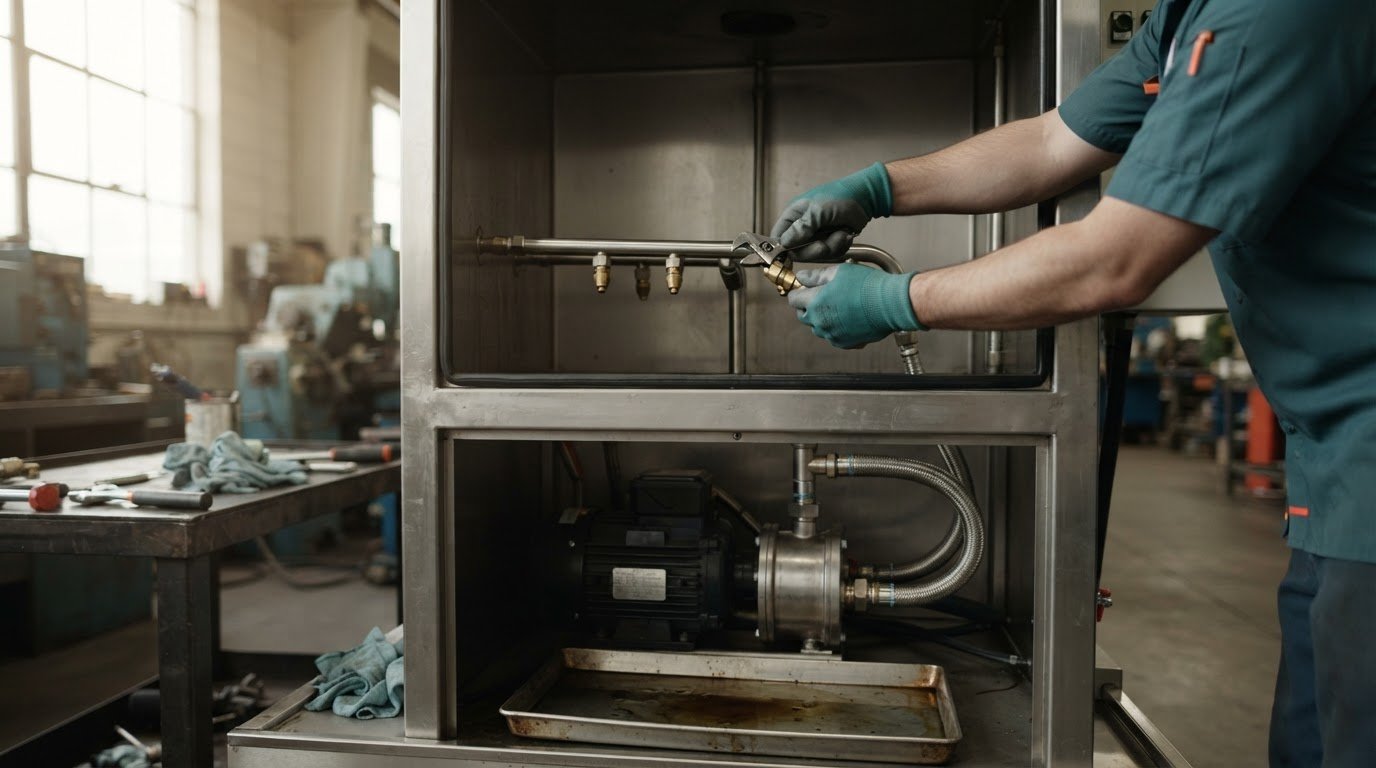
- Inspect the turntable, drive, and pump together during planned service. Check the turntable for hesitation, uneven rotation, or unusual noise, then look for visible wear or looseness in the drive. Inspect the pump for leaks, vibration, and buildup. A turntable that stops rotating can leave some surfaces with less spray, while a pump fault can reduce solution circulation.
Log the machine’s condition and any corrective action in its service record. Compare the next inspection with that entry to identify recurring wear.
- Follow the washer’s operating procedure to release pressure before opening or servicing pump connections. Check pressure-relief components for visible damage, leaks, or residue that could interfere with operation. If the pump or associated lines need draining, direct the cleaning solution into a suitable container and control the work area.
Never assume a stopped machine is depressurized. Follow the equipment instructions for shutdown and drainage, and record the service performed before returning the washer to operation.
- Use pressure and motor-current trends to guide pump maintenance instead of waiting for a complete failure. If pressure falls below its baseline or current rises above the motor’s nameplate rating, investigate the pump and operating conditions. Check for restricted flow, accumulated residue, and changes in cleaning-solution condition before deciding on corrective work.
Record readings before and after maintenance. Comparing them shows whether the work restored normal operation and helps distinguish a recurring pump problem from a process change, such as heavier soil on incoming parts.
- Review motor temperature and surrounding conditions during each inspection. Unusual heat, noise, or vibration can signal a developing issue, so document where and when the change occurs. Compare these observations with pressure and current readings for a clearer picture of the machine’s condition.
Use the combined record to schedule service during planned downtime. A consistent log helps the maintenance team act on early changes instead of reacting after cleaning performance declines.
Wash and rinse nozzle inspection and flushing
Inspect nozzle coverage and nearby machine components during planned maintenance. A blocked spray pattern can leave residue in pockets and passages, even when exposed surfaces look clean.
- Shut down the washer according to its operating instructions before inspecting or flushing nozzles. Wear appropriate personal protective equipment when operating or servicing the equipment, and handle cleaning solution carefully. Remove each nozzle only as the equipment procedure allows, then check for blockages, damage, or uneven openings.
Flush the nozzle and passage using a method compatible with the washer and its cleaning chemistry. Don’t push debris farther into the spray line. Refit the nozzle securely, then check during operation that its spray reaches the intended areas of the part.
- Inspect the cabinet, door, and safety system for damage that could affect operation. Check that the door closes properly and visible safety components remain intact. Look for residue around the door and cabinet seams, since buildup can interfere with closure or obscure signs of wear.
Record faults, and keep the washer out of service if a damaged safety component prevents safe operation. Follow the machine’s instructions before returning it to use.
- Inspect high-pressure hoses and couplings along their visible length. Look for leaks, cracking, abrasion, loose connections, or bulges that could signal deterioration. Pay particular attention to bends and connection points, where movement or rubbing can affect hose condition.
Address a damaged hose or coupling before operating the washer. A leak can reduce pressure and disrupt spray coverage, while escaping fluid can create a handling hazard.
- Inspect pump seals and spray-arm bearings for leaks, residue, or visible wear. A leaking seal can release cleaning solution, while a worn bearing can affect spray-arm movement and nozzle coverage. Where the equipment procedure permits, check for smooth movement and note unusual resistance or noise.
Compare each inspection with earlier service records. Recurring leaks or restricted movement can reveal a developing maintenance issue before it affects cleaning performance.
- Check the electrical control panel for visible damage, contamination, or moisture. Keep it closed during normal operation, and follow the washer’s service instructions before any inspection that requires access. Refer electrical faults to qualified maintenance personnel rather than touching exposed components.
For help matching washer maintenance needs with parts washing and cleaning chemistry, discuss parts washer maintenance options. Record nozzle condition, flushing, and any defects found, so the next inspection can track changes across the machine.
The Global One Group: Industrial Parts Washers
The Global One Group supplies industrial parts washers, parts-washing chemistries, and replacement parts for Magido and Fountain equipment. Turn to the team when you need equipment, cleaning chemistry, or replacement parts to support your maintenance plan.
Match the washer and cleaning chemistry to your components, soils, and production demands. For Magido and Fountain equipment, suitable replacement parts can support planned upkeep and help maintenance teams address worn components. The Global One Group supplies parts-washing equipment, chemistries, and relevant replacement parts.
Contact The Global One Group to discuss your parts washer, cleaning chemistry, or Magido and Fountain parts needs.
Make Maintenance Part of the Operating Plan
Assign each maintenance task an owner and include it in the production plan. A shared service log helps operators and maintenance staff pass along emerging issues without relying on memory or informal shift notes. Use the records to refine the schedule as workloads and cleaning demands change.
Preventative maintenance for parts washers works best as an ongoing operating discipline, not as a response to the latest breakdown. Keep the process practical: document findings, assign follow-up, and make unresolved issues visible before they disrupt production. This routine gives your team a stronger basis for planning repairs, replacement parts, or a washer suited to its cleaning requirements.
For parts-washing needs involving equipment, chemistry, or Magido and Fountain parts, contact The Global One Group to discuss the next step. Put a clear maintenance plan in motion and keep your operation moving.
Frequently Asked Questions
What routine preventive maintenance should be performed on parts washers?
Preventative maintenance for parts washers should combine routine checks with condition-based follow-up. Keep a service log linking each finding to operating hours, workload, and cleaning results. For example, note whether residue appeared after processing a particular type of component. This helps distinguish recurring process issues from isolated faults and gives maintenance staff useful context before they adjust equipment, chemistry, or service timing.
How often should parts washer components be inspected and serviced?
Set inspection frequency according to operating hours, production workload, and the washer’s service instructions. A heavily used machine may need closer attention than one that runs intermittently. Separate quick operational checks from planned service, and bring an inspection forward if cleaning results change or the machine develops unusual noise, leaks, or vibration. Record why the schedule changed so it reflects actual conditions rather than guesswork.
How do you clean and replace parts washer filters and strainers?
Shut down the washer using its operating procedure, then remove the strainer or filter element as directed. Clear trapped debris without pushing it into the fluid path, and inspect the element for damage or persistent blockage. Reinstall a reusable component only when clean and intact; replace disposable or damaged elements with compatible parts. Record the change and check the washer’s flow during its next operation.
How should parts washer cleaning solution be monitored, tested, and replaced?
Monitor solution condition through cleaning results, visible contamination, and checks recommended for the specific chemistry. If parts emerge with residue or the fluid contains accumulated oil and debris, assess filtration and solution condition before the next run. Follow the chemistry instructions for testing and replacement decisions. Set recurring replacement cycles, and manage used solution according to applicable local requirements.