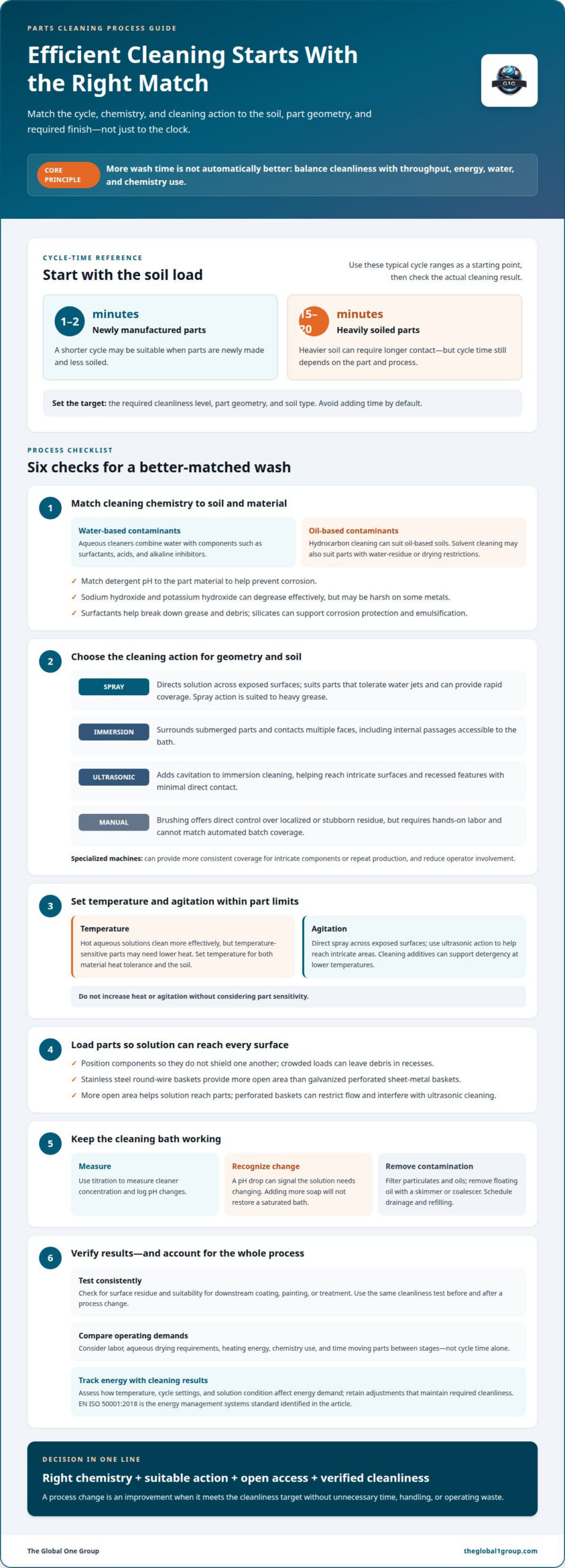
A longer wash cycle isn’t automatically a better one. Parts washers typically run 1–2-minute cycles for newly manufactured parts and 15–20-minute cycles for heavily soiled parts. Improving parts cleaning efficiency means matching the cycle and cleaning method to the soil, part geometry, and required cleanliness, rather than adding time by default.
When parts queue up or come out with residue, the washer can become a bottleneck, costing production time and adding rework. Improving parts cleaning efficiency means balancing cleaning results with throughput, energy, water, and chemistry use, without overloading the equipment or each batch.
This guide compares aqueous and solvent methods, explains what affects cycle time, and shows how batch loading affects cleaning access. It also covers aqueous washer types, including spray, rotary basket, and ultrasonic systems, to help you match the cleaning method to your parts and soils. Use these factors to identify process changes that can improve results and reduce operating waste.
Key Takeaways
- Match aqueous or solvent cleaning to the part material, type of soil, and drying requirements to avoid an ineffective process.
- Choose between immersion, spray, manual, or specialized cleaning based on the part’s geometry, contamination, and required throughput.
- Move parts into cleaning promptly after production to limit exposure to airborne contaminants and reduce cleaning challenges.
- Adjust basket loads to give cleaning solution better access to every part, rather than sacrificing cleanliness for a larger batch.
- Compare washer mechanisms: spray action suits heavy grease, while ultrasonic agitation can reach intricate surfaces with minimal contact.
1. Choosing between aqueous and solvent cleaning
Start with the soil, part material, and required finish. Aqueous cleaning combines water with soluble components such as surfactants, acids, and alkaline inhibitors. Solvent cleaning may suit parts that must avoid water-related residue or have drying restrictions. The right process also depends on solution temperature and concentration, soil compatibility, mechanical action, and exposure time.
Hydrocarbon cleaning can suit oil-based contaminants, while aqueous cleaners can address water-based contaminants. Match the detergent’s pH to the part material to help prevent corrosion. Sodium hydroxide and potassium hydroxide can degrease effectively but may be harsh on some metals. Surfactants help break down grease and debris, while silicates can support corrosion protection and emulsification.
Set the operating temperature according to the material’s heat tolerance and the soil being removed. Hot aqueous solutions clean more effectively, but temperature-sensitive parts may need lower heat. Cleaning additives can support detergency at lower temperatures. Match agitation to the part geometry and contamination: spray action directs solution across exposed surfaces, while ultrasonic action can help reach intricate areas. Avoid increasing heat or agitation without considering part sensitivity.
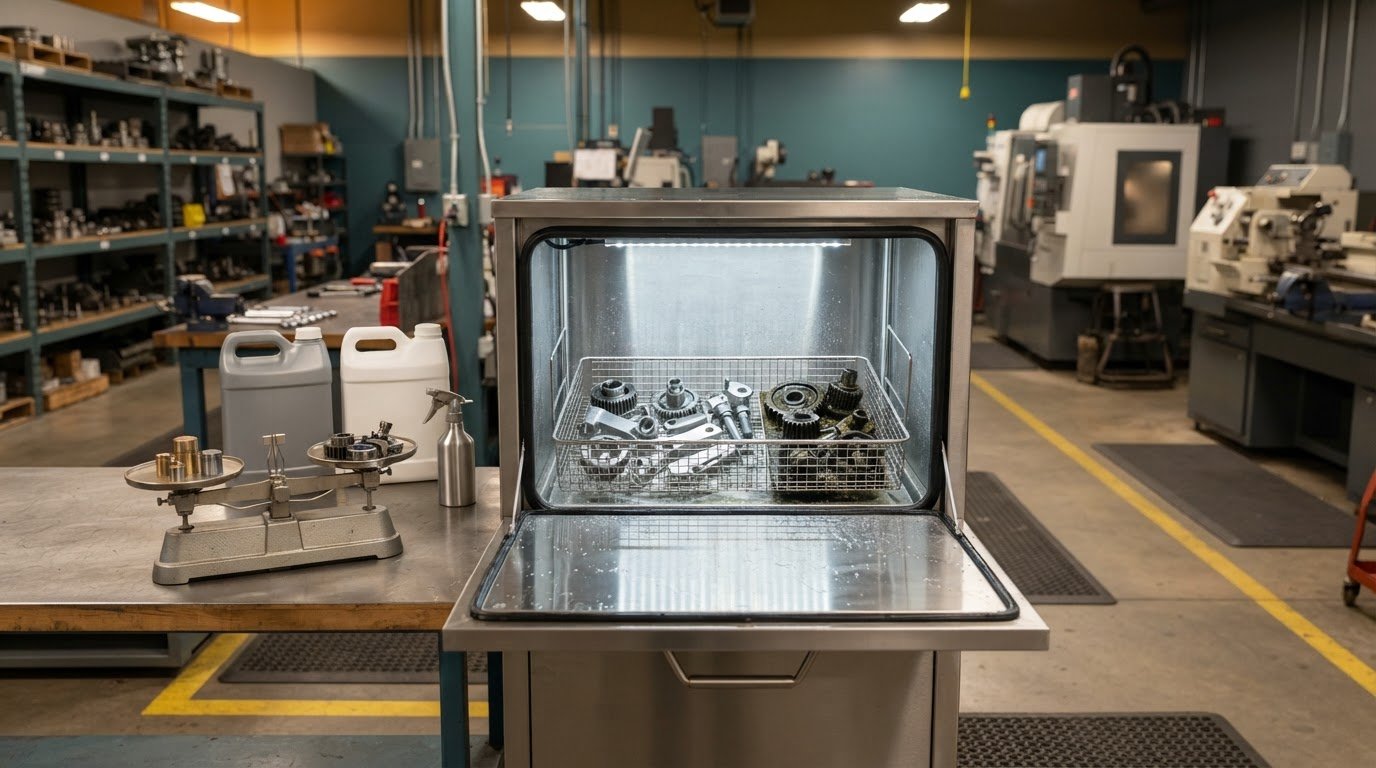
Basket design affects how much cleaning solution reaches each surface. Stainless steel round-wire baskets provide more open area than galvanized perforated sheet-metal baskets, helping solution reach parts and avoiding ultrasound deflection. A perforated basket can restrict flow and interfere with ultrasonic cleaning. Position components so they do not shield one another. A crowded load can leave debris in recesses even when the cycle runs normally.
Monitor cleaning solution concentration and pH. Operators can use titration to measure cleaner concentration and log pH changes. A pH drop can signal that the solution needs changing. Adding more soap will not restore performance once the bath becomes saturated. Filter particulates and oils, remove floating oil with a skimmer or coalescer, and schedule drainage and refilling to limit solution degradation.
Test parts after cleaning and compare results when a process change affects the wash. Check for surface residue and whether the finish is suitable for downstream coating, painting, or treatment. Use the same cleanliness test before and after adjustments to distinguish a genuine improvement from a change that merely shifts contamination elsewhere.
Track energy use alongside cleaning results. The International Organization for Standardization identifies EN ISO 50001:2018 as the energy management systems standard covering requirements and guidance for use. Apply that energy-management perspective to the washer operation: assess how temperature, cycle settings, and solution condition affect energy demand, then retain adjustments that maintain the required cleanliness.
2. Comparison with immersion, spray, manual, solvent, and specialized machine cleaning
Match the method to the soil, material, geometry, and production rate. Aqueous cleaners suit water-based contaminants, while hydrocarbon cleaning targets oil-based soils. Spray washing directs solution across exposed surfaces; immersion surrounds submerged parts and can use ultrasonic action to reach recessed features. Manual cleaning offers direct control over localized residue but requires hands-on labor. For intricate components or repeat production, a specialized machine can provide more consistent coverage.
Spray systems suit parts that tolerate directed water jets and need rapid coverage. Immersion works when the solution must contact multiple faces, including internal passages accessible to the bath. Ultrasonic immersion adds high-frequency sound waves that create cavitation, helping dislodge contaminants from complex surfaces. Manual brushing can target stubborn deposits but cannot match automated coverage across a recurring batch. The effect on throughput depends on part shape, soil load, and the handling each cycle requires.
Solvent washing can be useful when parts must avoid water-related contaminants or residue, or when drying creates a production constraint. Hydrocarbon cleaners suit oil-based contamination; aqueous cleaning is a practical option for water-based soils. If wet parts enter a hydrocarbon cleaning machine, dip them in a hydrocarbon bath first to remove water. Vapor degreasing also requires water-free parts, so control moisture before loading. These steps help prevent water from interfering with the selected solvent process.
Specialized equipment can improve cleaning performance and reduce operator involvement. Ultrasonic machines can clean complex metal components and intricate parts where direct spray may miss recessed surfaces. Automated systems can reduce workers’ exposure to toxic cleaning chemicals by eliminating manual handling. For solvent handling, reduce repeated direct contact by using machine-based cleaning and following the equipment’s operating instructions. Keep the process compatible with both the contaminant and the machine.
Compare operating costs through the work each method demands, not cycle time alone. Include labor for manual washing, drying requirements after aqueous cleaning, energy for heating, chemistry use, and the time needed to move parts between stages. An immersion process may need longer contact, while spray or automated cleaning can fit a repeatable manufacturing flow. The best choice is the method that meets the cleanliness target without unnecessary steps or rework. For a process-specific chemistry match, explore parts washing and chemistries.
3. How Long Does the Parts Cleaning Process Take?
Cycle time depends on soil, part geometry, and the cleaning process. Parts washers typically use 1–2-minute wash cycles for newly manufactured parts and 15–20-minute cycles for heavily soiled parts. Those figures describe wash cycles, not total time through production. Loading, unloading, queueing, and movement between manufacturing stages also influence how quickly cleaned parts return to work.
Move parts directly from production into cleaning, especially when cutting oil or coolant remains on the surface. Parts can become contaminated again after one hour in a plant environment with airborne particulates. Storage adds delay and gives oils, rust, and other contaminants more opportunity to complicate washing. A direct handoff limits exposure and keeps cleaning aligned with production flow.
Intermediate cleaning can help when residues from one production stage interfere with the next. Different cutting fluids or coolants, for example, may produce unsatisfactory results if parts wait until final cleaning. Cleaning between manufacturing phases removes process media earlier, rather than allowing mixed contamination to build. Reducing rust and coolant contamination before washing can also save time and resources while helping the cleaning solution last longer.
Automation changes how staff time factors into the process. Automated parts cleaners can reduce personnel requirements, improve safety, and shorten cleaning cycles by limiting manual handling. With an ultrasonic machine, an operator sets the cleaning time and temperature, then lets the equipment run. This frees staff for other production tasks while the machine follows a repeatable cycle. Match settings to the actual soil load. Extending every cycle to handle occasional heavy contamination can slow the whole line.
Common efficiency problems include delayed cleaning, accumulated rust or coolant, burrs, and using fine-cleaning equipment for general-purpose work. Prevent them by moving parts promptly, reducing contamination before washing, and removing burrs in a separate deburring process, such as brushing or high-pressure processing. Reserve fine-cleaning machines for fine-cleaning work. Accumulated dirt can contaminate parts and contribute to rejects.
Consistent results also depend on equipment condition. Follow the machine manufacturer’s maintenance recommendations to catch issues before they affect a batch or return cleaned parts to production. If results worsen between stages, review where contamination enters, then adjust the handoff or cleaning point. This keeps production moving without adding unnecessary cycles or relying on manual rework.
4. Reducing batch loads
A basket packed to capacity can block cleaning solution from reaching part surfaces. Reduce the number of parts in each load so spray and flow can contact more faces, edges, and recesses. For example, separate nested components instead of stacking them tightly. A smaller load may improve cleanliness and reduce rework, while an overloaded basket can leave grease or debris behind. Set the load according to part geometry and soil, not the basket’s maximum physical capacity.
Arrange parts to expose surfaces that collect the most contamination. Keep openings clear, avoid placing one component directly over another, and leave room for solution to circulate. If parts still emerge inconsistently, reduce the load again and compare results under the same cleaning conditions. This gives operators a practical way to find a repeatable batch arrangement without changing several process variables at once.
Water use matters in both aqueous cleaning and rinsing. The Environmental Protection Agency suggests high-pressure spray nozzles as one way to reduce water use in parts cleaning. Direct the spray toward contaminated surfaces so the washer can remove soil without unnecessary flow. Nozzle placement and pressure must suit the parts and equipment. A poorly aimed forceful jet can miss recessed areas, while a well-directed spray can improve contact with grease and debris.
Cascade rinsing can also reduce fresh-water demand. Use cleaner water for the final rinse, then move it to an earlier rinse stage as it becomes less clean. This reserves the cleanest water for the finished surface and makes better use of each rinse volume. Monitor residue on the parts and adjust the flow when the final rinse no longer delivers the required cleanliness.
Reducing waste means keeping the cleaning bath useful, not just reducing batch size. Filtration can remove particulates and oils from aqueous solutions; oil skimmers or coalescers can remove floating oil. These steps help preserve solution performance and reduce avoidable disposal and replacement. Remove accumulated sludge and keep filters clear so debris does not return to the wash stream or restrict equipment performance.
Track each batch using the same cleanliness checks and operating settings. Record load arrangement, visible residue, and any rinse adjustment, then compare the next run. A consistent process makes it easier to see whether reduced batch loading or water changes improved results. Manufacturers face pressure to reduce energy and water consumption while maintaining cleaning performance, so assess sustainability measures by both resource use and the condition of cleaned parts.
5. Aqueous washer types and cleaning mechanisms
Aqueous washers combine water-based solutions with surfactants, emulsifiers, and mechanical action. Surfactants reduce surface tension and help emulsify oils and grease; builders soften water and increase alkalinity. Washer design determines how the solution contacts components. Choosing the right mechanism is central to improving parts cleaning efficiency because part geometry, soil, throughput, and material sensitivity all shape the result.
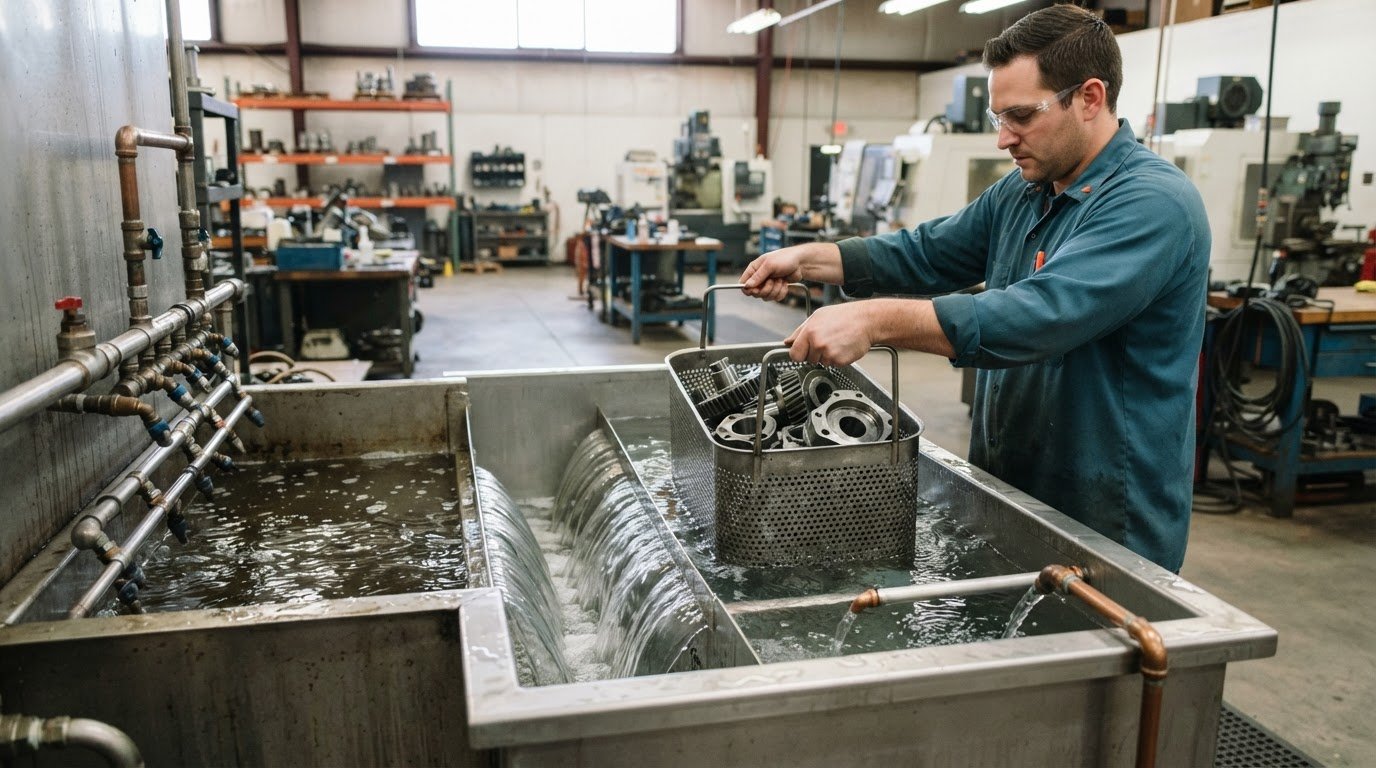
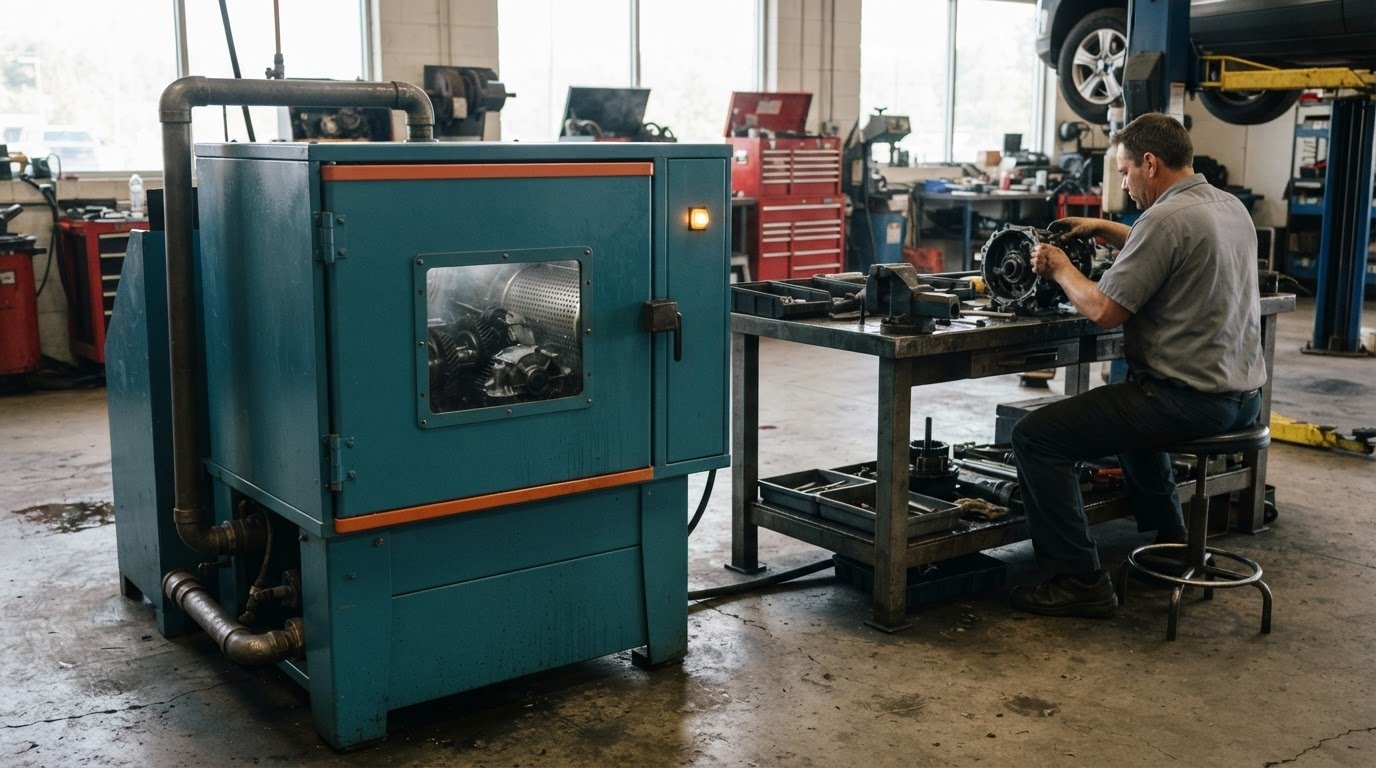
Spray washers direct water jets across exposed surfaces. They suit heavy grease and parts that tolerate direct spray. Position components to expose contaminated areas, especially pockets and undersides, rather than letting one part shield another. Rotary basket systems turn parts inside the cleaning chamber, changing their orientation for broader solution coverage. Both methods depend on access: blocked surfaces limit cleaning, regardless of the chemicals in the tank.
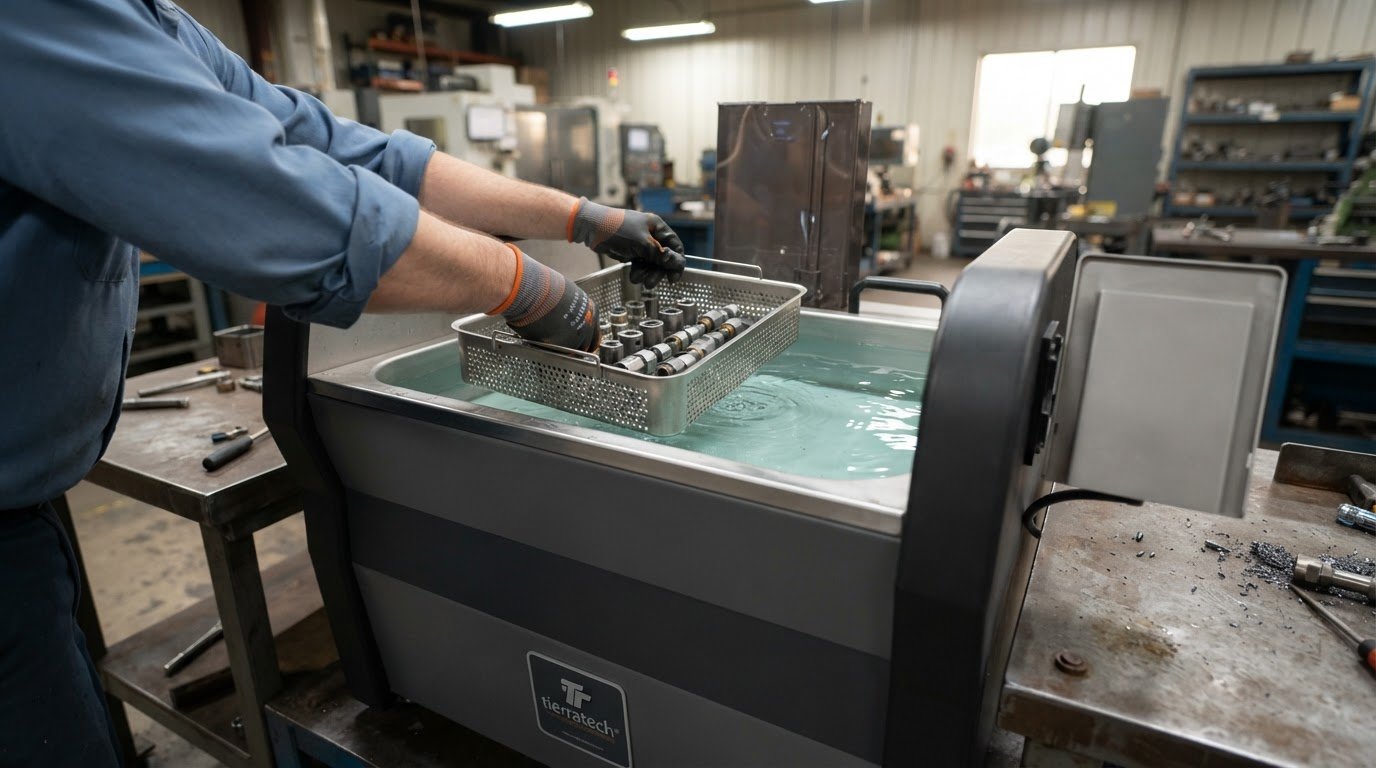
Immersion washers submerge components in cleaning solution, allowing contact across multiple faces. Ultrasonic washers add high-frequency sound waves that create microscopic bubbles. These bubbles implode at the part surface, producing cavitation that dislodges contaminants. This minimal-contact action suits delicate or intricate components, including parts with cavities that spray may not reach uniformly. Spray agitation is recommended for heavy grease, while ultrasonic agitation suits delicate parts.
Production volume helps determine the machine format. Batch washers suit low-volume applications: operators load parts, run a cycle, and unload them. Inline systems suit high-throughput operations by moving parts through a continuous cleaning process. A batch washer can accommodate varied jobs and changing loads, while an inline system can support steady production flow. Match equipment capacity and cleaning action to the work, not just the peak output target. That fit supports improving parts cleaning efficiency without adding unnecessary process steps.
Temperature and chemistry shape performance. Hot aqueous solutions can clean more effectively, but heat-sensitive materials may need lower temperatures. Formulations for immersion and spray should control foam, since excess foam can interfere with solution contact. Balance cleaning strength, solubility, foam control, and bath stability. Filtration and recycling can reduce water use by removing oils and particulates. For ultrasonic applications, open round-wire baskets allow solution access and avoid deflecting ultrasound waves.
Start selection with the soil and component: use spray action for heavy grease, ultrasonic cavitation for intricate or delicate parts, and rotary movement when changing orientation improves coverage. Then match batch or inline operation to production volume. Comparing these mechanisms against the required finish and workflow is a practical route to improving parts cleaning efficiency. Explore washer options for your cleaning process and align the cleaning mechanism with your application.
The Global One Group
The Global One Group helps manufacturers match cleaning methods with parts washers and chemistries. Turn to the team when soil type, component material, batch loading, or inconsistent cleaning results raise questions about your process. The Group also offers replacement parts for Magido and Fountain equipment to support maintenance needs for those washer brands.
Clarify the cleaning challenge by describing the parts, contaminants, current method, and required result. This context helps identify relevant parts washing equipment, chemistry, or replacement parts. Contact The Global One Group to discuss your parts-cleaning needs.
Turn your cleaning process into a measurable improvement plan
Make the next change deliberate. Choose one production line or part family, define the cleanliness result it must meet, and record current process performance. Then adjust one operating variable at a time. This approach shows whether a change improves results or simply shifts the burden to another stage.
Assess outcomes using the measures that matter on your shop floor: accepted parts, rework, throughput, and resource use. If a change improves one measure but harms another, refine the process before applying it more widely. A consistent review gives operators and decision-makers a shared basis for adjusting the process and sustaining gains.
Improving parts cleaning efficiency takes more than selecting a washer. It requires decisions that connect cleaning performance to the realities of production. The Global One Group can help you discuss the right next step for your parts-cleaning operation. Contact The Global One Group today to start the conversation and move toward a process that works harder for your production goals.
Frequently Asked Questions
How Long Does the Parts Cleaning Process Take?
Wash cycles typically range from 1–2 minutes for newly manufactured parts to 15–20 minutes for heavily soiled parts. Total turnaround also includes loading, unloading, and any queue before the washer. For example, a short cycle can still hold up production if batches wait for an operator or machine. Track complete time from production handoff to clean-part release, not just the washer’s programmed cycle.
Why Ultrasonic Cleaning?
Ultrasonic cleaning uses sound waves in a solution to create cavitation, which helps dislodge contaminants from intricate surfaces. It can suit parts with cavities or recesses that spray may not reach directly. Examples include metalworking parts with oil or shavings, and rubber or plastic components carrying mold release agents. Choose it when part geometry makes direct cleaning access difficult, and match the solution to the material and soil.
What factors affect parts cleaning efficiency in industrial operations?
Soil type, part material, geometry, and required cleanliness all affect the process. Solution concentration, temperature, mechanical action, and exposure time also shape results. A machined component with cutting oil presents a different challenge from a delicate part with residue in narrow passages. Production timing matters too: stored parts can collect airborne contaminants. Consider these factors together, since changing one setting may affect cleaning performance elsewhere.
How can parts cleaning processes be optimized step by step?
Start by identifying the part material, contamination, and required finish. Select compatible chemistry and washer action, then set temperature and cycle conditions for the soil and component. Arrange the load to expose surfaces and run a representative batch. Inspect the cleaned parts using a consistent cleanliness test. Change one process variable at a time, record the result, and retain adjustments that meet the required standard without adding unnecessary handling.
What are typical cycle times and throughput rates for industrial parts cleaning equipment?
Typical wash cycles run 1–2 minutes for new manufactured parts and 15–20 minutes for heavily soiled parts. Throughput depends on more than cycle duration: batch size, loading and unloading, and machine format all affect parts processed over a shift. Batch washers suit lower-volume work, while inline systems suit high-throughput operations. Compare completed, acceptable parts over the production period rather than relying on cycle time alone.
How can parts cleaning equipment reduce water and energy use?
Use directed high-pressure spray and maintain effective filtration or recycling to reduce water demand. The Environmental Protection Agency suggests high-pressure spray nozzles as one way to reduce water use in parts cleaning. For energy, avoid heating beyond what the soil and material require; heat-sensitive parts may need lower temperatures. Ultrasonic cleaning can operate at lower temperatures than traditional methods, which may reduce energy use while protecting heat-sensitive components.
What safety and environmental regulations apply to industrial parts cleaning in the United States?
Parts washers and solvent degreasers are available that meet EPA and OSHA standards, and some are BACT-approved for use in California. Some cleaning chemicals are being phased out or banned, so manufacturers should seek written assurances from suppliers about regulatory impacts in their region.