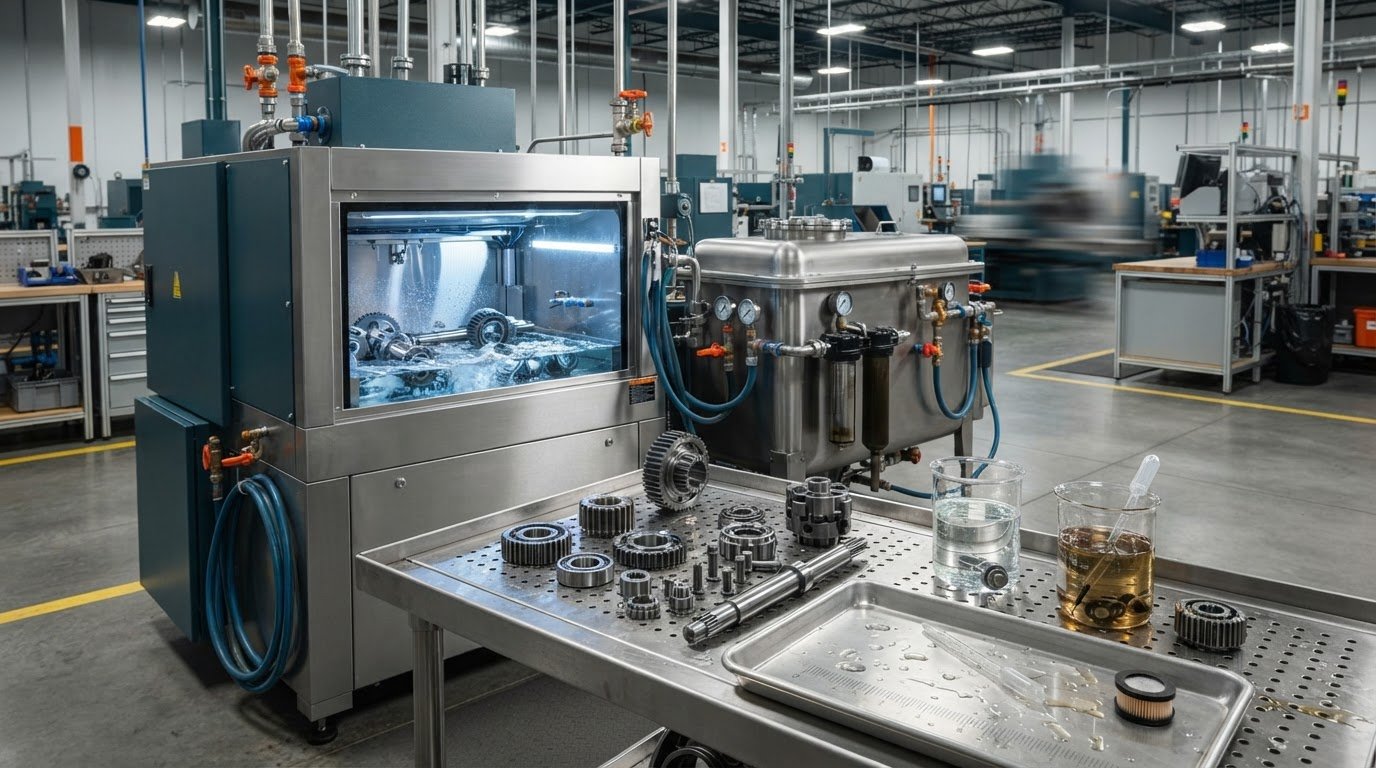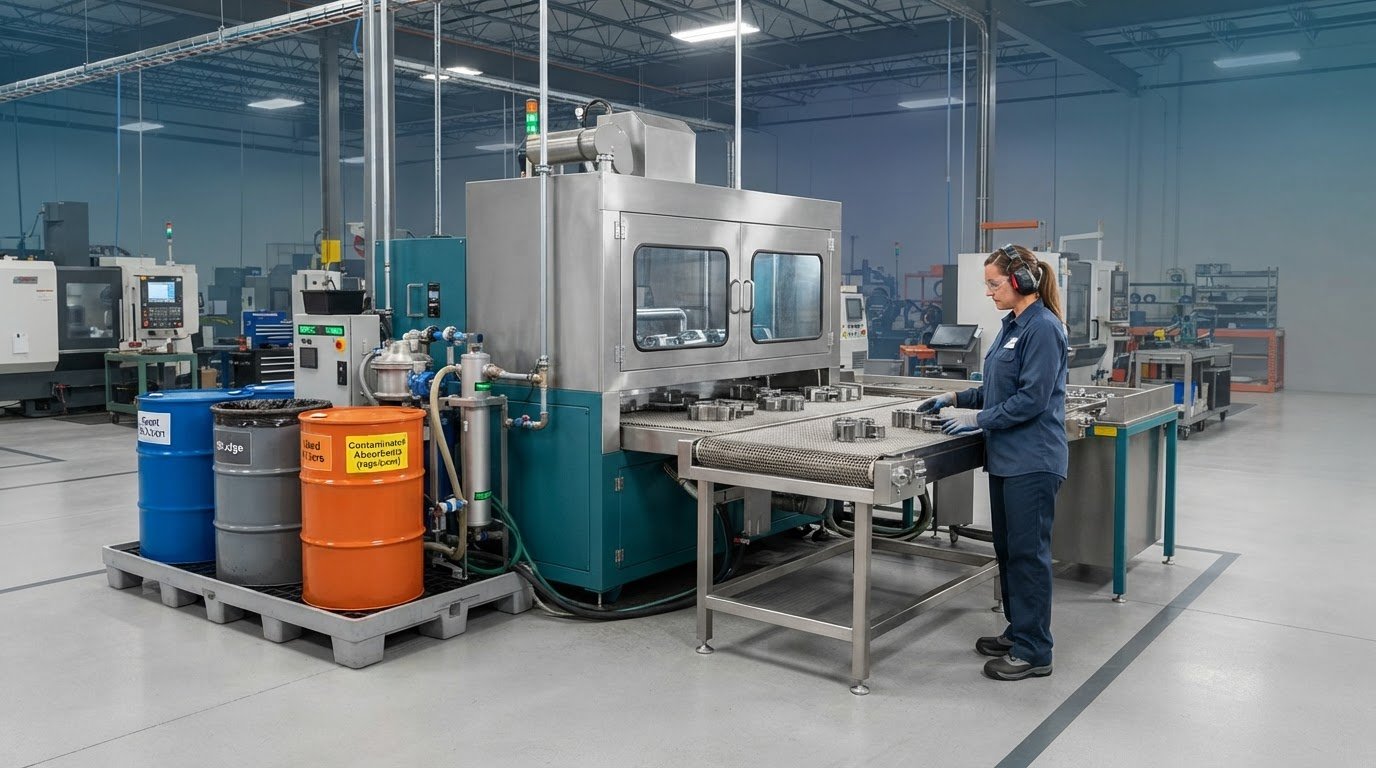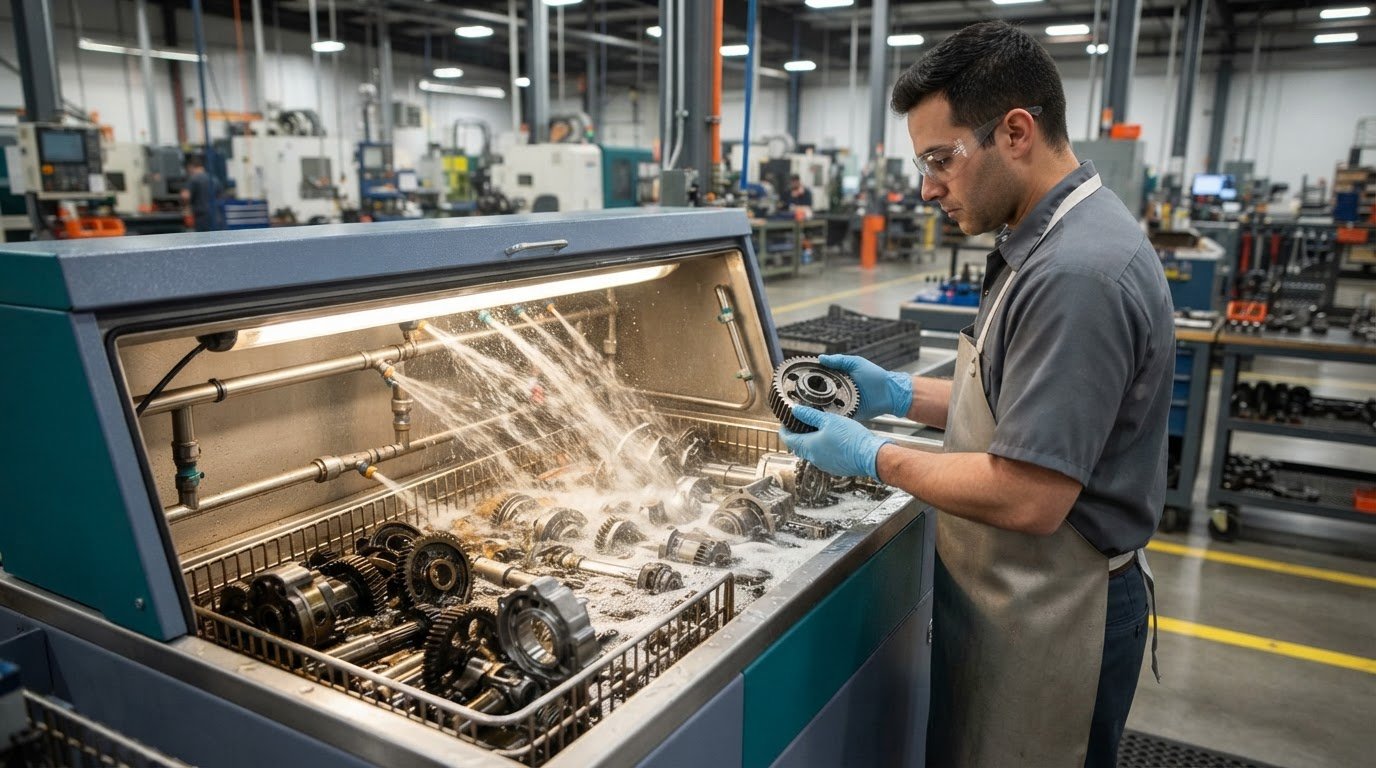
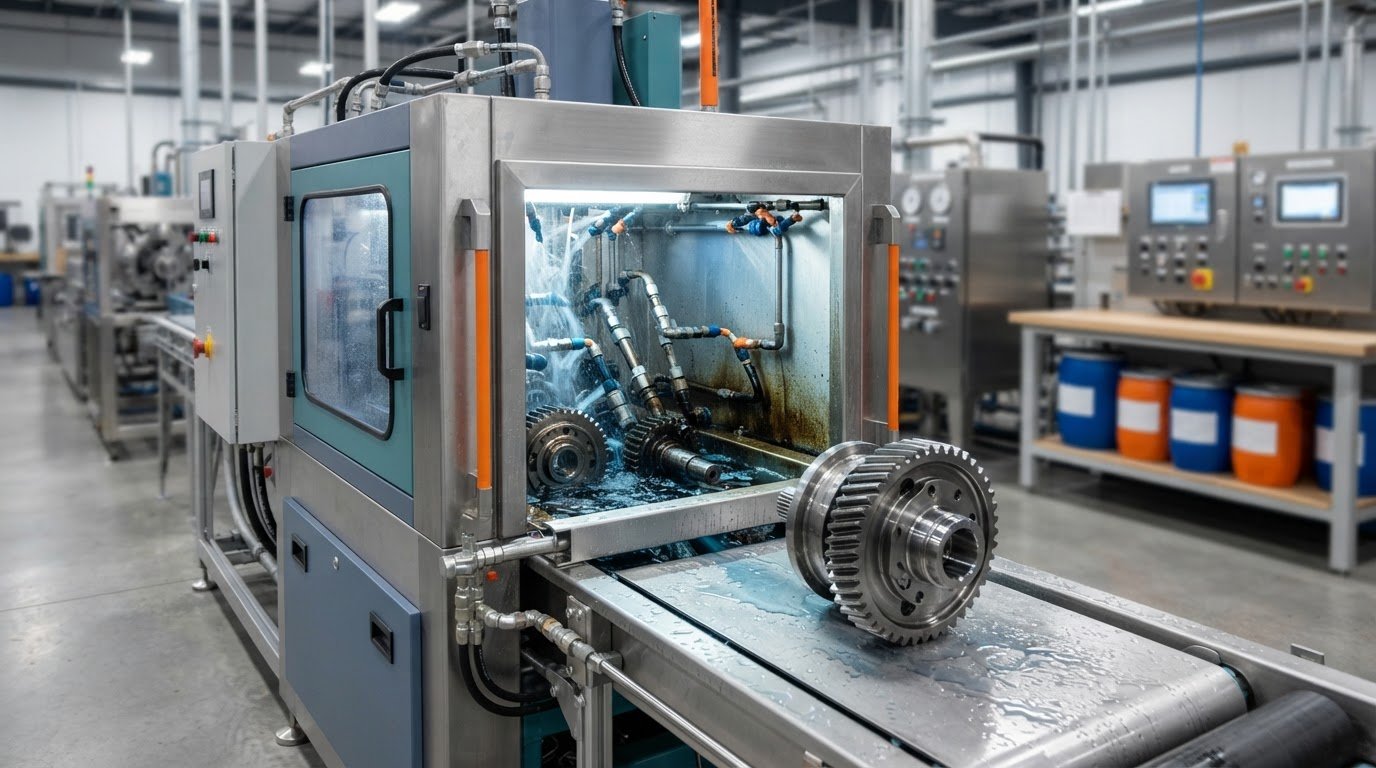
More aggressive isn’t always more effective. The wrong heavy duty degreasing chemical can leave oily residue behind, delay a part’s return to production, or create compatibility concerns for sensitive materials. The right choice depends on more than how stubborn the grease looks.
If thick oils and shop soils are disrupting your cleaning process, choose a cleaner that fits the actual job. Start by identifying the soil, the part materials, and how the washer operates. This guide explains what to compare and how to avoid relying on chemical strength alone.
Washer temperature, cleaning action, and process requirements all affect cleaner selection. Material compatibility and product documentation matter, too. The Global One Group supplies industrial parts washers and parts-washing chemistries, so operations can consider the cleaner alongside the equipment and cleaning process. Use the steps below to make chemistry decisions more consistent and keep cleaning performance aligned with your operation.
Key Takeaways
- Match cleaner selection to the soil, part material, and washer process.
- A heavy duty degreasing chemical works as part of a cleaning system, not as a standalone measure of strength.
- Consider how washer action, temperature, and dwell time may influence results.
- Use product labels and Safety Data Sheets to guide handling and use, then evaluate the cleaner against your process requirements.
- Align parts-washing chemistry with washer requirements to support consistent cleaning and keep parts moving through production.
Why a Heavy Duty Degreasing Chemical Must Match the Cleaning Job
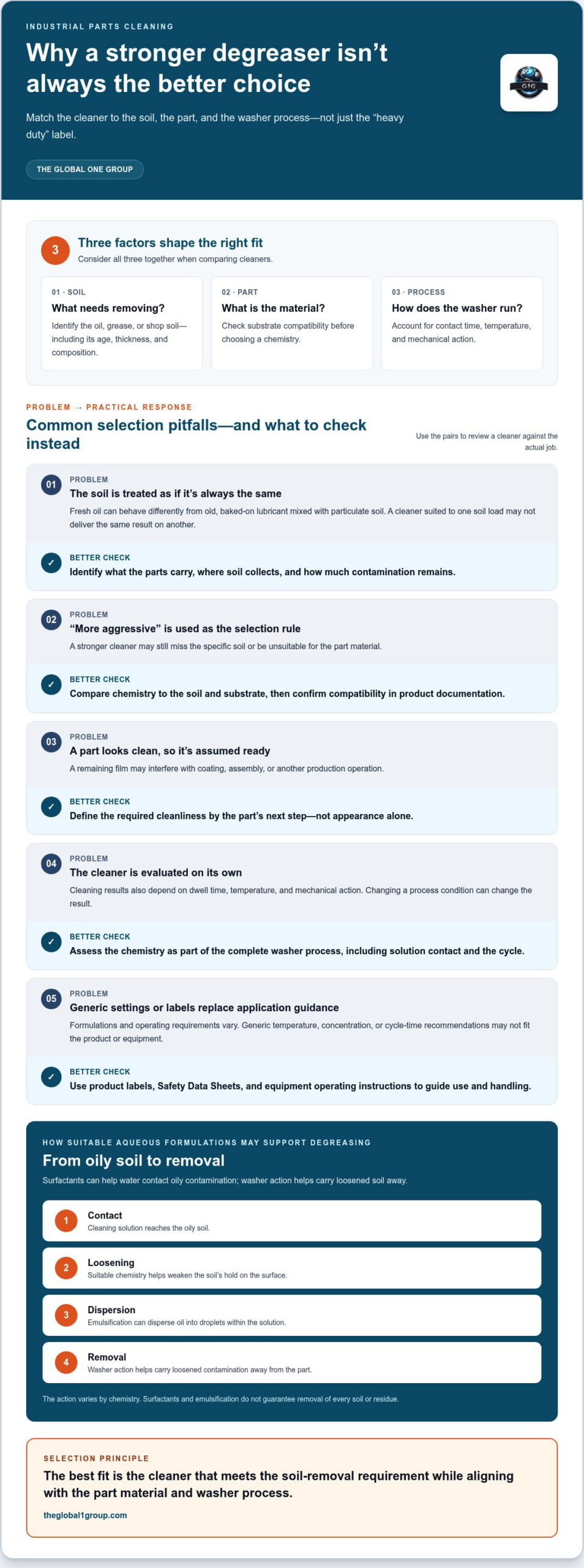
A heavy duty degreasing chemical is selected to remove demanding industrial oils, grease, and residues under defined washer and process conditions. The right choice depends on the soil, part material, and cleaning process working together. Choosing by “strength” alone can miss the real requirement: removing contamination without creating a problem for the next production step.
A part that looks clean may still carry a film that interferes with coating, assembly, or another operation. Define the required cleanliness by what happens next, not by appearance alone. The broad purpose of degreasing is to remove unwanted oils and similar contaminants, often to prepare a surface for a subsequent process. In production, the acceptable result depends on the part’s intended use and process requirements.
What makes industrial grease difficult to remove?
Accumulated oils, lubricants, and shop soils can resist routine cleaning, particularly when they form thick layers or combine with other residues. Soil age, thickness, and composition all affect how readily a cleaner can reach and remove contamination. A fresh oil film may respond differently from old, baked-on lubricant mixed with particulate soil.
That variability matters on the shop floor. A cleaner suited to one soil load may not deliver the same result on another. Before selecting chemistry, identify what the parts carry, where the soil collects, and how much contamination remains. Don’t assume one chemical will remove every contaminant from every part.
Why chemical strength alone is a poor selection rule
A more aggressive cleaner can still be the wrong match. It may not address the specific soil effectively, and the part material may limit which chemistry is appropriate. Account for substrate compatibility and the equipment’s operating conditions. Check those details against the product documentation rather than relying on a general label such as “heavy duty.”
Cleaning results also depend on the balance of chemistry, time, temperature, and mechanical action. Washer action brings the cleaning solution into contact with soils, while process time and temperature can influence how the chemistry performs. A change in one condition may affect the result, so evaluate the cleaner as part of the complete washing process.
Degreaser fit depends on the complete cleaning process, not chemical strength alone. Start with the soil and the cleanliness required for the next step, then account for the parts and washer conditions. This gives operators a practical basis for comparing options and helps prevent visible soil removal from being mistaken for a production-ready clean.
How Heavy Duty Degreasing Chemicals Break Down Tough Soils
A heavy duty degreasing chemical works through its interaction with the soil and the cleaning process. In suitable aqueous formulations, surfactants can help water make better contact with oily contamination. They can loosen soil from a surface and help disperse it into the cleaning solution. The action varies by chemistry, so don’t assume every degreaser behaves the same way.
How surfactants and emulsification support degreasing
Emulsification disperses oil into small droplets within a liquid so it can be carried away rather than remaining as one continuous film. Some surfactants support this process by reducing the barrier between water and oil. They can help lift soil from a part, but they don’t guarantee removal of every soil or residue.
- Contact: The cleaning solution reaches the oily soil.
- Loosening: Suitable chemistry helps weaken the soil’s hold on the surface.
- Dispersion: Emulsification can break oil into droplets within the solution.
- Removal: Washer action helps carry loosened contamination away from the part.
Surfactants help loosen and disperse oily soil when the formulation and cleaning process suit the application. Product documentation should guide chemistry-specific decisions, since ingredients and performance vary among formulations.
How washer conditions affect cleaning action
Chemistry is only one part of the process. Dwell time gives the solution an opportunity to act on contamination. Temperature can influence cleaning behavior, while mechanical action, such as solution flow or spray impact, helps reach and remove loosened soil. These factors interact, so a process change may affect results even when the cleaner stays the same.
Start with the washer’s actual process and requirements. Consider how the parts sit in the equipment, whether the solution reaches contaminated surfaces, and whether the cycle allows enough contact for the selected chemistry. Don’t apply generic temperature, concentration, or cycle-time recommendations without product and equipment guidance. Check operating instructions and material compatibility in the relevant documentation.
For a practical framework that connects cleaner selection to the cleaning task, review this industrial parts-washing chemistry selection guide. The Global One Group supplies specialized parts-washing chemistries alongside industrial parts washers, helping operations evaluate chemistry and equipment as parts of one cleaning process. Explore industrial parts-washing solutions while assessing your application.
Compare Heavy Duty Degreaser Options by Soil, Substrate, and Process
Compare cleaners against the conditions they must handle, not just a “heavy duty” label. A useful first step is to record the soil, part material, washer process, and required result. Use the table to organize that review, then confirm formulation-specific compatibility and operating guidance in the product documentation.
| Soil type | Substrate considerations | Washer process | Desired result |
|---|---|---|---|
| Thick oil or grease | Identify every material in the load, including mixed-metal parts. Check compatibility for each substrate. | Assess how the equipment delivers solution to covered surfaces and whether the process supports the selected chemistry. | Remove the grease to the level needed for the next operation. |
| Light oil or lubricant film | Consider sensitive surfaces, finishes, and any material-specific restrictions. | Match the cleaner to the washer’s approved use and cleaning cycle. | Achieve the required surface condition without unnecessary residue. |
| Oil combined with particulate or other shop residue | Review all part materials together, especially when a batch includes mixed metals. | Consider whether the process reaches crevices and lifts contamination from part surfaces. | Remove the combined soil, not only the visible oil. |
Match chemistry to the soil and the part material
Heavy grease, a thin lubricant film, and oil mixed with particulate soil present different cleaning challenges. Describe the contamination accurately before comparing a heavy duty degreasing chemical. Then list the substrates in the load, such as steel, aluminum, or other materials, and use product documentation to verify compatibility. Don’t assume a cleaner suitable for one metal will suit another, or that a mixed-metal batch has a universal compatibility profile.
Set the cleaning target around the next production step. A part headed for assembly may have different residue tolerances from one that will receive a coating or another surface treatment. Define the required result with that downstream process in mind, rather than relying on appearance alone.
Match the cleaner to the washer and operating process
Even suitable chemistry must fit the parts washer and workflow. Review the equipment’s cleaning method alongside the product’s documented use instructions. Check process factors such as temperature, foam behavior, and cycle requirements against the relevant equipment and chemistry guidance. Don’t assume generic settings apply. For water-based cleaning, also consider how the washer process supports solution contact with the parts.
Use the comparison to narrow the options, then evaluate the selected chemistry on the actual soil, parts, and washer conditions. This helps avoid trading visible grease removal for substrate concerns or an unsuitable downstream surface.
A Practical Checklist for Selecting and Validating a Heavy Duty Degreaser
Use a repeatable evaluation before changing chemistry. A heavy duty degreasing chemical should fit the actual soil, parts, washer, and cleaning target. This checklist turns those factors into observable criteria, so selection doesn’t rely on assumptions about chemical strength.
Document the cleaning problem before comparing products
Start with representative parts and the cleaning shortfall. Record the soils on the parts, the materials in the load, how the washer currently runs, and what the next production step requires. Clear baseline notes make it easier to compare results and identify what changed.
- Describe the soil. Note whether parts carry thick grease, oil, lubricant, or a mix of residues. Record where it accumulates and whether the current process leaves visible contamination or an unwanted film.
- List the substrates. Identify the materials in the load, including mixed-metal parts, finishes, and sensitive surfaces. Use product documentation to review compatibility instead of assuming a cleaner suits every material.
- Define the cleaning target. Specify the acceptable result for the next operation, such as assembly or a surface treatment. Account for residue limits that matter to that step.
- Capture washer conditions. Document the equipment and its existing process, including how parts are loaded and how the cleaning solution reaches them. Compare those conditions with the chemistry’s stated use instructions.
- Review product information. Read the label and Safety Data Sheet (SDS) for directions on use, handling, hazards, and protective measures. Follow the product’s documented instructions; don’t substitute assumed concentrations or operating settings.
Validate cleaning performance and process fit
Evaluate a candidate under controlled conditions before making a wider process change. Use representative parts and consistent inspection criteria. If you change several process factors at once, it may be difficult to tell which change affected the result.
- Run a limited evaluation. Follow the product and equipment instructions, then process comparable parts through the planned cleaning cycle.
- Inspect against the target. Check for remaining soil and residue using criteria tied to the next production step, not appearance alone.
- Record operational observations. Note cleaning results, workflow effects, and anything observed in the washer during the evaluation. Compare the findings with the baseline before extending the change.
This measured approach helps teams select chemistry using evidence from their own cleaning process. The Global One Group supplies industrial parts-washing chemistries and washers for operations evaluating their cleaning needs. Learn more about The Global One Group’s parts-washing solutions.
Keep Parts Cleaning Moving with The Global One Group
Recurring grease problems call for a practical cleaning decision, not a guess based on a “stronger” label. The Global One Group supplies specialized industrial parts-washing chemistries alongside industrial parts washers. Considering chemistry with equipment keeps selection connected to the cleaning job and the process it must fit.
Bring chemistry, equipment, and cleaning demands into one decision
A cleaner’s fit depends on the soil being removed, the materials being processed, and the washer conditions. Bring those details together when evaluating a heavy duty degreasing chemical. This helps avoid treating chemistry as a standalone fix when the washer process, loading approach, or cleaning target may also affect results.
Start with the knowns: identify the grease and other residues, list the part substrates, describe the washer and its current process, and define what “clean enough” means for the next production step. Use product documentation to assess intended use, handling guidance, and compatibility information. Keep the evaluation tied to the application rather than assuming one formulation suits every soil, part, or machine.
The equipment context matters throughout the decision. An industrial parts washer and its cleaning process shape how parts meet the cleaning solution and how the process fits into production. Aligning chemistry with those requirements supports a more deliberate selection and gives the team a consistent way to assess results.
Move from recurring soil problems to a workable next step
Before making a change, make sure the key questions have clear answers:
- What soils are present, and where do they build up?
- Which materials and finishes must the cleaner accommodate?
- What washer process and operating conditions must the chemistry fit?
- What residue level will the next production step accept?
- How will the team evaluate cleaning results and process effects consistently?
Use those answers to plan a controlled evaluation and compare the outcome with your existing cleaning criteria. The Global One Group also supplies replacement parts for Magido and Fountain equipment to support parts-washing equipment maintenance.
For help aligning industrial parts-washing chemistry with your equipment and cleaning requirements, contact The Global One Group.
Choose Chemistry That Keeps Your Process on Track
Reliable degreasing starts with a clear picture of the soil, part materials, washer conditions, and cleanliness required for the next operation. The right heavy duty degreasing chemical fits those factors together, rather than simply sounding strongest. Review product guidance, then evaluate cleaning results against consistent criteria before changing the wider process.
The Global One Group supplies specialized parts-washing chemistries for industrial cleaning and degreasing, along with industrial parts washers and replacement parts for Magido and Fountain equipment. Connecting chemistry needs with washer requirements gives your team a practical foundation for evaluating its cleaning process.
Discuss your industrial parts-washing chemistry needs with The Global One Group and take the next step toward a cleaning process built around your parts and production requirements.
Frequently Asked Questions
What is a heavy duty degreasing chemical?
A heavy duty degreasing chemical is a cleaner selected to remove demanding industrial oils, grease, and residues from parts. Its suitability depends on the soil, part material, and cleaning process, not simply a claim of strength. For example, thick lubricant on a steel component and mixed residue on a multi-material assembly present different selection considerations. Check product documentation for intended use and compatibility.
How do I choose a heavy duty degreaser for industrial parts?
Choose a heavy duty degreaser by documenting the soil, part materials, washer process, and cleanliness required for the next production step. Distinguish thick grease from thin oil or mixed shop residue, and identify materials such as steel, aluminum, or sensitive finishes. Compare product directions and compatibility guidance with your equipment conditions. Then evaluate a suitable option on representative parts using consistent inspection criteria.
Can a heavy duty degreaser damage aluminum or other metals?
Yes, a degreaser can be unsuitable for aluminum or another metal if its formulation and use conditions don’t match the material. Compatibility varies by product, substrate, finish, and process, so don’t assume a cleaner suitable for one metal will suit a mixed-metal load. Review the label and product documentation for compatibility guidance, and evaluate the cleaner on representative parts before changing the wider cleaning process.
What makes a degreaser suitable for a parts washer?
A degreaser suits a parts washer when its documented use aligns with the equipment’s cleaning method, operating conditions, and part materials. Review the product instructions alongside the washer requirements, including any guidance on foam, temperature, and use. The cleaner must also address the soils present and deliver the surface condition required downstream. Avoid applying generic settings or assuming a product will work in every washer.
How do temperature and dwell time affect degreasing?
Temperature and dwell time can influence how effectively a cleaning chemistry acts on soil. Dwell time provides contact between the solution and contamination, while temperature may affect the cleaning process. Their effects depend on the formulation, washer, soil, and substrate, so increasing heat or cycle time isn’t a universal fix. Follow product and equipment instructions, and assess results under consistent, documented process conditions.
Is an aqueous degreaser effective on heavy grease?
An aqueous degreaser can be effective on heavy grease when its formulation, the parts washer, and the cleaning process suit the application. Results depend on factors such as the grease, part material, solution contact, and process conditions. Don’t assume every water-based cleaner handles every grease or residue. Review the cleaner’s product documentation and evaluate it on representative parts against the cleanliness requirements of the next production step.
How can I tell whether an industrial degreaser is working?
Assess performance against defined cleaning criteria, not appearance alone. Inspect representative parts for remaining grease, other soil, and unwanted residue, then compare the results with what the next production step requires. Keep inspection methods and process conditions consistent during evaluation, and record workflow or equipment observations as well. If parts look clean but fail a downstream requirement, the process hasn’t met its target.