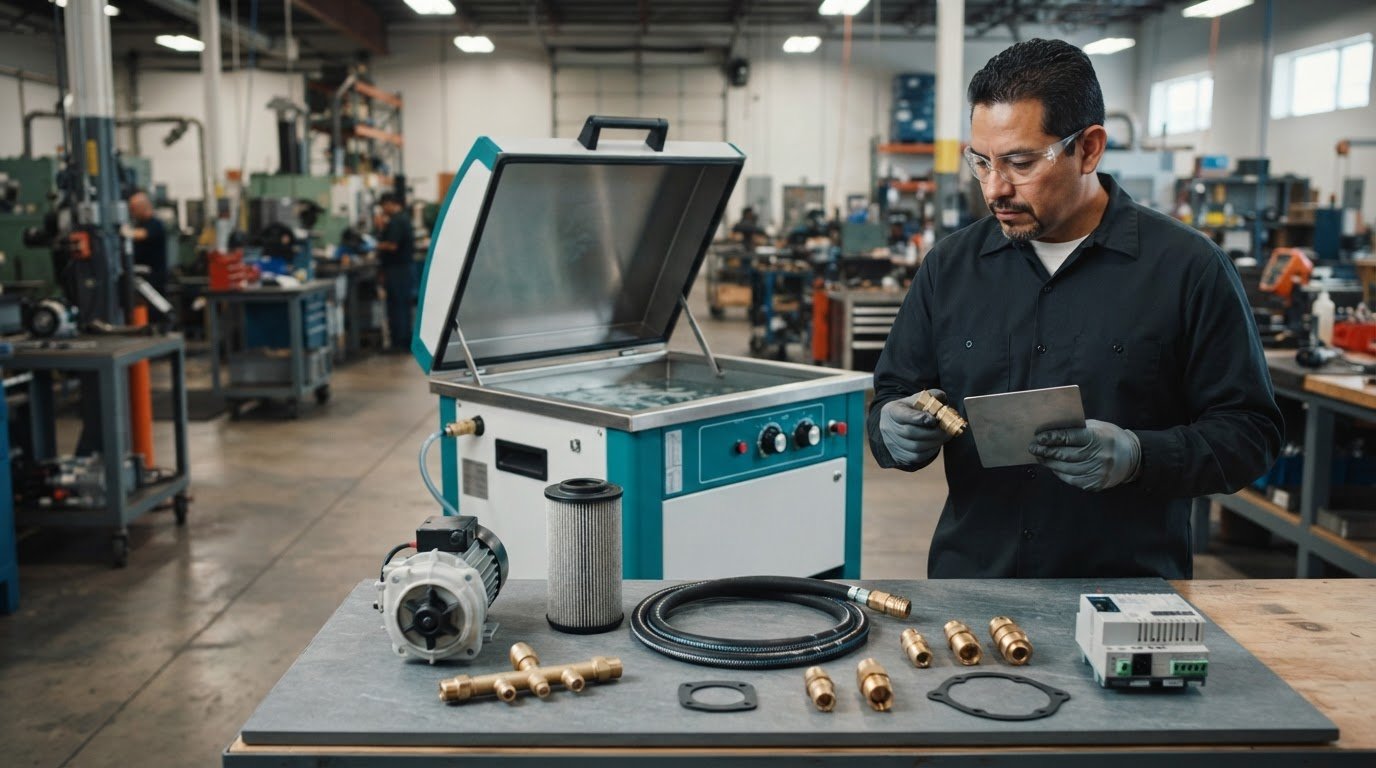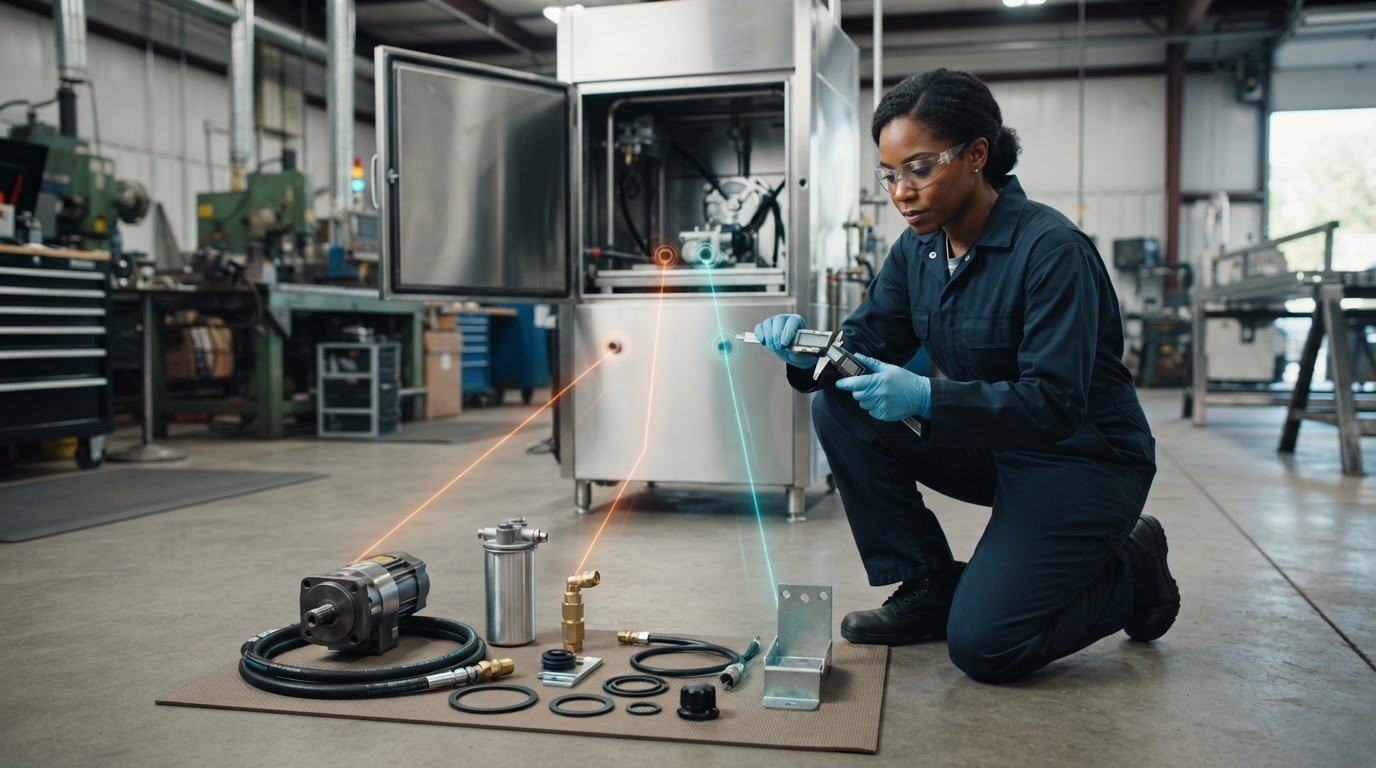
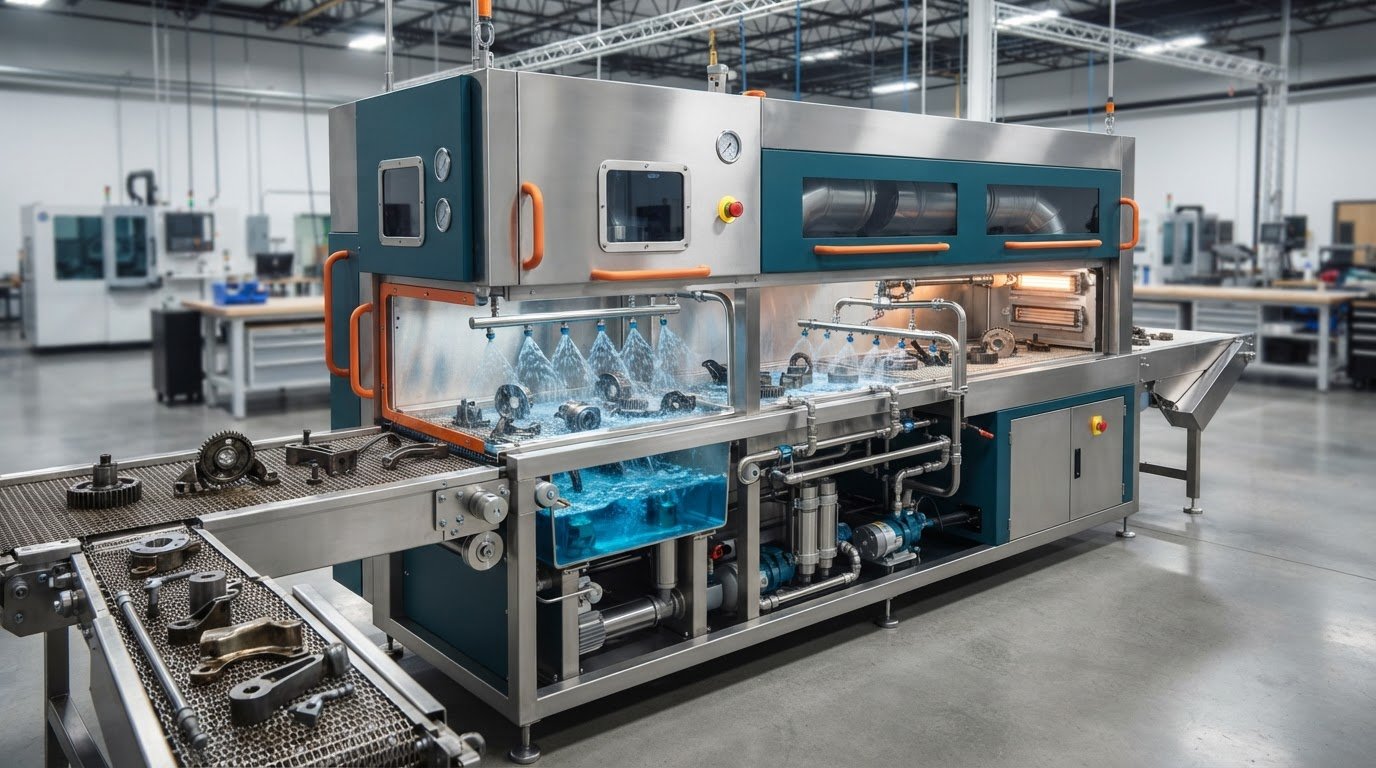
Switching to water-based cleaning won’t solve a parts-cleaning bottleneck by itself. An aqueous parts washer works when its chemistry, temperature, agitation, and cycle suit both the soil and the part. If they don’t, grease may remain, residue may linger, or sensitive materials may corrode. The key question isn’t simply whether water can clean your components. It’s whether the complete process fits your operation.
Before changing equipment or chemistry, check how an aqueous parts washer moves cleaning solution across components, which soils the process needs to remove, and where material compatibility or rinsing require attention. This guide also explains how washer type, throughput, and workplace requirements shape the decision.
Before speaking with a supplier, identify the parts you need to clean, their materials and soils, your cleanliness target, and how many components your workflow must process. Those details help determine what to test, which chemistry to evaluate, and whether the cycle can keep pace with production. The goal is a reliable process, not a water-based system chosen on assumption alone.
Key Takeaways
- An aqueous parts washer combines water-based chemistry with mechanical action and controlled conditions. A manual wash station may not provide the same process control.
- Cleaning cycles vary by equipment. Check how the system loads parts, applies solution, handles rinsing and drying, and supports inspection.
- Assess contaminant type, part material, geometry, cleanliness requirements, and throughput before deciding whether the process needs testing.
- Match batch size, production rhythm, labor, and floor space to the washer configuration so cleaning doesn’t create a new bottleneck.
- Prepare part details, soil descriptions, and process requirements for a supplier discussion. Evaluate equipment, chemistry, and maintenance needs together.
What Is an Aqueous Parts Washer, and What Does It Remove?
An aqueous parts washer cleans components with water-based chemistry and mechanical action under controlled operating conditions. Unlike a manual wash station, where results depend heavily on an operator’s technique, a washer uses equipment to apply a defined process. The setup varies, but chemistry, temperature, agitation, and exposure time all affect the result.
An aqueous parts washer uses water-based cleaning chemistry and mechanical action to remove contaminants from industrial components, depending on the part, soil, and process. Water alone doesn’t ensure a reliable cleaning outcome. A parts washer uses a cleaning medium and mechanical energy, with operating conditions that influence how effectively it works.
Water-based doesn’t automatically mean harmless, compatible with every substrate, or waste-free. Cleaning chemistry can affect parts and requires appropriate handling. Used solution and removed contaminants also need consideration under the facility’s applicable requirements. Check material compatibility and waste-handling expectations before introducing a process.
How Is an Aqueous Parts Washer Different from a Solvent Washer?
The primary difference is the cleaning medium: an aqueous system uses water-based chemistry, while a solvent washer uses a solvent-based cleaning medium. Neither approach suits every job. Performance depends on the contaminant, substrate, chemistry, and operating conditions, so compare systems against your actual cleaning requirement rather than assuming one is universally better. A detailed cost and safety comparison belongs in a dedicated solvent-versus-aqueous analysis.
Which Industrial Parts and Soils Can It Handle?
Machined components carrying oils or grease may suit aqueous cleaning, but those examples don’t guarantee performance. Results depend on the soil’s composition, how long it has remained on the part, the chemistry, and the washer’s mechanical action. Surface residue may respond differently from contamination embedded in a coating, packed into a recess, or resistant to the cleaning solution.
Start with the parts and soils behind the cleaning problem. Note the substrate, geometry, contaminant type, and cleanliness level required by the next operation. If a material could react with the chemistry, or if the residue is difficult to identify or remove, test representative parts before committing to a process. Testing helps establish whether the equipment and chemistry can meet the requirement without damaging the component or leaving unwanted residue.
How Does an Aqueous Parts Washer Clean Components?
An aqueous parts washer moves cleaning solution across or around components so the chemistry can loosen contamination and the machine can help carry it away. The process depends on the equipment. A cabinet washer may spray parts in a basket, while another system may use immersion or a different configuration. Don’t assume every unit follows the same cycle.
Cleaning results depend on the combined process, not water alone. Chemistry, temperature, contact time, and mechanical action need to suit the soil and part. Check the operating guidance for the specific washer and cleaning solution before setting or changing process conditions.
What Happens During the Wash Cycle?
A typical sequence may include loading parts, applying cleaning solution, rinsing if the process requires it, drying, and inspecting the components. Spray systems direct solution onto exposed surfaces. Immersion systems submerge parts so the solution can contact them. Mechanical action helps detach soil, but it can’t compensate for chemistry that doesn’t suit the contaminant.
Part position matters. Blind holes, cavities, and closely spaced features can trap air or shield surfaces from solution. Validate the process with representative parts, especially when geometry makes coverage difficult to confirm. Rinsing and drying also depend on the cleanliness target, part material, and equipment configuration. Check that the process leaves parts ready for the next operation.
Why Do Temperature, Time, and Agitation Matter?
Temperature affects how a cleaning solution performs. Contact time determines how long it works on the soil, while agitation helps move solution across the part and dislodge contamination. These variables interact, so changing one may affect the result. Don’t raise heat or extend a cycle by guesswork. Follow the washer and chemistry supplier’s product-specific guidance, then verify the result on actual parts.
A government environmental agency case study describes a vehicle maintenance facility that eliminated the use of solvents through a parts-cleaning system change. That example shows what a defined process achieved in one setting, not what every application will achieve. To assess equipment and chemistry for your parts, soils, and workflow, consider discussing those requirements with an industrial parts washer supplier.
When Does an Aqueous Parts Washer Fit the Job, and When Does It Need Testing?
An aqueous process may fit when its chemistry can remove the target soil, protect the part, and meet the required cleanliness level at the pace production demands. Evaluate five factors: contaminant, substrate, geometry, cleanliness target, and throughput. A good result on an open, lightly soiled component doesn’t prove the process will work on a coated assembly with residue in narrow passages.
Water-based chemistry isn’t automatically harmless, compatible with every material, or free of waste-handling requirements. An aqueous parts washer may support a move away from some solvent-based processes, but whether it suits your operation depends on testing and process controls, not the equipment label.
Which Parts and Contaminants Need Compatibility Checks?
Identify both the soil and every material the cleaning solution will contact. Is the contamination oil-based, particulate, carbonized, or a mixture? Are the parts bare metal, coated, or assembled with elastomers and other sensitive materials? Confirm how the chemistry interacts with each relevant substrate, including surfaces that may corrode, discolor, soften, or otherwise change.
Geometry matters as well. Recesses, joints, and cavities can hold contaminants or cleaning solution, while complex assemblies may restrict access. Test representative parts under the intended process. After washing, inspect cleanliness and residue, then check for corrosion, coating changes, trapped moisture, or other effects that could interfere with the next operation. Include drying in the evaluation if the part cannot tolerate residual moisture or must move quickly into production.
What Are the Practical Benefits and Limitations?
A validated aqueous process may reduce reliance on solvent-based cleaning for an application where the chemistry and equipment meet the cleaning requirement. Don’t assume it will deliver a specific cost reduction or work as a direct replacement without changes. Difficult, carbonized, or chemically resistant soils may need a different approach. High-volume workflows also need to account for cycle, drying, and handling demands.
Plan for chemistry management as part of the operating process. Review the cleaning solution’s Safety Data Sheet, follow applicable equipment and chemical guidance, and confirm the environmental, workplace-safety, and waste-handling requirements for your facility and jurisdiction. If testing reveals residue, corrosion, material changes, or inadequate cleaning, adjust the chemistry or process only after verifying compatibility. Make the decision based on a repeatable result on representative parts, not a broad claim that aqueous cleaning works for every job. For a structured approach to matching process controls to your parts and production requirements, the industrial aqueous cleaning systems implementation guide explains how to assess those factors and plan a validation trial.

How Should You Evaluate an Aqueous Parts Washer for Your Operation?
Choose equipment around the work your operation needs to move through cleaning. A washer that fits the part but misses the cleanliness target, batch volume, or available floor space can create a production constraint. Gather operating details first, then validate the proposed process with representative parts.
What Information Should You Gather Before Requesting Equipment Guidance?
Build a practical application brief before comparing configurations. Include:
- Parts: Record dimensions, materials, coatings, assemblies, and surfaces or components that need special care.
- Contaminants: Describe the typical soils and note whether they vary by part or production run.
- Cleanliness: Define what “clean” means for the next operation, including how your team will inspect and accept each part.
- Volume and rhythm: Estimate parts per batch, cleaning frequency, and required turnaround. Consider whether operators can load and unload without disrupting other work.
- Space and workflow: Measure available floor space and identify constraints around loading, access, and movement of parts.
- Process needs: Note whether rinsing, drying, filtration, or fluid management matters for your application, and document current operator procedures.
Batch size and production rhythm affect more than washer capacity. They determine how parts fit into a basket or other load, how often operators handle them, and how a cleaning cycle fits between upstream and downstream steps. Keep the brief configuration-neutral. Let the part and workflow requirements guide equipment discussions.
Use these details to discuss your aqueous parts-washing needs with a supplier.
How Do You Validate Cleaning Performance Before Adoption?
Set acceptance criteria with production, quality, and maintenance before testing. Specify the cleanliness standard, inspection method, and any conditions the part must meet after washing, such as no visible residue or unacceptable material changes. This gives the team clear criteria for evaluating results instead of relying on a general impression.
Establish a baseline for the current process, then test representative parts under documented conditions. Record the equipment configuration, chemistry, process settings, and inspection results so the team can compare outcomes consistently. Include parts that reflect challenging soils, geometry, and materials, not just the easiest items to clean.
Before adoption, confirm chemistry, equipment, and material compatibility against supplier documentation. Review rinsing, drying, filtration, fluid management, and operator steps where they affect acceptance or workflow. If test results miss the target, resolve the gap before making the process part of routine production.
What Should You Discuss with an Aqueous Parts Washer Supplier?
A supplier conversation works best when it moves from the cleaning problem to a verified process, rather than straight to a machine quote. Define what isn’t working, share the parts and soils involved, discuss testing, confirm operating requirements, and plan for routine maintenance and replacement parts. Consider equipment, cleaning chemistry, and ongoing parts needs together. Each can affect how well an aqueous parts washer fits your application and production flow.
How Do Equipment, Chemistry, and Maintenance Fit Together?
Describe the parts, contaminants, cleanliness target, and workflow the process needs to address. Ask how the proposed washer and chemistry align with those details, and which recommendations are supported by equipment or chemical guidance. Don’t assume a detergent suits every substrate or that a machine configuration will reach every surface. Verify compatibility and performance for the specific models and application under consideration.
Ask how routine maintenance requirements fit your operation. Clarify which replacement parts may be needed, how your team can identify the correct parts for the washer model, and what documentation can support maintenance planning. These questions help you consider operating continuity without assuming a particular service arrangement or replacement schedule.
The Global One Group supplies industrial parts washers, specialized parts-washing chemistries, and genuine and compatible replacement parts for Magido and Fountain equipment. Confirm model-specific recommendations, compatibility, and availability for your application directly with the supplier.
What Questions Help Prevent a Poor-Fit Purchase?
Bring a representative part, if practical, and prepare focused questions before selecting equipment:
- Application data: What details about part dimensions, materials, soils, batch volume, and cleanliness criteria do you need to evaluate the job?
- Process validation: How can the team test representative parts, and what conditions and inspection criteria should the test document?
- Cycle requirements: How will the proposed process address washing, rinsing, drying, and inspection for these specific components?
- Operating guidance: Which documents explain chemistry handling, washer operation, routine maintenance, and applicable facility controls?
- Compatibility: What supplier documentation confirms that the proposed chemistry and equipment suit the parts and contaminants being evaluated?
Write down the answers and unresolved questions. Compare options against your actual acceptance criteria, not broad claims about cleaning capability. For a focused discussion about equipment, chemistry, and replacement parts, talk with The Global One Group.
Make Your Next Cleaning Decision With Confidence
An aqueous parts washer delivers dependable results only when its chemistry, equipment, and operating conditions match the parts and contaminants. Confirm the process on representative components, and assess more than soil removal. Material compatibility, residue, rinsing, drying, throughput, and operator requirements all matter.
Before choosing a system, document your cleanliness target, production rhythm, available space, and the challenges your current process creates. Bring those details into a supplier discussion to evaluate equipment and cleaning chemistry together, then plan for the replacement parts needed to support the equipment over time.
The Global One Group supplies industrial parts washers and specialized parts-washing chemistries, along with genuine and compatible Magido and Fountain replacement parts. Discuss your industrial parts-washing requirements and share the parts, soils, and workflow you need to address. A clear application brief is a practical first step toward a cleaning process your team can evaluate with confidence.
Frequently Asked Questions
What is an aqueous parts washer?
An aqueous parts washer uses water-based cleaning chemistry and mechanical action to remove contaminants from industrial components. Depending on the equipment, it may apply solution by spray, immersion, or another method. Results depend on the parts, soil, chemistry, and operating conditions. Unlike a manual wash station, it uses equipment to carry out a defined process, though the cycle and level of control vary by system.
How does an aqueous parts washer remove grease?
An aqueous parts washer uses cleaning chemistry to loosen or break down grease while mechanical action moves solution across the part and carries soil away. Temperature and contact time can also affect performance, but suitable settings depend on the chemistry and equipment. Grease type, how long it has remained on the part, and the part’s geometry all matter. Test representative components rather than assuming every greasy part will respond the same way.
Are aqueous parts washers safer than solvent parts washers?
Not automatically. Aqueous systems can reduce reliance on some solvent-based cleaning processes, but water-based chemistry still requires safe handling and appropriate controls. Review the cleaning solution’s Safety Data Sheet, follow equipment and chemical guidance, and assess ventilation, operator procedures, and waste handling for your facility. Compare the specific hazards and operating requirements of each process before choosing. The right decision depends on the chemistry, equipment, application, and workplace conditions.
Can an aqueous parts washer clean aluminum or other sensitive materials?
It may, but compatibility depends on the specific alloy or material, surface finish, coatings, cleaning chemistry, and operating conditions. Aluminum, elastomers, painted surfaces, and assembled components can respond differently to a wash process. Confirm compatibility using supplier documentation and test representative parts before adopting the process. Inspect for corrosion, discoloration, residue, or other material changes, including after drying. Don’t assume a solution suitable for one metal or part will suit every component.
Does an aqueous parts washer require rinsing and drying?
Rinsing and drying depend on the cleaning process, equipment configuration, part material, and requirements of the next production step. A rinse may help remove cleaning solution or loosened soil when the process calls for it. Drying can matter if moisture could affect the part, assembly, storage, or downstream operation. Define acceptance criteria before selecting a cycle, then confirm that washing, rinsing, and drying leave parts ready for their intended use.
How do I know whether an aqueous parts washer will clean my parts?
Define the soil, part materials and geometry, required cleanliness, batch volume, and production pace. Then test representative parts under documented process conditions using suitable equipment and chemistry. Inspect results against clear criteria, including residue, material condition, and any rinsing or drying requirements. Ask the supplier what application details and parts are needed to evaluate the job, and confirm model-specific equipment and chemistry compatibility before changing the process.