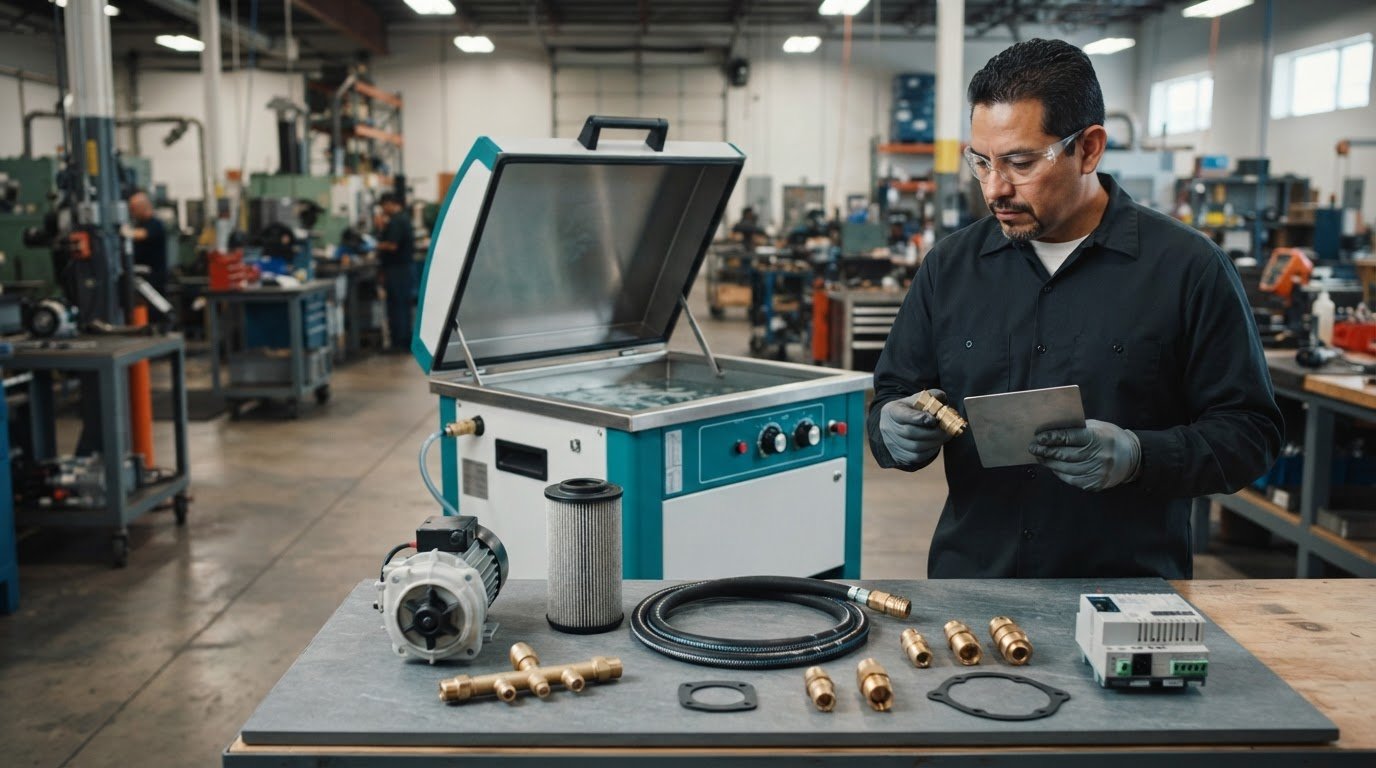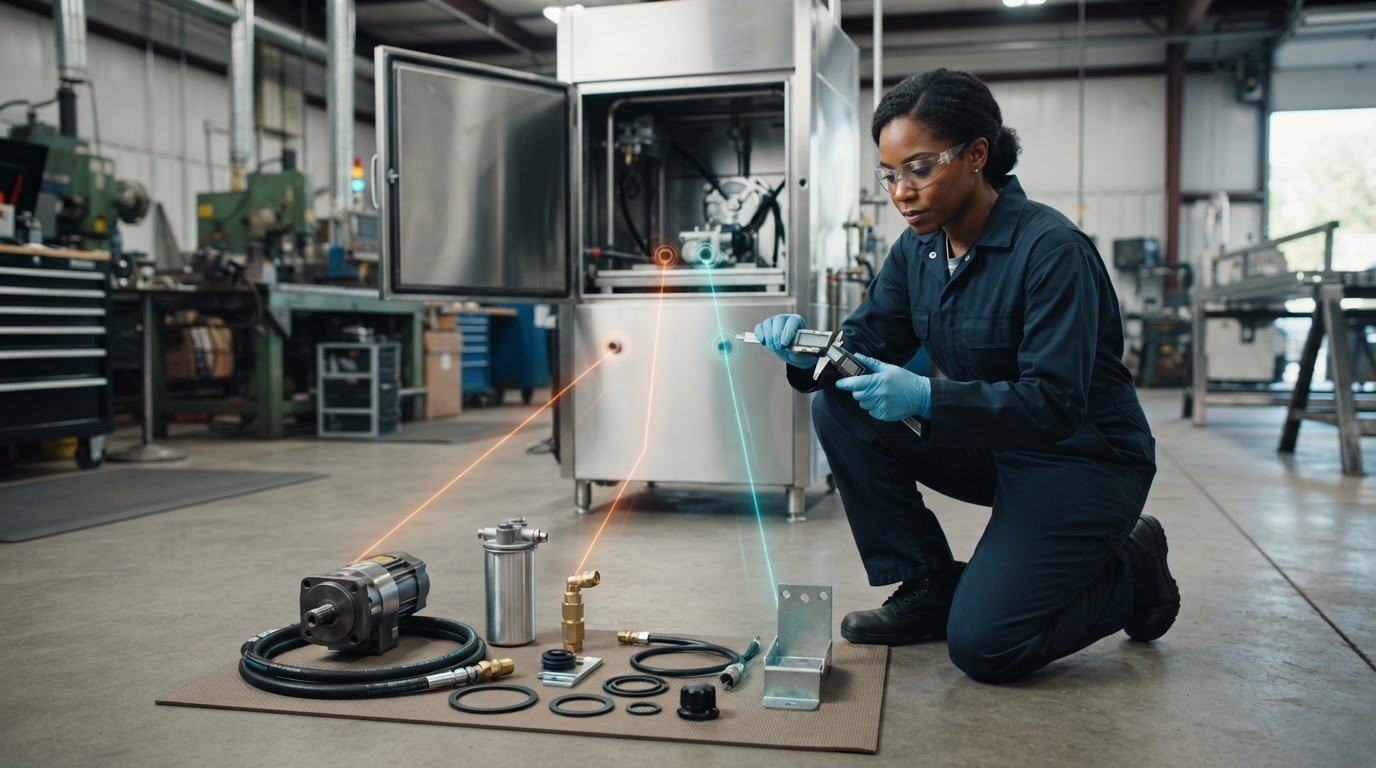

What if engine-block cleaning could keep pace with the rebuild line instead of holding it back? An engine block parts washer machine is a production tool, not just a larger sink. The right combination of spray coverage, heat, cycle design, and chemistry can remove stubborn oil and carbon while reducing the time technicians spend scrubbing by hand. A repeatable wash process can also make cleaning more consistent, helping prepare parts for inspection and rebuilding.
A dirty block can delay the next job, while solvent handling can add operational burdens. This guide explains how automated aqueous washing can reduce hands-on cleaning, support thorough cleaning before inspection, and help you manage chemistry use without relying on hazardous solvents. You’ll learn which machine capabilities matter for engine blocks, how pressure, flow, heat, and cleaning chemistry work together, and what to consider when matching washer capacity to shop throughput. We’ll also cover how compatible chemistry and replacement parts can help keep a washing system productive.
Key Takeaways
- Manual engine cleaning can create labor bottlenecks, while residue left behind can compromise rebuild quality.
- Choose an engine block parts washer machine by matching its cleaning performance and loading configuration to your block size and shop workflow.
- Consider how pressure and flow reach internal oil passages, and verify machine specifications against the parts you need to clean.
- Pair the washer with compatible, low-foaming chemistry to support effective degreasing and protect pump performance.
- The Global One Group supplies Magido washers, specialized cleaning chemistries, and replacement parts for Magido and Fountain equipment.
The Industrial Bottleneck: Why Manual Engine Cleaning Fails
Manual scrubbing turns skilled rebuild technicians into wash-bay labor. Every minute spent working on baked-on oil, carbon, and sludge is a minute not spent inspecting, measuring, or assembling engines. The cost can be easy to overlook because it rarely appears as a separate line item. To see whether cleaning is constraining throughput, track the time each block spends in manual cleaning and compare the total with the shop’s rebuild workload.
“Clean enough” carries a different risk. Residue left in oil passages or on bearing surfaces can interfere with lubrication or contaminate components during assembly, contributing to premature wear or failure. Effective industrial parts cleaning processes remove contaminants before inspection and finishing. A repeatable wash cycle can reduce variation between operators, but it does not replace inspection or careful handling.
The High Cost of Technician Downtime
A technician who scrubs a block can’t rebuild another one at the same time. Automated washing shifts much of that hands-on cleaning into a controlled cycle. Staff load the block, select the appropriate process, and move on to other work while the washer runs. It is not “set and forget.” Operators still need to load and unload parts, follow equipment procedures, and monitor cleaning performance. The benefit is fewer hands-on minutes per wash.
Manual solvent use can also expose workers to fumes and skin contact. Moving to an aqueous system can reduce reliance on hazardous solvents, but it does not remove the need to assess chemical hazards, ventilation, PPE, and handling procedures. Follow applicable OSHA requirements and the chemistry’s safety data sheet.
Aqueous Cleaning: Performance and Safety Considerations
Regulatory requirements depend on the chemical and its use, so don’t assume every solvent faces the same restrictions. As of 2026, the EPA’s TCE rule prohibits most industrial and commercial uses, while its PCE rule restricts many uses and sets workplace protections for those that remain. The Fifth Circuit vacated the EPA’s methylene chloride risk management rule on September 15, 2026. Facilities should monitor EPA developments and continue to check applicable OSHA requirements. Aqueous cleaning is an alternative to assess, not a blanket compliance guarantee.
Cleaning performance depends on the system working together. Heat helps soften and loosen baked-on oils, spray impingement directs mechanical force at surfaces and deposits, and the right detergent supports soil removal. Closed-loop water treatment may reduce water and chemistry consumption, but it does not make waste disappear. Contaminated liquid and collected residue still require appropriate handling. An engine block parts washer machine can reduce repetitive scrubbing and support consistent cleaning when the cycle and chemistry suit the soil and parts.
Mechanical Essentials of an Engine Block Parts Washer Machine
An engine block parts washer is an enclosed system that circulates heated aqueous cleaning solution over components to remove oil, grease, and other soils. For rebuild work, the machine must do more than rinse exposed surfaces. It needs suitable pressure and flow, effective spray coverage, and chemistry matched to the contaminants and materials. Consider the complete cleaning system, not one pump rating in isolation.
Pressure, measured in PSI, describes the force behind the spray. Flow, measured in GPM, describes the volume of solution delivered. Higher pressure can help dislodge stubborn deposits, but pressure alone does not guarantee that solution reaches a narrow oil galley or recessed passage. Flow, nozzle placement, passage access, and part orientation all affect coverage. Confirm the washer’s specifications for the exact configuration under consideration. Don’t assume a rating guarantees cleaning inside every cavity.
Pressure vs. Flow: Finding the Right Balance
Impingement is the mechanical force created when a stream of water strikes a surface and helps loosen contaminants. Nozzles shape and distribute that force, so their number, angle, and placement matter alongside headline PSI. A heavy cast-iron block also needs adequate flow to carry cleaning solution across broad surfaces and move loosened soil away. Ask how the machine handles blind passages and recessed areas, then confirm the results with a representative cleaning test.
The Importance of Manifold Design
Fixed spray arms use consistent, stationary spray paths and can simplify system design, but surfaces outside those paths may receive less direct impact. Oscillating arms vary spray direction during the cycle, which can improve access to changing angles. Performance still depends on nozzle layout and unobstructed flow. For V8 and large diesel blocks, evaluate how the specific machine exposes the deck, sides, and internal openings to spray. A rotary turntable moves the load through the spray field, helping reduce shadowing behind projections. It cannot replace correct loading or prove that hidden passages are clean.
Heat can soften oily deposits and improve the action of a compatible aqueous detergent, but there is no single setpoint for every washer and soil. Treat 140°F to 180°F as a range to verify against the machine’s operating limits, chemistry guidance, component materials, and cleaning results, not as a universal specification. Cabinet construction also deserves attention. Stainless steel can offer corrosion resistance, but confirm that the cabinet and wetted components suit the chemistry and operating conditions.
Switching from solvent cleaning may reduce reliance on hazardous solvents, but it does not eliminate the need to assess chemical hazards. OSHA’s safety measures for toxic solvents apply to covered shipyard operations, so verify which requirements govern your workplace. To compare aqueous washer options and compatible chemistries, review industrial parts washing equipment and chemistry from The Global One Group.
Cabinet vs. Rotary: Selecting Your Shop’s Workhorse
Choose a washer based on the parts you clean, how you load them, and how often they reach the wash bay. A cabinet washer can suit large, irregular components that need individual positioning. A rotary basket washer can handle batches of smaller parts when repeated loading and unloading would take technician time. The right design fits both your current workload and the demands of your rebuild process.
Start with the largest and heaviest component you expect to wash. Check the usable chamber dimensions, rated load capacity, basket or turntable limits, and the space needed to load and unload safely. Then consider how often you clean smaller components. An engine block parts washer machine should match the block and workflow, not just fit the available floor space.
Front-Load Cabinets for Heavy Rebuilds
Front-load cabinets give operators a direct route to position heavy blocks, often with a hoist or crane when manual lifting isn’t appropriate. Confirm that the opening, chamber, and loading approach accommodate both the part and the handling equipment. A vertical door may need overhead clearance, while a swing door needs room to open into the bay. Tracks or turntables can simplify positioning, but verify their load ratings and compatibility.
Top-loading washers can work well in compact cells or for smaller components, but lifting a heavy block over the cabinet rim can complicate handling. Match the access style to the actual load, operator movement, and available clearance. A configuration that looks compact on a floor plan may create a bottleneck at the loading point.
Rotary Basket Systems for High-Volume Components
Rotary basket systems can be useful when a shop cleans groups of smaller parts, such as pistons and other compatible components, in repeatable batches. Rather than washing each piece separately, operators load a suitable batch and run one cycle. Arrange parts so spray can reach their surfaces. Overcrowding can block coverage and reduce cleaning consistency.
Compare the basket’s usable area and load rating with your typical batch, then account for access space around the machine. A rotary system may reduce repeated handling, while a cabinet can offer more flexibility for bulky, irregular parts. Neither design automatically cleans every surface or hidden passage. Verify the process against the parts and soils you actually handle.
Build the decision around these questions:
- Heavy blocks: Can your lifting method place the part into the chamber safely and accurately?
- Mixed workloads: Do you need one large-part washer, or a separate batch process for smaller components?
- Growth: Will chamber dimensions and capacity support larger parts or more frequent batches later?
- Cleaning quality: Can the load receive adequate spray coverage without parts shielding one another?
Protect the rebuild as well as throughput. An NHTSA-hosted manufacturer bulletin cautions against abrasive pads on engine components because released grit can create a risk of internal engine damage. Select a washer and loading method that clean effectively without introducing avoidable debris or handling risks.

Maximizing ROI Through Chemistry and Maintenance
A washer’s pump and spray system provide the mechanical action, but detergent affects how effectively the cycle loosens grease and oil. The wrong chemistry can leave deposits behind, create excess foam, or damage sensitive metals. Match the detergent to the soil, machine, water conditions, and parts being cleaned. An engine block parts washer machine works as a system, and chemistry is a core part of that system, not an afterthought.
Choose Aqueous Chemistry for the Parts and Water
Start with the metals. Aluminum can react differently to cleaning solutions than cast iron or steel, so confirm detergent compatibility and pH guidance with the chemistry supplier before setting a process. Don’t assume one formula suits every component. Low-foaming chemistry helps maintain stable circulation and spray action, while an appropriate degreaser addresses oily soils without requiring technicians to compensate with repeated cycles.
Water quality matters, too. Hard-water minerals can reduce cleaning effectiveness and form scale on heated surfaces, including elements. If deposits appear or performance declines, check water conditions, detergent concentration, and maintenance procedures rather than simply increasing chemical use. Follow the chemistry supplier’s directions and the washer manufacturer’s operating guidance.
Rust inhibitors leave a protective film on compatible ferrous metals after the dry cycle, helping limit flash rust during handling and storage.
Preventive Maintenance and Critical Spares
Build simple checks into the wash-bay routine. Record normal cleaning results and watch for changes. Weaker spray, longer cycles, uneven coverage, unusual pump noise, or parts that emerge dirtier than expected can signal a restriction, worn component, or developing pump problem. Inspect and clean spray nozzles as directed, and check heating performance, filters, and solution condition on a planned schedule. Catching a change early gives the team time to investigate before it disrupts the workflow.
Keep critical replacement parts aligned with the equipment you operate. A compatible part on hand can help reduce the wait associated with sourcing a needed component, while an incorrect substitute can create fit or performance issues. The Global One Group supplies replacement parts for Magido and Fountain equipment, along with aqueous washers and specialized industrial degreasing chemistries. As a Certified Master Distributor of Magido Cleaning Systems, it offers equipment, chemistry, and parts for a coordinated wash-bay setup.
Set a maintenance checklist that covers the pump, nozzles, heater, filters, and cleaning solution. Review it against the washer manufacturer’s recommendations and your actual operating conditions. Explore aqueous parts washers, cleaning chemistries, and replacement parts from The Global One Group to plan for consistent cleaning and practical upkeep.
Modernizing Your Wash Bay with The Global One Group
A washer purchase is only one part of a productive wash bay. You also need chemistry suited to the parts and soils you clean, plus access to compatible replacement parts when equipment needs attention. The Global One Group is a Certified Master Distributor of Magido Cleaning Systems and supplies heavy-duty aqueous parts washers, specialized industrial degreasing chemistries, and replacement parts for Magido and Fountain equipment.
That combination matters during equipment selection and after installation. A machine’s capacity, loading configuration, and cleaning performance should fit your actual workload, not a generic production estimate. Before choosing an engine block parts washer machine, document the largest and heaviest parts you process, your typical wash frequency, and the soils you need to remove. Ask the supplier to confirm current model specifications, including pump flow rates, against those requirements.
Evaluate Magido Systems Against Your Shop’s Needs
Magido equipment provides an option to evaluate for heavy-duty aqueous washing, while the right configuration depends on your parts, handling method, and available floor space. Compare chamber capacity and loading access, then confirm that the machine’s cycle and chemistry suit the materials you wash. Ease of operation also matters. Operators need a clear, repeatable process for loading parts and selecting the appropriate cycle. Verify specific features and performance for each model rather than assuming they apply across a product range.
A national supplier can also simplify equipment and parts procurement. The Global One Group supplies Magido washers and replacement parts, which can help buyers consider equipment options alongside maintenance needs. Confirm compatibility and availability for the specific machine and component before making procurement decisions.
Coordinate Equipment, Chemistry, and Replacement Parts
Managing machines, cleaning chemistry, and parts procurement together can reduce the friction of dealing with separate supplier relationships. Choose chemistry for the metal, contaminants, water conditions, and washer requirements. For existing Fountain equipment, identify the machine model and the component needed when sourcing replacement parts. Accurate details help prevent ordering a mismatch. Build a practical spares plan around the components your equipment uses and the consequences of a delay, rather than stocking parts without a clear need.
Modernizing the wash bay also means considering the transition from solvent-based cleaning to an aqueous process. Match the machine and chemistry to shop requirements, then plan for compatible parts as equipment operates. Optimize your wash bay with The Global One Group by exploring Magido washers, industrial cleaning chemistries, and Magido and Fountain replacement parts.
Build a Wash Bay That Keeps Rebuilds Moving
Reliable engine cleaning depends on more than spray pressure. The washer configuration must suit your parts and loading workflow, while compatible chemistry and routine maintenance help keep cleaning consistent. Choose an engine block parts washer machine around your actual workload, and verify its specifications for the components you need to clean.
The Global One Group supplies Magido washers, specialized industrial cleaning chemistries, and replacement parts for Magido and Fountain equipment. Its product range can help you plan for the machine as well as the chemistry and parts needed to maintain a wash-bay process.
Frequently Asked Questions
How long does a typical engine block wash cycle take?
There’s no single cycle time for every engine block washer. The required time depends on soil type, contamination level, detergent, temperature, spray coverage, and how the block sits in the cabinet. A lightly soiled block may need a different process than one with baked-on oil or carbon. Use the washer and chemistry supplier’s guidance, then validate the cycle on representative parts and inspect the results before setting a routine.
Can I clean aluminum and cast iron blocks in the same machine?
Often, but only if the washer’s chemistry and process suit both metals. A detergent that works for cast iron may be too aggressive for aluminum, so check the chemistry supplier’s compatibility and pH guidance before washing mixed materials. You may need separate solutions or cycles to protect parts and achieve consistent cleaning. Confirm the machine can handle the chosen chemistry and follow its operating instructions.
Do I need a special permit to operate an aqueous parts washer?
Not necessarily, but an aqueous system doesn’t automatically remove permit or waste-handling obligations. Requirements can depend on your location, wastewater discharge route, and the contaminants in the wash solution. Before installation or disposal, check with your environmental health and safety lead and relevant local authorities. Review the chemistry’s safety data sheet, and ask how to manage spent solution, sludge, and any collected residues.
How often should I change the cleaning chemistry in my washer?
Change intervals depend on soil loading, production volume, solution condition, and the chemistry and washer manufacturers’ recommendations. Don’t rely on a fixed calendar schedule alone. Track cleaning results and inspect the solution for signs of contamination or reduced performance. If parts come out oily, the bath may need attention, but first check concentration, temperature, filtration, and spray delivery. Follow supplier guidance for testing, replenishment, and disposal.
What is the difference between a top-load and front-load parts washer?
A top-load washer gives operators access from above and can suit compact work areas or smaller components, but loading heavy parts over the cabinet rim may complicate handling. A front-load cabinet provides access through a door at the front, which can work better for positioning larger components with suitable lifting equipment. Compare chamber dimensions, load limits, door clearance, and your shop’s handling method before choosing.
How do I prevent flash rust on engine blocks after washing?
Use an aqueous chemistry with a rust inhibitor suited to the metal, then dry the block promptly and thoroughly according to the washer and chemistry instructions. Water left in passages or recessed areas can encourage corrosion, so plan how to drain and dry those areas. Protect cleaned parts from moisture during handling and storage. Confirm inhibitor compatibility with later inspection, machining, or assembly steps.
Where can I find replacement pumps for Magido parts washers?
The Global One Group supplies replacement parts for Magido equipment, including maintenance components. Before ordering a pump, identify the washer model and verify the required part against the equipment documentation. Check specifications such as flow and pressure for the specific machine configuration rather than assuming pumps are interchangeable. The Global One Group is a Certified Master Distributor of Magido Cleaning Systems and serves customers nationally.
Are aqueous parts washers as effective as solvent-based cleaners?
They can clean effectively when the washer, chemistry, temperature, spray action, and cycle suit the parts and soils. Aqueous systems use water-based cleaning solutions and mechanical action, while solvent systems rely on different chemical properties. Neither approach guarantees results for every contaminant or component. Test representative parts, verify cleaning requirements, and consider material compatibility, worker safety, and waste handling when comparing processes.
Ready to evaluate an aqueous cleaning setup for your engine rebuild workflow? Contact The Global One Group about Magido washers, cleaning chemistries, and Magido and Fountain replacement parts.