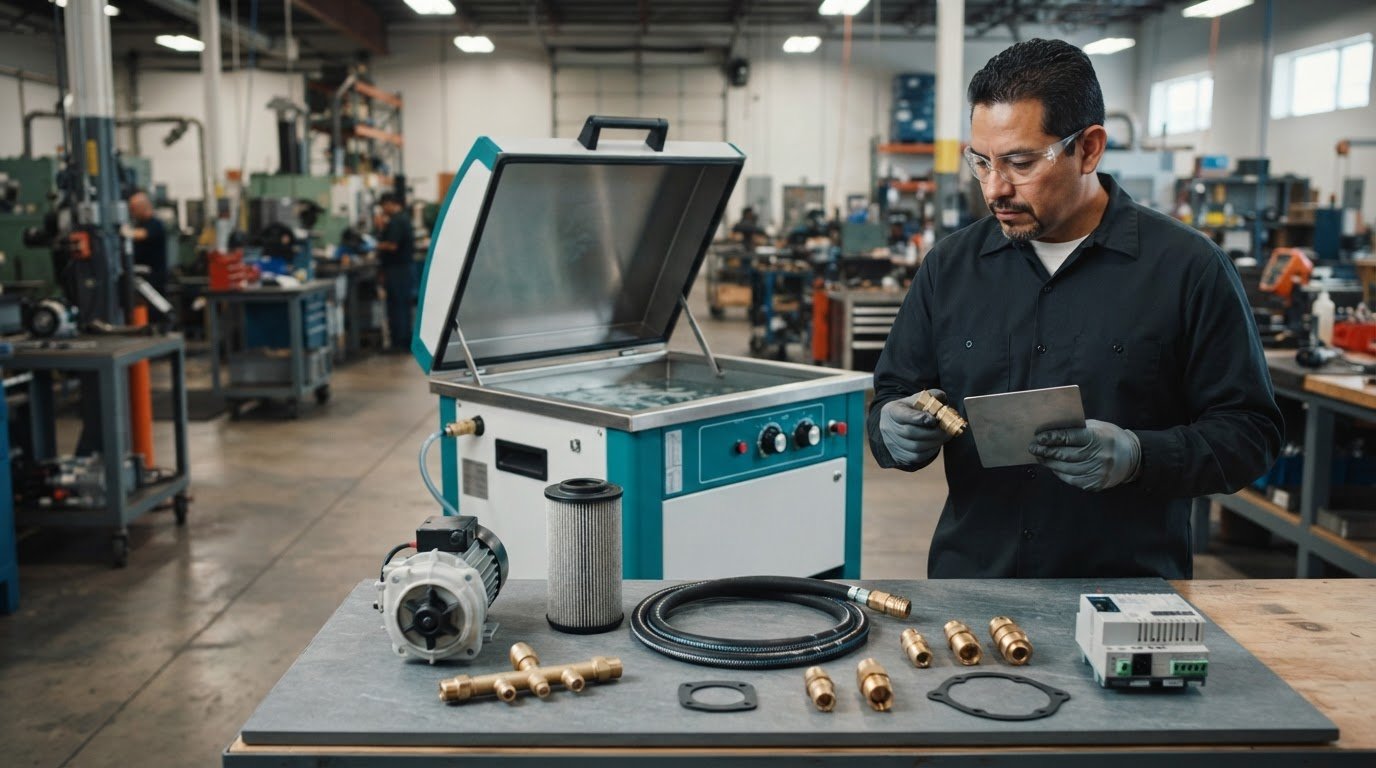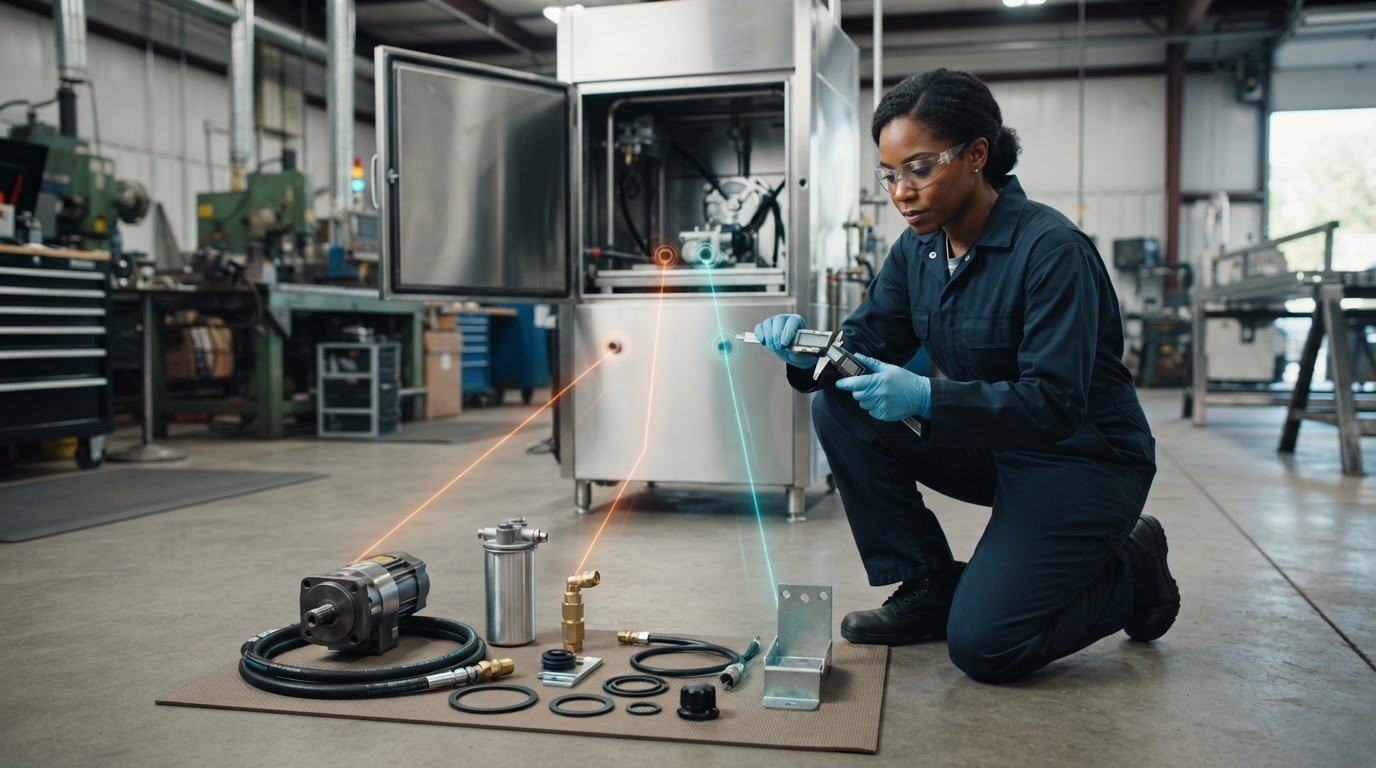

Paying skilled technicians to stand over an open solvent sink and manually scrub grease is the fastest way to bleed operational margin. You already know that manual wash bays create severe throughput bottlenecks during rebuild and maintenance cycles, leaving downstream assembly teams waiting while cleaning drags on. Worse yet, inconsistent manual scrubbing leads to costly re-work and coating adhesion failures down the line. Deploying a rugged spray wash cabinet industrial platform eliminates these shop-floor headaches instantly, converting dirty parts preparation into a closed-loop, push-button workflow that runs completely unsupervised.
In this guide, you’ll learn how modern aqueous spray wash cabinets automate heavy degreasing, slash manual wash bay labor by up to 40%, and accelerate shop-floor throughput. We will examine how high-impact spray mechanics pair with specialized aqueous chemistries to establish repeatable, compliant, and hazard-free cleaning across every shift.
Key Takeaways
- Transitioning to a spray wash cabinet industrial system replaces tedious manual scrub sinks with automated, push-button degreasing cycles.
- Closed-loop aqueous cleaning eliminates hazardous solvent liability while ensuring full compliance with stringent environmental standards.
- Motorized rotary spray manifolds deliver complete 360-degree coverage to eliminate costly rework and downstream coating failures.
- Pairing heavy-duty spray hardware with matched low-foaming chemistries maximizes cleaning power across varied workpiece metallurgies.
- Working with a nationwide master distributor secures immediate access to OEM pumps, nozzles, and technical support to protect operational uptime.
Why Manual Wash Bays Stall Industrial Shop Operations
Manual wash bays choke production schedules. In Lean manufacturing, every rebuild cell and assembly line depends on predictable takt times, yet manual wash sinks introduce erratic delays. Technicians scrub parts at varying speeds, creating severe operational logjams that hold up downstream assembly and final delivery. Facilities re-evaluating what are industrial parts washers quickly realize that relying on manual solvent agitation breaks workflow continuity. Integrating an automated spray wash cabinet industrial setup eliminates this friction, transforming degreasing into a closed, predictable stage of your production line.
The True Labor Cost of Manual Scrubbing
Skilled mechanics shouldn’t spend two to four hours a day scraping baked-on grease and carbon over a sink. That’s expensive, misallocated labor that drains billable hours from machining, inspection, and rebuild operations. Manual scrubbing also induces physical fatigue. As arm strain builds throughout a shift, technician speed drops and downstream assembly errors climb. Switching to automated cleaning recovers those lost hours immediately, redirecting skilled hands back to profitable, high-precision tasks.
Inconsistent Surface Cleanliness and Rework Penalties
Hand brushes simply cannot reach deep blind holes, internal oil galleys, and intricate casting geometries. When residual grit or grease escapes detection, the penalties hit hard during final assembly. Contaminants cause premature component wear, failed quality inspections, and improper coating adhesion. A standardized spray wash cabinet industrial platform delivers uniform fluid impingement and thermal energy across every surface, ensuring zero variance from the first shift to the third.
Environmental, Health, and Safety Liabilities
Open solvent tanks bring persistent regulatory and safety liabilities straight onto your shop floor. Airborne VOCs create hazardous inhalation risks for personnel, while messy solvent wash stations generate constant slip-and-fall hazards. Managing toxic solvent waste also requires stringent reporting, strict storage protocols, and expensive hazardous disposal services. Enclosed aqueous systems eliminate these chemical liabilities, keeping your operation fully compliant and your workforce safe.
How an Industrial Spray Wash Cabinet Automates Heavy Cleaning
Automated parts washing isn’t just about blasting hot water at oily steel. An engineered spray wash cabinet industrial system integrates fluid mechanics, thermal transfer, and matched aqueous chemistry into a synchronized degreasing cycle. Inside heavy-gauge stainless steel chambers built to contain severe hydraulic force, motorized rotary turntables slowly rotate workpieces through fixed, multidirectional spray grids. This continuous rotation ensures pressurized solution strikes every external angle, undercut, and internal passage without operator intervention. Rather than brushing parts piece by piece, technicians load complete assemblies, close the hatch, and let the machinery execute the wash cycle unsupervised.
The Mechanics of High-Impact Spray Manifolds
Cleaning efficiency begins at the pump. High-flow industrial pumps feed rows of strategically angled V-jet nozzles arranged along vertical and horizontal spray bars. These nozzles create overlapping, high-velocity spray curtains that deliver continuous fluid impingement. As the solution impacts dirty surfaces, mechanical force fractures the bond between stubborn petroleum grease, cutting fluids, and the base metal. This kinetic action dislodges metal shavings and packed swarf from blind pockets that brushes can’t clear.
Thermal Energy and Aqueous Degreasing Dynamics
Heat does the heavy lifting before chemistry even takes over. Industrial immersion heaters elevate the cleaning fluid to between 140°F and 180°F, softening stubborn waxes and liquefying heavy oils on contact. This thermal energy accelerates chemical reactions, allowing specialized low-foaming detergents to emulsify residual hydrocarbons quickly. Once the cycle finishes, the residual heat stored in the cleaned metal promotes rapid flash drying, ensuring components exit clean and dry. Keeping these wash processes enclosed also helps operations meet strict environmental benchmarks like Federal Cleaning Operation Standards without venting toxic vapors.
Continuous Filtration and Sludge Management
A closed-loop system must protect its wash solution to maintain continuous cleaning power. Cabinet washers manage contamination through three integrated stages:
- Coarse chip baskets: Catch heavy metal turnings and large debris right beneath the turntable.
- Inline canister filtration: Traps fine particulates down to specific micron ratings, preventing abrasive grit from blasting back onto machined surfaces.
- Disc or belt oil skimmers: Continuously remove floating tramp oils into external collection drums during rest periods.
Upgrading to heavy-duty industrial parts washers equipped with multi-stage filtration ensures your cleaning solution lasts for weeks rather than days, drastically reducing fluid disposal cycles and recurring operating costs.
Comparing Industrial Parts Washers: Manual Sinks vs Spray Cabinets
Sticking with manual sink tubs forces a hard limit on shop productivity. A manual sink requires constant hands-on effort for every bracket, housing, and bolt. In contrast, an automated spray wash cabinet industrial system handles entire batches under closed-loop spray pressure while your mechanics move on to high-value rebuild work. Choosing the right platform comes down to comparing labor allocation, chemical overhead, and physical shop safety. Understanding how a manufacturing parts cleaner machine fits into your broader production workflow — including how cleaning action, chemistry, and part handling interact — helps you select the system that truly matches your throughput requirements.
| Operating Metric | Manual Solvent Sink | Industrial Spray Wash Cabinet |
|---|---|---|
| Operator Labor | 100% manual contact time | Touchless push-button automation |
| Throughput Speed | Single-part cleaning bottleneck | Batch cleaning on rotary turntable |
| Fluid Chemistry | Hazardous solvents, high haul-away fees | Low-foaming aqueous biodegradable wash |
| Workpiece Capacity | Limited to small components | Engine blocks, gearboxes, heavy castings |
Throughput Speed and Labor Productivity Metrics
Scrubbing a grease-caked transmission case by hand easily eats up 45 minutes of a technician’s morning. An automated wash cabinet runs that same component through a wash and rinse cycle in roughly 15 minutes. Because the machine cleans multiple parts simultaneously on a heavy-duty turntable, shop output surges. Technicians reclaim hours each day to focus on precision machining, tear-down diagnostics, and final assembly.
Operating Cost and Chemical Consumption Profiles
Solvent-based cleaning models bleed cash through recurring chemical replacement contracts and regulated disposal fees. Automated aqueous systems recirculate their water-based wash baths continuously through filtration stages, cutting cleaning fluid expenses by roughly 30%. Fully insulated cabinet walls hold operating heat inside the reservoir, reducing the energy draw needed to maintain wash temperatures during heavy production shifts.
Ergonomic and Shop Safety Differences
Manual wire brushing over open sinks leads to chronic operator fatigue, carpal tunnel strain, and back injuries. Modern spray cabinets eliminate that wear on technicians. Operators easily stage heavy engine blocks, massive pump volutes, and industrial gearboxes directly onto swing-out or roll-in turntables using overhead shop cranes. The fully sealed spray wash cabinet industrial enclosure traps all moisture and chemical mists, eliminating slick shop floors and reducing facility insurance liabilities.

How to Implement and Operate an Industrial Spray Wash Cabinet
Transitioning to automated washing requires methodical shop-floor preparation. Simply dropping equipment in place without dialing in utilities, chemistry, and cycle parameters leaves throughput on the table. When properly commissioned, a spray wash cabinet industrial system integrates smoothly into daily rebuild lines, delivering spotless components without mechanical hiccups or process interruptions.
Step 1: Facility Utilities and Placement Preparation
Start with utility infrastructure. Heavy-duty wash cabinets demand dedicated three-phase electrical drops to feed high-draw immersion heaters and multi-horsepower pump motors. Position the machine directly within the operational path of overhead bridge cranes or forklift lanes so technicians can stage heavy castings without manual rigging delays. Level the cabinet precisely on the shop floor to prevent eccentric turntable bearing wear, and route dedicated steam exhaust ducting outside to maintain a comfortable, dry shop floor.
Step 2: Selecting and Diluting Specialized Chemistries
Standard shop degreasers will foam violently under continuous high-pressure spray impingement. Pair your equipment with engineered, low-foaming aqueous chemistries specifically formulated for high-impact washing. For ferrous alloys, ensure your detergent blend includes specialized rust inhibitors to prevent immediate flash corrosion during post-wash flash drying. Verify solution concentration weekly using simple chemical titration checks, maintaining precise bath dilution ratios to ensure aggressive cleaning without damaging softer aluminum or bronze alloys.
Step 3: Loading Fixtures and Cycle Programming
Proper part orientation dictates wash quality. Distribute payload weight evenly across the rotary turntable perimeter to prevent drive motor strain. Position blind holes, oil galleys, and deep cavities downward so gravity pulls dirty wash solution out rather than letting it pool inside. Program your cycle timer to match soil density:
- Light cutting fluids and handling oils: Run a 5 to 8 minute wash cycle at 140°F.
- Heavy grease, caked road soils, and carbon: Set a 15 to 20 minute wash cycle at 160°F to 180°F.
To eliminate wash bay downtime and match the exact detergent formulations to your metallurgy, contact the cleaning specialists at The Global One Group to source heavy-duty aqueous equipment and precision chemistries nationwide.
Maximize Wash Bay Uptime with Proven Systems and Support
Downtime in your wash bay brings the rest of your production line to a standstill. Heavy-duty degreasing machinery operates under severe internal stress, running high-pressure caustic washes at elevated temperatures shift after shift. Installing a spray wash cabinet industrial unit is the first step toward reclaiming technician hours, but securing long-term reliability demands industrial-grade engineering backed by dependable parts sourcing. Keeping equipment operational means pairing robust structural design with rapid, nationwide access to manufacturer-grade maintenance components.
Industrial-Grade Construction That Withstands Shop Floor Abuse
Equipment longevity starts with materials. Heavy-gauge stainless steel construction protects cabinets against continuous corrosion caused by hot alkaline solutions and acidic stripping agents. Direct-drive turntable mechanisms deliver consistent, heavy payload rotation without slipping belts or fragile chains that stretch and snap under shock loads. Rugged, sealed control enclosures shield sensitive timers and electrical contactors from airborne shop contaminants, preventing erratic cycle faults in demanding manufacturing environments.
Ensuring Long-Term Reliability with OEM Components
Maintaining peak cleaning performance requires high-tolerance mechanical hardware. Precision-machined spray nozzles eventually suffer orifice wear from abrasive particulate circulation, leading to drops in wash pressure and degraded degreasing power. Stocking critical spare parts keeps your line moving without unexpected interruptions:
- OEM wash pumps: Preserve calibrated hydraulic force to strip packed carbon and heavy oils.
- High-output heating elements: Maintain rapid bath heat-up and constant operating temperatures across shifts.
- Dedicated replacement parts for Magido and Fountain systems: Restore original factory operating tolerances nationwide.
- Specialized washing chemistries: Formulated with seal conditioners to protect pump packings while eliminating residual grease films.
Modernize Your Wash Bay Operations Today
Manual solvent tanks and weak wash sinks waste billable labor and expose your business to costly environmental liabilities. Upgrading to automated aqueous machinery transforms parts cleaning from an operational sinkhole into a streamlined production asset. If you are ready to eliminate bottlenecks, cut operating costs, and protect technician health, explore high-performance washing machinery with The Global One Group.
Eliminate Cleaning Bottlenecks and Accelerate Rebuild Velocity
Manual wash bays don’t belong in a modern production facility. Relying on hand scraping stalls rebuild schedules, exposes your crew to hazardous chemical liabilities, and wastes billable technician hours on low-value scrubbing. Transitioning to an automated spray wash cabinet industrial system locks in uniform surface cleanliness, cuts cycle times, and creates predictable takt times across every shift.
Reliable wash bay uptime requires rugged hardware engineered for punishing duty cycles and supported by a dedicated industrial partner. As a Certified Master Distributor of Magido Cleaning Systems, The Global One Group delivers heavy-duty aqueous parts washers, engineered chemistries, and replacement components nationwide. Protect your shop from unexpected downtime with immediate access to critical OEM pumps, nozzles, and heating elements. Upgrade your wash bay with industrial cleaning systems from The Global One Group today and turn parts degreasing into an automated competitive advantage.
Frequently Asked Questions
How does an industrial spray wash cabinet differ from a traditional parts sink?
A spray wash cabinet industrial system automates parts cleaning inside an enclosed chamber using motorized turntables and high-pressure spray manifolds, whereas a traditional parts sink demands continuous manual scrubbing. Instead of an operator standing over a solvent sink with a hand brush, the cabinet blasts workpieces with heated aqueous solution from multiple angles simultaneously. This mechanization turns a messy labor bottleneck into a touchless, repeatable batch workflow.
What types of parts and soils can automated spray cabinets clean?
These cabinets clean everything from heavy cast-iron engine blocks and transmission cases to precision machined aluminum housings and hydraulic cylinders. They strip heavy petroleum greases, burnt motor oils, cutting fluids, metal swarf, and road grime. Using adjustable temperature controls and tailored low-foaming chemistries, facilities safely process ferrous and non-ferrous alloys without surface damage, etching, or residue build-up.
Do industrial spray wash cabinets require hazardous solvents to strip heavy grease?
No, modern cabinets rely entirely on water-based aqueous cleaning chemistries paired with thermal energy and high hydraulic pressure. Operating at elevated solution temperatures between 140°F and 180°F, low-foaming alkaline detergents break down heavy grease and emulsify oils cleanly. This eliminates toxic VOC inhalation hazards, fire risks, and expensive hazardous waste disposal contracts associated with traditional petroleum solvent wash tanks.
How long does a typical automated cleaning cycle take in a spray cabinet?
Standard automated cycles typically range from 5 to 20 minutes depending on the density and baked-on nature of the soils. Light machining coolants and loose oils rinse clean in 5 to 8 minutes, while heavily carbonized gearboxes or diesel blocks require a full 15- to 20-minute cycle. Technicians simply set the mechanical timer, hit start, and return to assembly while the cycle completes.
Can cleaning ferrous metal parts in an aqueous spray cabinet cause rust?
Not when the wash bath is formulated properly. Industrial aqueous detergents include specialized flash-rust inhibitors that passivate raw cast iron and carbon steel during the wash and rinse phases. Combined with high internal operating temperatures, parts retain enough thermal mass to flash dry within seconds of opening the cabinet door, preventing moisture from pooling and inducing surface oxidation.
What utility connections are needed to install an industrial spray wash cabinet?
Most heavy-duty units require a dedicated three-phase electrical drop (typically 230V or 460V) to power the heating elements and wash pump motor. In addition, you need a standard cold or hot water supply line for initial tank filling and automatic bath make-up. Finally, plan for dedicated exterior steam exhaust venting and compressed shop air if the unit features pneumatic door locks or blow-off cycles.
How often do you need to change the cleaning water and chemistry in the cabinet?
Most shops change their wash solution every 4 to 12 weeks, depending on daily throughput and soil loading. Equipping a spray wash cabinet industrial unit with an oil skimmer and multi-stage filtration significantly extends bath life by constantly removing floating hydrocarbons and particulate sludge. Regular pH and titration testing will tell you exactly when the chemistry is depleted and requires replacement.