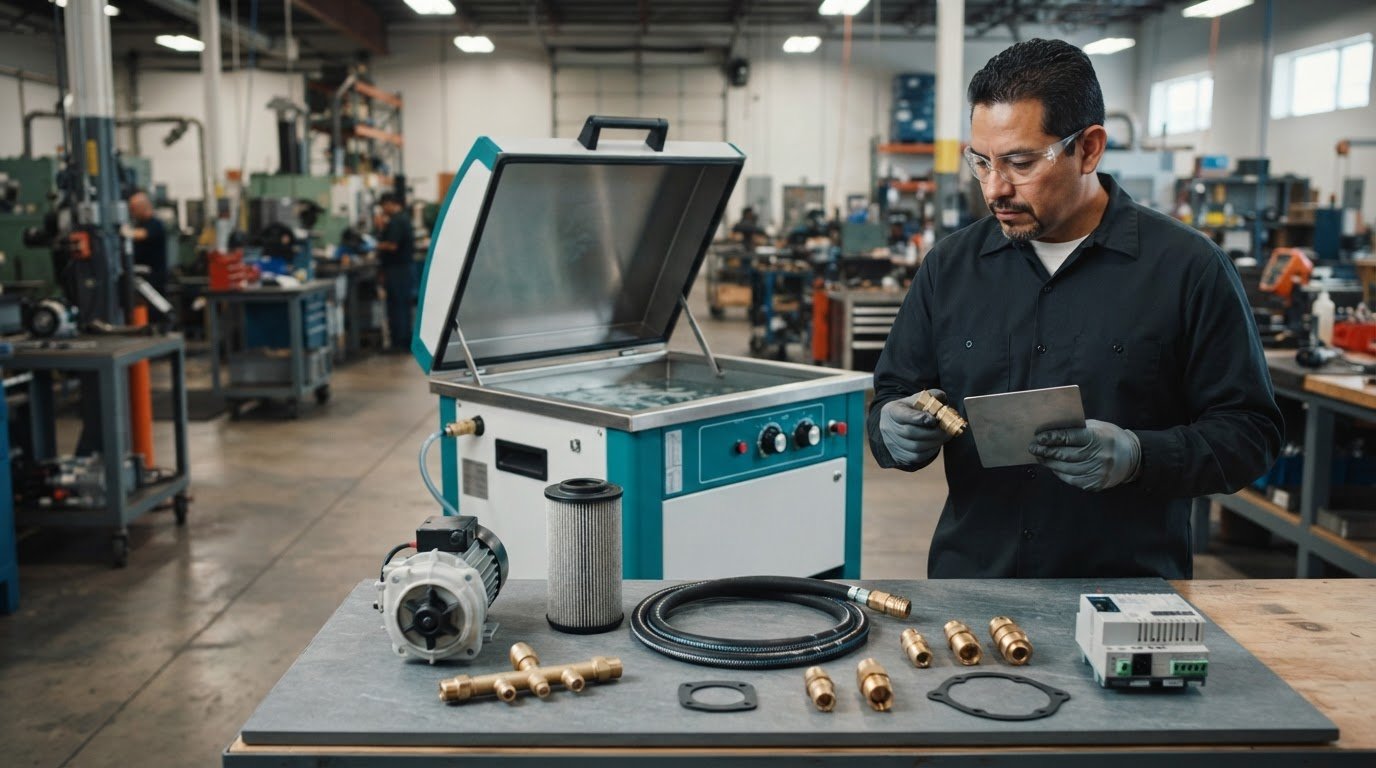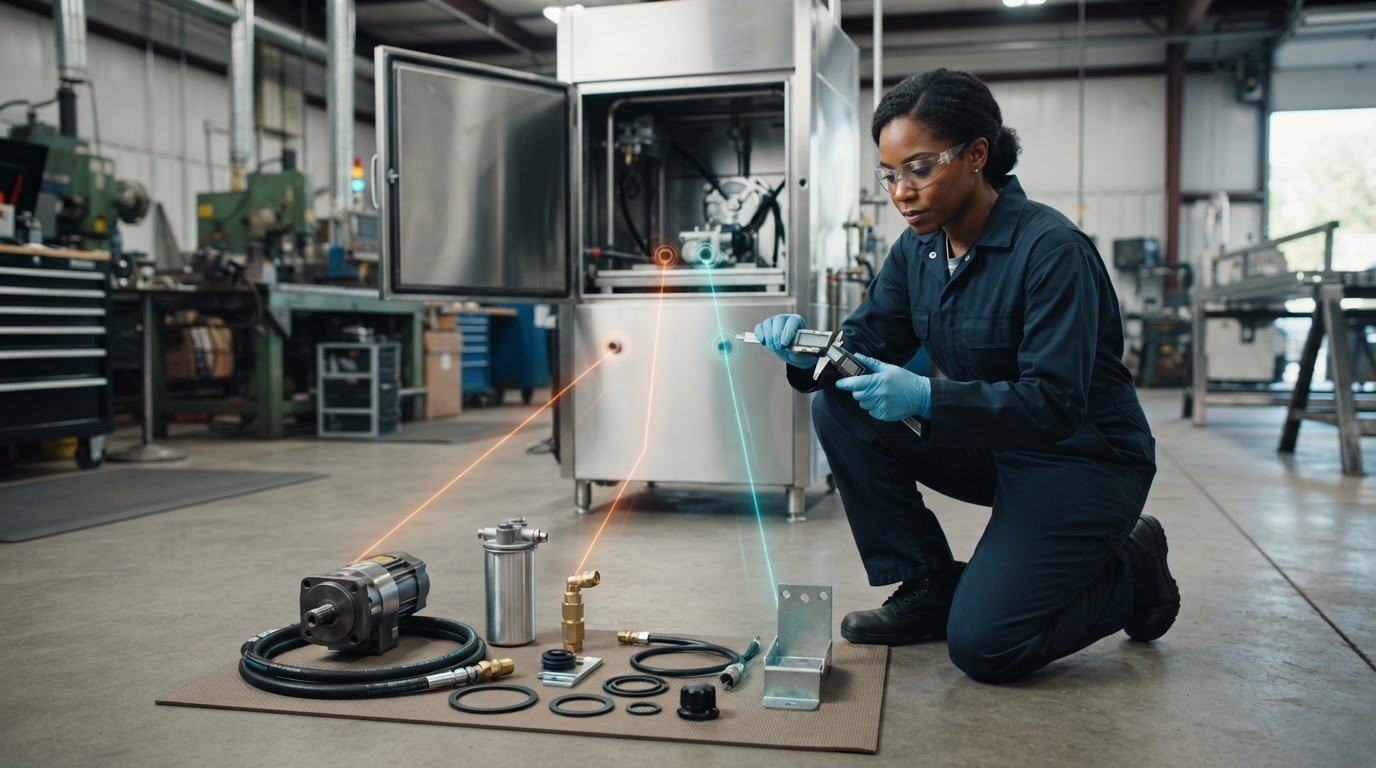

What if the machine isn’t the bottleneck, but the way cleaning fits into your production process? Manual cleaning takes labor and can produce inconsistent results. A poorly matched manufacturing parts cleaner machine can create new delays or fail to reach contamination in recessed features. The challenge is controlling the process by matching cleaning action, chemistry, cycle requirements, and part handling to the job.
You need parts that can move from machining to inspection, coating, plating, or assembly in the condition those steps require. This article explains the main stages of machine-based parts cleaning, compares spray, immersion, and ultrasonic approaches, and shows how part geometry, contaminants, cleanliness targets, and throughput shape equipment decisions. It also outlines what to clarify before specifying a system, so you can assess the washer, cleaning chemistry, and production workflow as connected parts of the operation.
Key Takeaways
- A manufacturing parts cleaner machine works best as part of a controlled production process, not as a standalone fix.
- Part geometry, contaminants, cleanliness targets, and production pace help determine which cleaning approach to assess.
- Map part flow, batch size, operator access, and downstream handoffs before specifying equipment.
- Recurring queues at manual cleaning or inconsistent results can signal that it’s time to evaluate machine cleaning.
- Equipment, cleaning chemistry, and replacement parts all matter when planning a dependable parts-washing operation.
What Is a Manufacturing Parts Cleaner Machine, and Where Does It Fit?
A manufacturing parts cleaner machine removes process soils from components through a controlled cleaning process. Unlike hand cleaning, which depends heavily on an operator’s technique and repeated manual steps, machine cleaning follows a defined process. Results still depend on the equipment, cleaning chemistry, part design, and operating conditions, so one setup shouldn’t be assumed to suit every application.
A manufacturing parts cleaner machine makes cleaning a planned production step between making or maintaining a component and sending it to its next operation. A part may need cleaning after machining, before inspection, ahead of finishing, or before assembly. Maintenance teams may also clean components before checking wear or returning equipment to service. The Parts washer overview offers additional background on the equipment category and its manufacturing and maintenance uses.
The goal isn’t simply to make a part look clean. A well-matched process can remove relevant soils, prepare a surface for downstream work, and make cleaning more consistent. Set the target based on what the next operation requires instead of assuming every component needs the same level of cleaning.
What contaminants can a manufacturing parts cleaner remove?
Depending on the application, parts washers may help remove oils, grease, chips, and other process soils. No machine or chemistry guarantees removal of every contaminant. Soil type, how strongly it adheres, part material, geometry, and the cleaning process all affect results. Confirm material and chemistry compatibility for the specific application, especially before introducing a new process or cleaning a sensitive component.
Why does parts cleaning matter in a production workflow?
Inspection, assembly, finishing, and maintenance can all depend on parts arriving in a condition suitable for the next task. Residual soil may complicate inspection or interfere with preparation for a downstream operation. Define what “clean enough” means at that handoff, then build the cleaning step around it.
Manual cleaning can demand operator time and produce different results from one person or shift to another. A machine provides a controlled way to clean parts, but it won’t automatically eliminate a bottleneck. Consider how parts move in and out, how often they need cleaning, and whether the selected process suits the components and production requirements. This helps cleaning support the workflow instead of creating another queue.
How Does a Manufacturing Parts Cleaner Machine Work?
A manufacturing parts cleaner machine runs a cleaning sequence, but the exact steps depend on the equipment, the soil, the chemistry, and the condition the part needs to reach. A typical workflow may include:
- Load and position: Arrange parts so the cleaning process can reach the surfaces that need attention.
- Apply cleaning action: The machine uses its designed process with the selected cleaning chemistry.
- Drain or rinse: Drainage or rinsing may follow the wash, depending on the process.
- Dry and inspect: Dry parts if required, then check them against the cleanliness needs of the next operation.
A cleaning cycle combines time, temperature, chemistry, and mechanical action to address specific soils while protecting the part and preparing it for its next step. Treat these variables as a coordinated process, not as independent controls.
How do time, temperature, chemistry, and mechanical action interact?
Time sets how long the process acts on a part; temperature describes the operating heat when the selected process uses it; chemistry helps loosen or remove soils; and mechanical action describes how the process brings cleaning energy or solution into contact with surfaces. Increasing one variable doesn’t automatically improve results. It may affect part compatibility or the performance of other process elements. Before establishing a cycle, confirm recommended settings and chemistry compatibility for the parts and soils through application testing or supplier guidance.
What happens before and after the wash cycle?
Loading matters. Position parts to expose target surfaces and allow drainage, while avoiding arrangements that trap soil or cleaning solution. After the cycle, follow the selected process for draining, rinsing, or drying, where applicable. Handle cleaned parts so they don’t pick up contaminants again before inspection or the next production step.
Set cleanliness checks around the actual requirement. A visual check may suit some tasks, while a downstream specification may call for a more defined inspection method. Keep acceptance criteria consistent so operators know what condition qualifies for release. If the process uses toxic cleaning solvents, review applicable requirements carefully: OSHA toxic solvent regulations at 29 CFR 1915.32 address shipyard employment, so verify whether that standard applies to your operation and check the requirements relevant to your workplace.
For a process review, consider the washer, chemistry, and replacement parts together. The Global One Group supplies industrial parts washers and cleaning chemistries for facilities assessing their parts-washing needs.
Which Parts-Cleaning Approach Fits Different Manufacturing Needs?
No single cleaning method suits every manufacturing application. The right fit depends on the part, contamination, equipment design, production needs, and required cleanliness. Use this comparison to narrow the options, then validate the process on representative parts before specifying equipment.
| Approach | Process and soils to assess | Geometry and throughput questions |
|---|---|---|
| Spray washing | Applies cleaning action to loaded parts. Assess whether the process can address the specific oils, grease, chips, or other soils. | Can the cleaning action reach recessed features and complex surfaces? Can loading and cycle requirements support the needed part flow? |
| Immersion | Places parts in a cleaning bath. Consider whether contact with the bath suits the contamination and material. | Will the bath reach the areas that need cleaning, including internal features? Assess batch handling and required cycle time. |
| Ultrasonic cleaning | Uses sound-wave energy in a liquid cleaning bath. Validate its effectiveness against the actual soil and cleanliness target. | Check how part geometry, material, loading, and production volume affect process results and handling. |
When might spray washing or immersion be considered?
Spray washing directs cleaning action toward loaded parts; immersion brings parts into contact with a cleaning bath. Either may be worth evaluating, but the method’s name alone doesn’t establish suitability. Pay particular attention to blind holes, narrow passages, complex geometry, and stubborn soils. Test whether the process reaches the target surfaces and removes contamination without compromising the part.
When might ultrasonic cleaning be considered?
Ultrasonic cleaning uses sound-wave energy in liquid to support soil removal. Its suitability depends on part material, geometry, contamination, equipment design, and the cleanliness requirement. Omegasonics is one example of a search result focused on ultrasonic equipment, not an endorsement or a claim about The Global One Group’s offerings. Treat any proposed method as an option to validate on representative parts.
Before choosing a manufacturing parts cleaner machine, define the soil to remove, the surfaces that must be reached, material compatibility, acceptable cleanliness, and required throughput. Compare process results with the next operation’s requirements. That evidence, rather than a technology label, should guide equipment and chemistry selection.

How Do You Integrate a Parts Cleaner into Manufacturing Operations?
Plan the cleaning step around the parts moving through the plant, not just the machine’s location. Map where components arrive from machining or maintenance, how often they need cleaning, how many fit into a typical batch, and where they go next. Then check whether the proposed process can keep pace without creating a queue at loading, unloading, inspection, or assembly.
Wash-bay layout affects the handoff. Account for floor space, operator access, part handling, and the route between dirty and clean areas. Consider how workers will load and unload parts safely and consistently, and whether the layout helps prevent cleaned components from contacting incoming soil. For more on evaluating this part of the workflow, see industrial spray wash cabinet workflow guidance.
What should a plant assess before adding a cleaning machine?
Build a requirements list before comparing equipment. Record representative part dimensions and materials, the soils to remove, the condition required for downstream work, cleaning frequency, batch size, and expected production flow. Review available utilities, operator access, loading methods, and floor layout with qualified personnel. Separate confirmed requirements from assumptions, especially assumptions about cycle time, cleaning results, or material compatibility that need application testing.
Chemistry and process controls must match the parts and contamination. Confirm compatibility and operating recommendations with equipment documentation and chemistry supplier guidance. Don’t assume a change in chemistry or operating conditions will suit every part or soil.
How can teams keep cleaning performance consistent?
Set repeatable procedures for loading, operating, unloading, and checking cleaned parts. Make the acceptance criteria clear at the handoff so operators can identify results that need review. Track process results and investigate visible changes, recurring soil, or variation in the required cleanliness. These signals can point to changes in incoming parts, contamination, chemistry, or operating conditions.
Include routine checks for bath condition and filtration where the equipment includes filtration. Follow the manufacturer’s documentation for inspection and maintenance details; machines don’t all use the same components or require the same checks. Before changing operating parameters or chemistry, consult the relevant equipment documentation and supplier guidance, then verify the effect on representative parts.
Information about parts-washing equipment and chemistry from The Global One Group can help frame an evaluation of your production workflow.
When Should You Evaluate a Manufacturing Parts Cleaner Machine?
Recurring queues at a manual-cleaning station, inconsistent results between operators, or rising maintenance demands are signals to investigate the cleaning process. They don’t automatically mean a machine will solve the problem. First identify where the delay or variation starts: part handling, the cleaning method, chemistry, staffing, or the handoff to the next operation.
Evaluate a manufacturing parts cleaner machine when you can define the problem and the production requirement it needs to meet. Compare the current process with the proposed one, including the parts involved, soils to remove, compatibility needs, cycle expectations, workflow fit, chemistry, and ongoing maintenance. Testing representative parts and confirming application requirements should inform equipment discussions, rather than assumptions about what a machine can achieve.
What information should you gather before discussing equipment?
Bring representative parts and document their materials, dimensions, and contamination. Record current cleaning steps, throughput expectations, operator tasks, and the cleanliness condition required at the next handoff. Note where queues form and how often they occur. This gives suppliers practical context to discuss application fit and explain how they assess and validate cleaning performance for your parts and process.
Ask which requirements they can confirm from documentation and which need testing. Clarify how they evaluate chemistry compatibility, process results, cycle expectations, loading, and maintenance needs. Keep the questions specific to your production conditions. A process that works for one part or soil may not transfer directly to another.
How can The Global One Group support the next evaluation step?
The Global One Group supplies industrial parts washers, specialized parts-washing chemistries, and replacement parts for Magido and Fountain washers. The company is a Certified Master Distributor of Magido Cleaning Systems. Considering equipment, chemistry, and replacement parts together can help you frame the evaluation around sustained operation, not just the initial equipment choice.
Use the information you’ve gathered to clarify what the process must handle and what still needs verification. The Global One Group’s industrial parts-cleaning solutions include washers, cleaning chemistries, and Magido and Fountain replacement parts.
Build a Cleaning Process That Keeps Production Moving
A manufacturing parts cleaner machine should address a defined process need, not become another piece of equipment waiting for parts. Start with the work: identify the soils, confirm part and chemistry compatibility, and set cleanliness criteria around the next production step. Then compare suitable cleaning approaches and assess how loading, batch flow, inspection, and ongoing checks fit your operation.
Test representative parts and verify application requirements before settling on equipment or operating conditions. That groundwork helps distinguish a real cleaning bottleneck from a problem elsewhere in the workflow and gives equipment discussions a clear operational basis.
The Global One Group supplies industrial parts washers, specialized cleaning chemistries, and Magido and Fountain replacement parts. As a Certified Master Distributor of Magido Cleaning Systems, the company can be a practical resource as you evaluate equipment and the supporting elements of a sustained cleaning operation.
To discuss your parts-washing needs, explore The Global One Group’s industrial parts-cleaning solutions.
Frequently Asked Questions
What does a manufacturing parts cleaner machine do?
A manufacturing parts cleaner machine removes process soils from components through a controlled cleaning process. Depending on the application, it may address oils, grease, chips, or other contamination before inspection, finishing, assembly, or maintenance. The equipment and chemistry must suit the soil and part material. Define the cleanliness condition needed for the next operation, then verify that the selected process can meet it on representative parts.
How does an industrial parts cleaner machine work?
An industrial parts cleaner typically loads parts, applies a cleaning action, and then drains or rinses them when the chosen process requires it. Drying and inspection may follow, depending on the equipment and required part condition. Time, temperature, mechanical action, and cleaning chemistry all affect results. Appropriate settings depend on the parts and contamination, so use equipment documentation, supplier guidance, and application testing rather than assuming one cycle suits every job.
Which cleaning method is best for manufacturing parts?
No single method is best for every part. Spray washing directs cleaning action at loaded parts, immersion brings parts into contact with a cleaning bath, and ultrasonic cleaning uses sound-wave energy in liquid. Compare each approach against the part’s geometry, material, contamination, throughput needs, and cleanliness requirement. Test representative components, including complex features or blind holes, to check cleaning results and compatibility before settling on a process.
Can a parts cleaner machine remove oil and grease?
It may remove oil and grease when the cleaning process, chemistry, and equipment match the specific soil and part. Results also depend on how the contamination adheres and whether the process reaches the affected surfaces. Check compatibility with the part material and validate performance on representative components. Don’t treat a machine’s general ability to clean as proof that it will remove every oil or grease from every part.
What should manufacturers consider before installing a parts cleaning machine?
Document the parts’ dimensions and materials, the soils to remove, and the cleanliness required for downstream work. Map cleaning frequency, batch size, production flow, and handoffs to inspection, finishing, or assembly. Assess floor space, utilities, loading and unloading, operator access, and how cleaned parts will avoid recontamination. Separate confirmed requirements from assumptions, then verify equipment fit, chemistry compatibility, and process results with qualified guidance and application testing.
How can a parts cleaning machine reduce production bottlenecks?
A cleaning machine may help address a bottleneck if manual cleaning creates recurring queues or inconsistent steps between production stages. Start by locating where parts wait and how cleaning frequency, batch size, loading, and unloading affect flow. Then assess whether a suitable machine and process can fit the required handoffs and throughput. Machine cleaning isn’t an automatic fix; a mismatch in process or layout can simply move the queue elsewhere.
How often should an industrial parts cleaner be maintained?
Follow the equipment manufacturer’s maintenance documentation rather than applying one schedule to every washer. Check bath condition, filtration where fitted, and visible changes in cleaning results as part of routine process oversight. Appropriate checks and intervals depend on equipment design, use, chemistry, and operating conditions. Consult equipment documentation and chemistry supplier guidance before changing parameters or maintenance practices, and investigate recurring changes in cleaning performance promptly.