More frequent waste pickups won’t fix a parts-washing process that keeps generating avoidable waste. To reduce hazardous waste parts washing, start at the source: control contamination, extend bath life where the process allows, and identify each waste stream before it leaves the facility.
Spent wash solutions aren’t the only concern. Sludge and used filters can also create recurring handling and documentation work, while an untested process change can put cleaning quality or production at risk. First, establish what’s being discarded, why it’s accumulating, and how to reduce it without compromising the wash.
This practical checklist helps you map waste streams, spot avoidable contamination, and apply process controls that may extend bath life. It also explains how to verify waste determinations and document changes before disposal. Because equipment, chemistry, soils, and process conditions all affect results, assess them together before changing your operation. The goal is less waste at the source, dependable cleaning performance, and a more controlled path from washer to disposal.
Key Takeaways
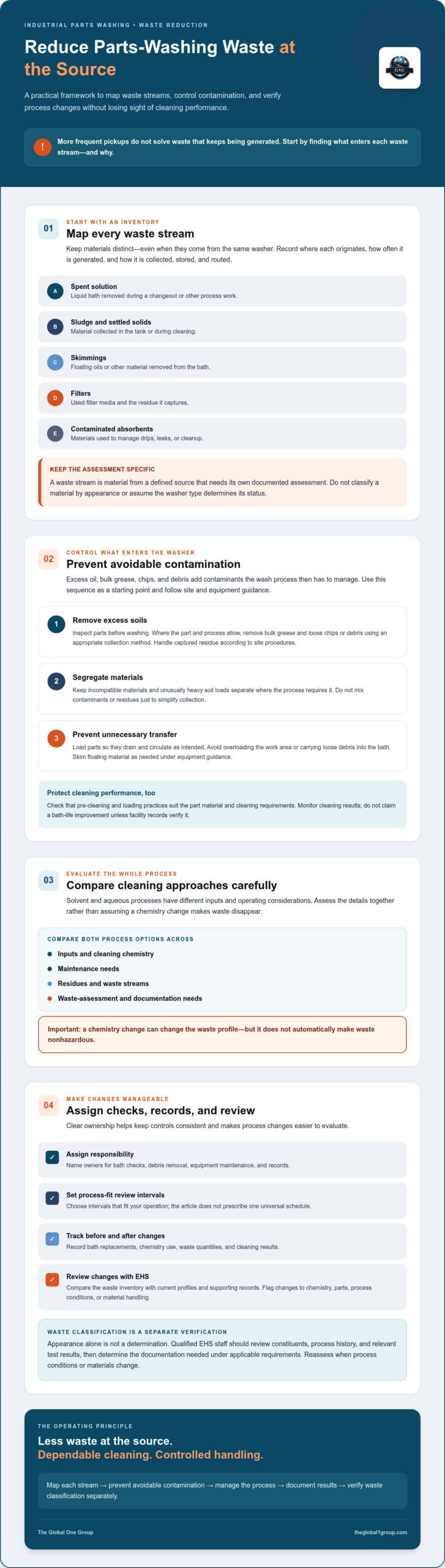
- Map each waste stream, including spent solution, sludge, skimmings, filters, and contaminated absorbents, to identify where avoidable waste builds up.
- Reduce hazardous waste parts washing by removing excess soils and debris before cleaning and preventing unnecessary contamination of the bath.
- Compare solvent and aqueous processes by their inputs, maintenance, residues, and waste-assessment needs. A chemistry change can change the waste profile, but it doesn’t automatically make waste nonhazardous.
- Assign ownership for bath checks, debris removal, equipment maintenance, and records. Choose review intervals that fit your process.
- Track bath replacements, chemistry use, waste quantities, and cleaning results before and after changes, and verify waste classification separately.
Hazardous Waste in Parts Washing: A Waste-Stream Checklist
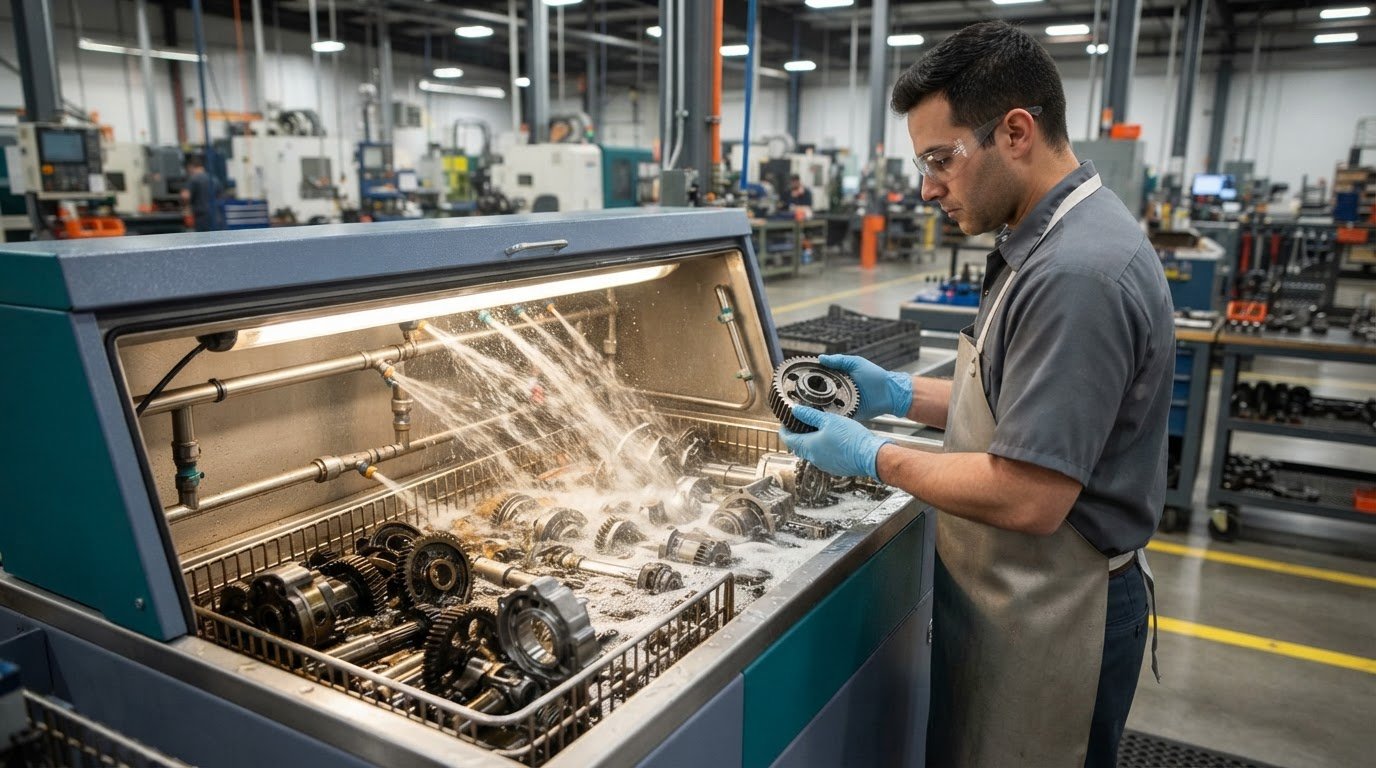
Parts-washing waste doesn’t come from chemistry alone. Soils removed from components, routine maintenance, and spill cleanup can all add material to the disposal stream. Before changing a washer or cleaning chemistry, identify what your operation generates and how staff handle each material. This inventory gives your team a practical starting point to reduce hazardous waste parts washing while keeping cleaning performance in view.
Review the full process, from loading dirty parts to maintaining the washer and cleaning up drips. For context on how cleaning methods and environmental concerns vary, see this overview of industrial parts cleaning processes.
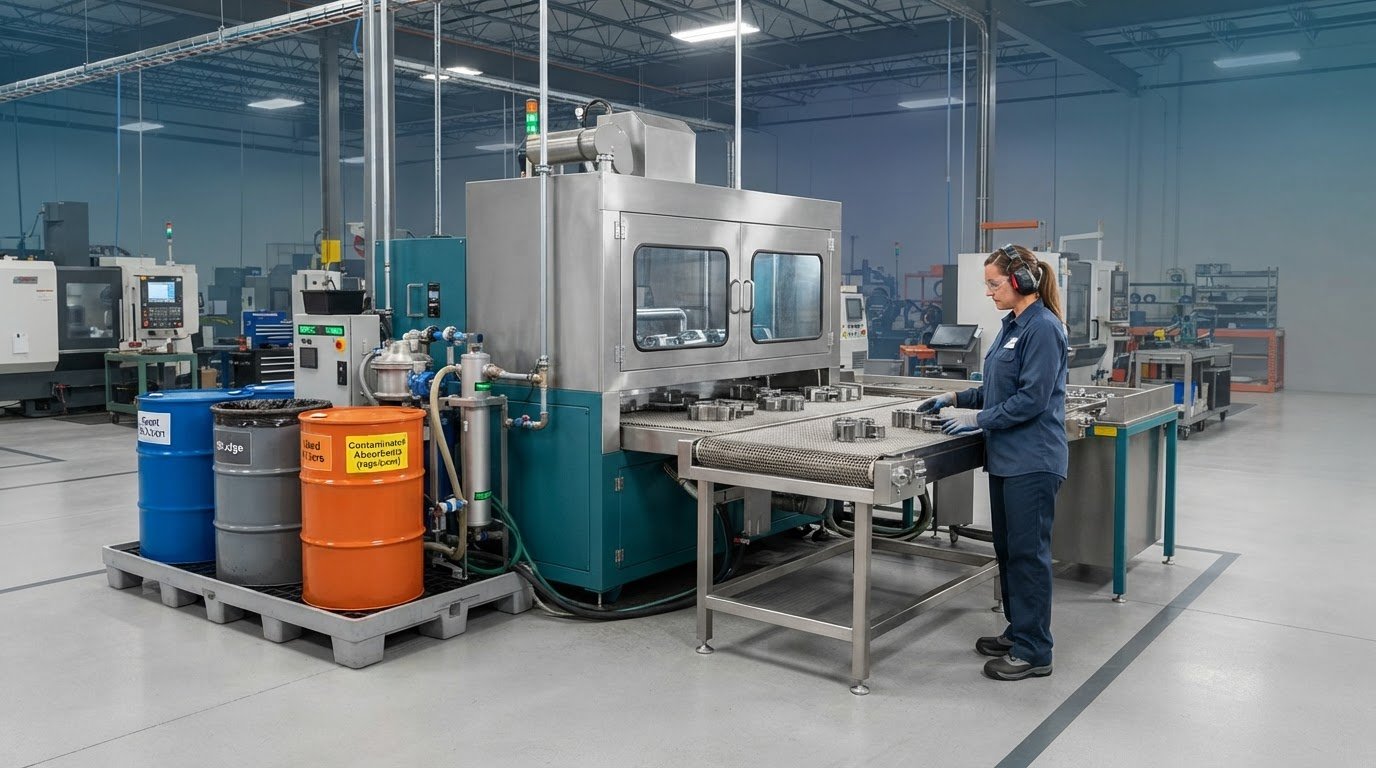
- Spent solution: Liquid bath removed during a changeout or other process work.
- Sludge and settled solids: Material that collects in the tank or during cleaning.
- Skimmings: Floating oils or other material removed from the bath.
- Filters: Used filter media and the residue it captures.
- Contaminated absorbents: Materials used to manage drips, leaks, or cleanup.
A waste stream is a material from a defined source that requires its own documented assessment before the facility decides how to manage it. Don’t combine different materials in your records simply because they came from the same washer.
Map every parts-washing waste stream before changing the process
Build an inventory that captures each material, where it originates, how often it’s generated, and how staff collect, store, and route it. Keep liquid baths, settled solids, filters, skimmings, and cleanup materials distinct. Separating them can reveal which activities drive waste generation and gives EHS staff a useful record to review.
Ask your EHS team to compare the inventory with existing waste profiles and supporting records. Flag missing information, process changes, or changes in how materials are handled. Because a process change can affect what enters a waste stream, update records through your facility’s review process rather than relying on an old profile without checking.
What determines whether spent parts-washing material is hazardous?
Appearance isn’t a determination. A clear liquid, dark sludge, or water-based bath can’t be classified by sight alone, and the type of washer or cleaning process doesn’t settle the question either. Under applicable federal and state requirements, the generator must assess each waste. Constituents, process history, and relevant test results may inform that assessment; no single rule applies to every spent solution or residue.
Have qualified EHS staff review the facts and determine what documentation the facility needs. If the chemistry, parts being cleaned, or process conditions change, flag the change for review before making assumptions about classification or disposal.
Reduce Hazardous Waste at the Source by Controlling Contamination
Every load carries more than the parts themselves. Excess oil, bulk grease, chips, and other debris can enter the wash bath, adding contaminants the process then has to manage. To reduce hazardous waste parts washing, control what enters the washer before relying on filtration or changing chemistry. Use this sequence as a starting point, then adapt it to the parts, washer, and site procedures.
- Remove excess soils. Inspect parts before washing. Where the part and process allow, scrape off bulk grease and remove loose chips or debris using an appropriate collection method. Follow site procedures for handling the captured residue.
- Segregate materials. Keep incompatible materials and unusually heavy soil loads separate where your process requires it. Don’t mix contaminants or residues simply to streamline collection.
- Prevent avoidable transfer. Load parts so they drain and circulate as intended for the washer. Avoid overloading the work area or carrying loose debris into the bath. Skim accumulated floating material as needed under equipment guidance.
These controls target avoidable contamination, not cleaning performance. Check that pre-cleaning and loading practices suit the part material and cleaning requirements, then monitor the results. Don’t claim a specific bath-life improvement unless your facility’s records verify it.
Keep excess oil, chips, and debris out of the wash bath
Make a quick pre-wash inspection part of the handling routine. A component with loose chips or a heavy grease deposit may need an appropriate removal step before it joins a shared wash cycle. If a heavily soiled part would burden the rest of the load, separate it according to your process rather than transferring that soil across the batch. Collect removed material in suitable containers and follow site procedures for storage and waste assessment.
Extend bath life with filtration and maintenance controls
Filtration, settling, skimming, and washer maintenance can help manage contaminants, but the right approach depends on equipment guidance and actual soil loads. Check whether filters suit the material being captured, remove accumulated debris using established procedures, and record relevant bath checks. Don’t judge bath condition by appearance alone; use checks appropriate to the chemistry and process.
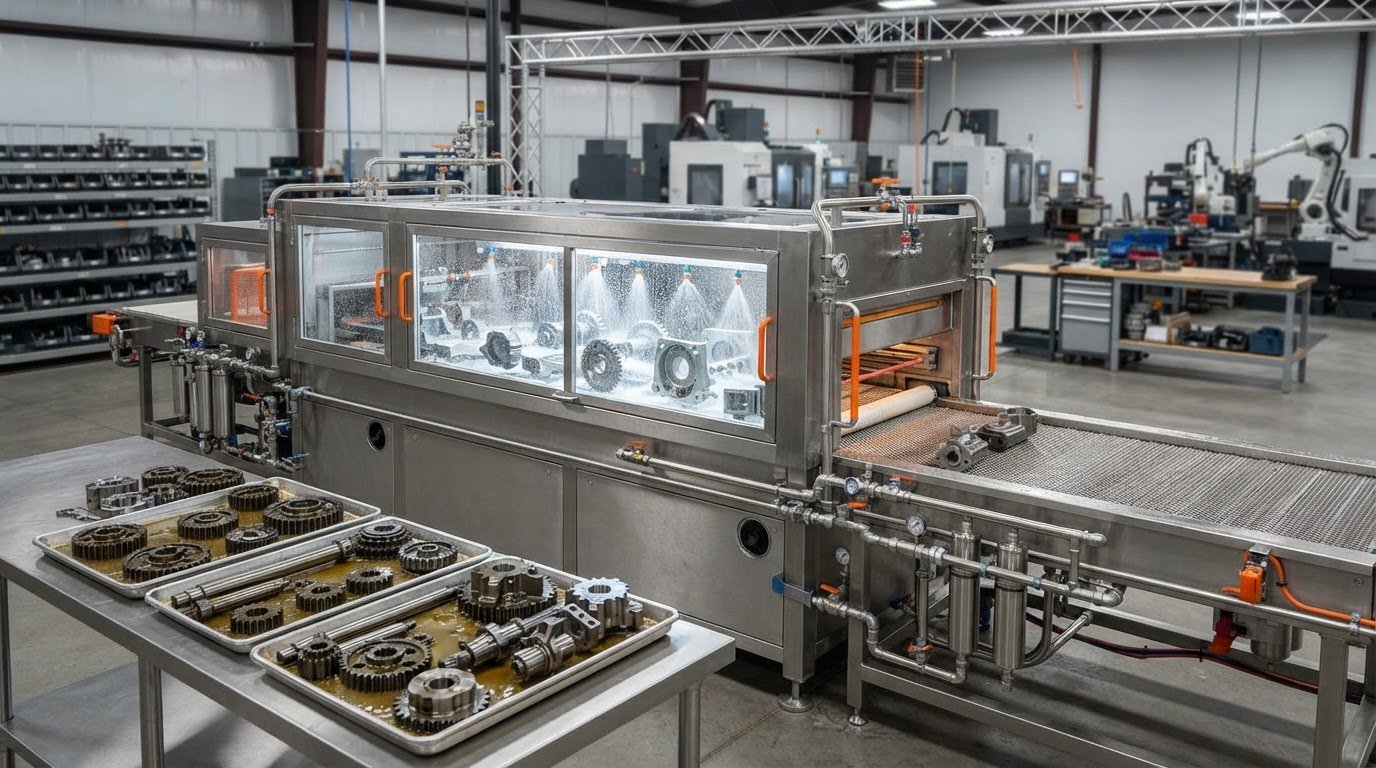
For process context, see this aqueous parts washer guide. The EPA’s Managing Your Hazardous Waste guide also addresses waste management for common activities such as parts washing. If you’re reviewing washer condition or chemistry compatibility, compare parts-washing equipment and chemistry options against your soils, substrates, and process conditions.
Compare Solvent and Aqueous Parts Washing Without Assuming Waste Disappears
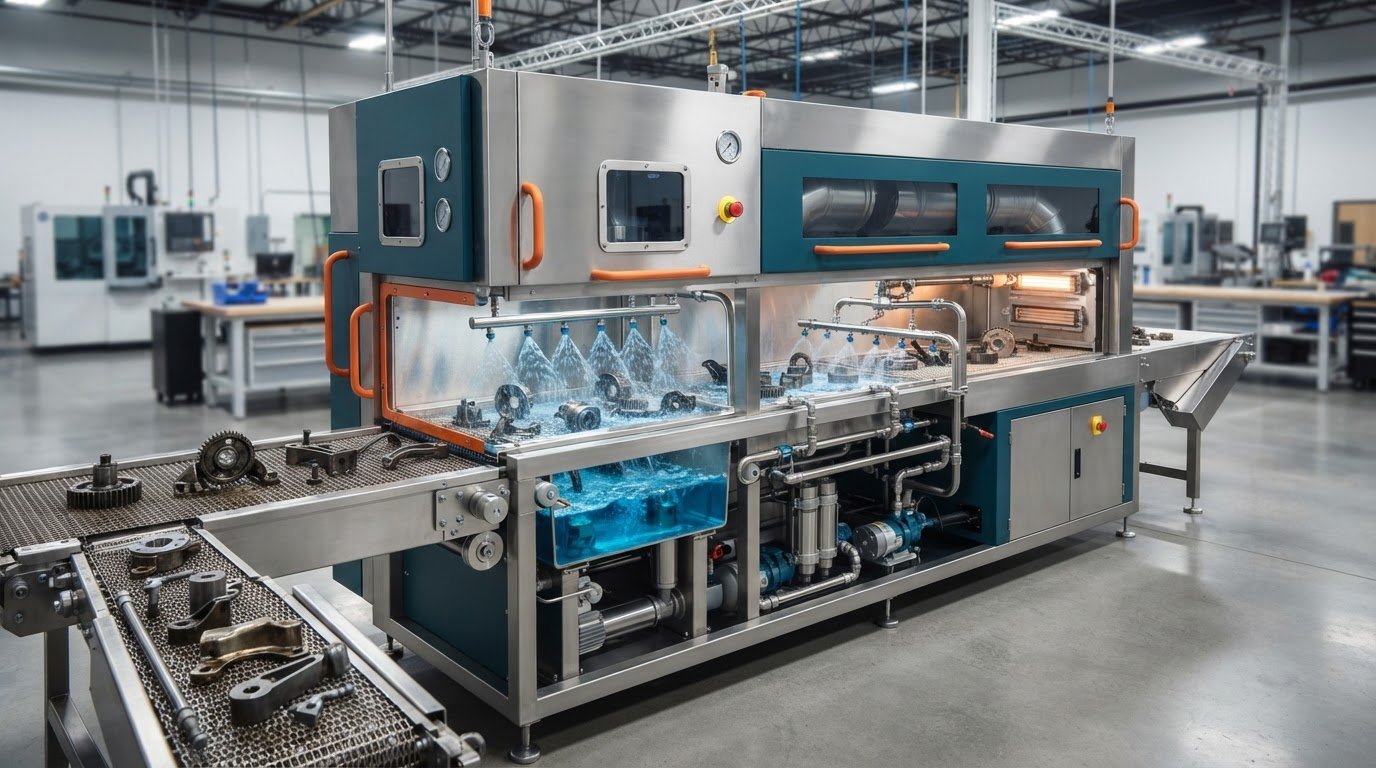
Changing cleaning chemistry can change what enters the waste stream, but it doesn’t remove the need to assess that waste. A plan to reduce hazardous waste parts washing should compare the full process: soils removed from parts, chemistry inputs, filtration and maintenance, residues, and spent-bath handling. An aqueous process may produce a different waste profile, but water-based cleaning alone doesn’t establish that a waste is nonhazardous.
Use this comparison to guide questions, not to assume every solvent or aqueous system behaves the same way. Actual results depend on the application, soils, chemistry, washer, and operating conditions.
| Area to compare | Solvent process | Aqueous process |
|---|---|---|
| Process inputs | Review the cleaner and the soils the process removes. | Review water, cleaning chemistry, soils, and process conditions. |
| Maintenance | Check equipment guidance and how the facility manages accumulated soils and spent cleaner. | Review filtration, settling, skimming, and bath checks against equipment guidance and soil loads. |
| Residues | Identify spent solution, captured soils, and other residues generated by the process. | Identify spent solution, captured soils, filters, and cleanup residues. |
| Waste assessment | Assess each waste stream using its process history, constituents, and relevant records or test results. | Apply the same stream-by-stream assessment. Water-based chemistry doesn’t guarantee nonhazardous waste. |
What changes when a facility evaluates aqueous cleaning?
Treat aqueous cleaning as a process option, not a waste-classification shortcut. Confirm that the process removes the target soils from the relevant substrates, then assess temperature, cycle requirements, and drying needs against production requirements. Before a trial, ask qualified EHS staff to review how the resulting spent solution and residues should be assessed and documented.
For common assumptions to test, consult this solvent-free parts washer guide. Confirm chemistry compatibility with the facility’s soils, substrates, washer, and process conditions rather than relying on a broad technology label.
Compare cleaning performance and waste handling together
Set measurable cleanliness acceptance criteria before the trial. Define how the team will inspect or verify cleaned parts, and use the same method throughout the comparison. Then record chemistry use, bath maintenance, residue generation, and cleaning results. This lets operations compare process performance and waste generation without treating either as a proxy for the other.
Use the industrial aqueous cleaning implementation guide to consider planning factors. Evaluate equipment, chemistry, maintenance demands, and waste handling as one operating system, then document what the trial actually demonstrates.
Use This Parts-Washing Checklist to Control Bath Life and Waste Handling
A checklist only works when someone owns each task and records what they find. Set daily, weekly, and periodic review points to match production demands, equipment guidance, chemistry instructions, and site-specific safety procedures. These are planning categories, not universal intervals. Adjust them to your process, and define who performs each check, who reviews the records, and who approves changes.
Consistent process monitoring helps identify avoidable contamination before bath replacement. It also gives operators a clearer basis for investigating cleaning problems instead of changing the bath by habit.
- Daily or per operating shift: Assign an operator to check the washer using the process checks your site specifies. Record chemistry additions, relevant operating conditions, visible soil loading, and cleaning outcomes. Remove debris according to equipment guidance and site procedures.
- Weekly or at a site-defined interval: Assign a lead or maintenance owner to review recurring trends, inspect filtration and skimming practices, and confirm that debris-removal tasks are complete. Compare cleaning results with your acceptance criteria.
- Periodically, based on process needs: Have the designated process or EHS owner review records, maintenance needs, waste handling, and whether current action limits still fit the equipment, chemistry, and actual soil loads.
Set action limits using equipment and chemistry guidance, not guesswork. If results move outside those limits, pause and investigate the cause before adjusting the bath or changing operating conditions.
Monitor the wash process before performance drops
Keep records consistent enough to reveal patterns. If parts need repeated washing, retain residue, or fail cleaning checks, document the affected load and conditions. Then look for changes in soil type, loading, chemistry additions, filtration, or equipment condition. Rewashing can signal a process issue, but it doesn’t identify the cause on its own. Investigate first; don’t use an unplanned bath replacement as a substitute for diagnosis.
Follow equipment and chemistry instructions alongside site safety procedures. Assign clear roles for routine checks, maintenance, and record review so problems don’t fall between shifts.
Handle spent solution, sludge, and filters responsibly
Keep spent solution, sludge, filters, and other residues identified and managed under facility procedures and applicable requirements. Don’t dilute, mix, discharge, or reclassify waste to avoid proper review. Maintain the waste determination and supporting records for each stream, and involve qualified EHS staff when chemistry, soils, equipment, or process conditions change.
Reviewing a washer or chemistry change? Discuss parts-washing equipment and chemistry options against your process conditions and documented needs.
Verify Waste Reductions and Choose Parts-Washing Support That Fits
A change in bath life or waste volume is useful only if your records show what changed and cleaning results remain acceptable. To reduce hazardous waste parts washing responsibly, compare a documented baseline with follow-up results. Keep operational measurements separate from formal waste determinations and disposal records.
Measure results without overstating environmental or compliance claims
Use the same units, time periods, waste categories, and production-volume basis for each comparison. For example, compare bath replacements and waste quantities over equivalent operating periods while tracking chemistry use and cleaning outcomes. If production volume or part mix changes, record that context so the comparison doesn’t imply an improvement the data can’t support.
Document what changed, when it changed, and how it affected cleaning quality, maintenance demands, and waste generation. A lower recorded volume is an operational result, not proof that a waste stream has a different regulatory classification or disposal outcome. Keep the facility’s waste determinations and supporting records distinct from process-performance data, and avoid claiming compliance or hazardous-waste reduction without evidence to support the claim.
Turn the assessment into a practical equipment and chemistry review
Use the results to define what the process needs next. Match washer capacity and configuration to the parts, soil types, production throughput, and available floor space. Review equipment condition and maintenance needs as part of that decision. A process change won’t solve recurring performance issues if the washer can’t support the application.
Confirm that parts-washing chemistry suits the soils, substrates, washer, and operating conditions. If you use Magido or Fountain equipment, verify replacement-part compatibility with the specific system and application. Don’t assume one chemistry, washer setup, or part will fit every process. A knowledgeable review can help connect equipment, chemistry, and maintenance needs without promising an unverified bath-life or waste outcome.
Bring your baseline records, cleaning requirements, and equipment details into the discussion. Talk with The Global One Group about parts-washing equipment and chemistry, including replacement parts for Magido and Fountain systems.
Make Your Next Parts-Washing Improvement Measurable
Waste reduction starts with a clear view of the process. Identify each waste stream, keep avoidable soils and debris out of the bath, and monitor cleaning results alongside chemistry use and waste quantities. These steps help you reduce hazardous waste parts washing without assuming a new cleaning method automatically changes a waste’s classification.
Keep operational results separate from verified waste determinations. Compare consistent baseline and follow-up records, document process changes, and involve qualified EHS staff when waste profiles or conditions need review. That discipline helps protect cleaning quality while giving your team a sound basis for its next decision.
Equipment condition, compatible chemistry, and the right replacement parts all contribute to dependable parts-washing performance. The Global One Group supplies industrial parts washers, specialized washing chemistries, and replacement parts for Magido and Fountain equipment. Confirm compatibility with your application, then talk with The Global One Group about parts-washing equipment and chemistry.
Start with the waste stream you can measure today. A practical, well-documented improvement can build momentum for a more controlled process.
Frequently Asked Questions
Does switching to an aqueous parts washer eliminate hazardous waste?
No. Aqueous cleaning may change the waste profile, but water-based chemistry doesn’t automatically make spent solution, sludge, filters, or other residues nonhazardous. Soils removed from parts and process conditions also affect what the facility generates. Assess each resulting waste stream under applicable requirements, and have qualified EHS staff review the process history, constituents, and relevant test results before determining how to manage it.
How can a parts washer bath last longer?
Keep excess grease, chips, and debris out of the bath, avoid overloading shared cycles, and use skimming, filtration, and maintenance practices suited to the equipment and soil load. To reduce hazardous waste parts washing, track chemistry additions, operating conditions, and cleaning results rather than relying on appearance alone. Follow equipment and chemistry instructions, and use facility records to verify whether process changes actually extend bath life without reducing cleaning quality.
Is spent parts-washing solution always hazardous waste?
No. Spent solution isn’t automatically hazardous, but you can’t determine its status from appearance or from whether the washer uses solvent or aqueous chemistry. The facility must assess the waste under applicable federal and state requirements. Constituents, process history, and relevant test results may inform the determination. Ask qualified EHS staff to review the specific waste stream and its supporting records before deciding how to manage it.
Can filtration reduce hazardous waste from parts washing?
Filtration can capture soils and particles from a bath, which may help control contamination when the filtration method suits the equipment and process. It doesn’t guarantee longer bath life or less hazardous waste. Used filters and captured residues become separate materials for assessment and handling. Follow equipment guidance, monitor cleaning performance, and compare bath changes and waste quantities before and after adjustments to confirm whether filtration helps your operation.
What parts-washing waste streams should a facility track?
Track spent wash solution, sludge or settled solids, skimmings, used filters, and contaminated absorbents. Keep each stream distinct in the inventory, noting where it originates, how often it’s generated, and how staff currently handle it. This makes it easier to spot process changes and review existing waste profiles. Include cleanup materials and maintenance-related residues if your operation generates them, and ask EHS staff to review the records.
How do we know whether a waste-reduction change worked?
Compare baseline and follow-up records using the same waste categories, units, time periods, and production-volume basis. Track bath replacements, waste quantities, chemistry use, and cleaning results, while documenting process or maintenance changes that could affect the comparison. A measured drop in waste or bath changes is an operational result, not proof of a new hazardous-waste classification or disposal outcome. Keep those determinations separate and have EHS staff review them.