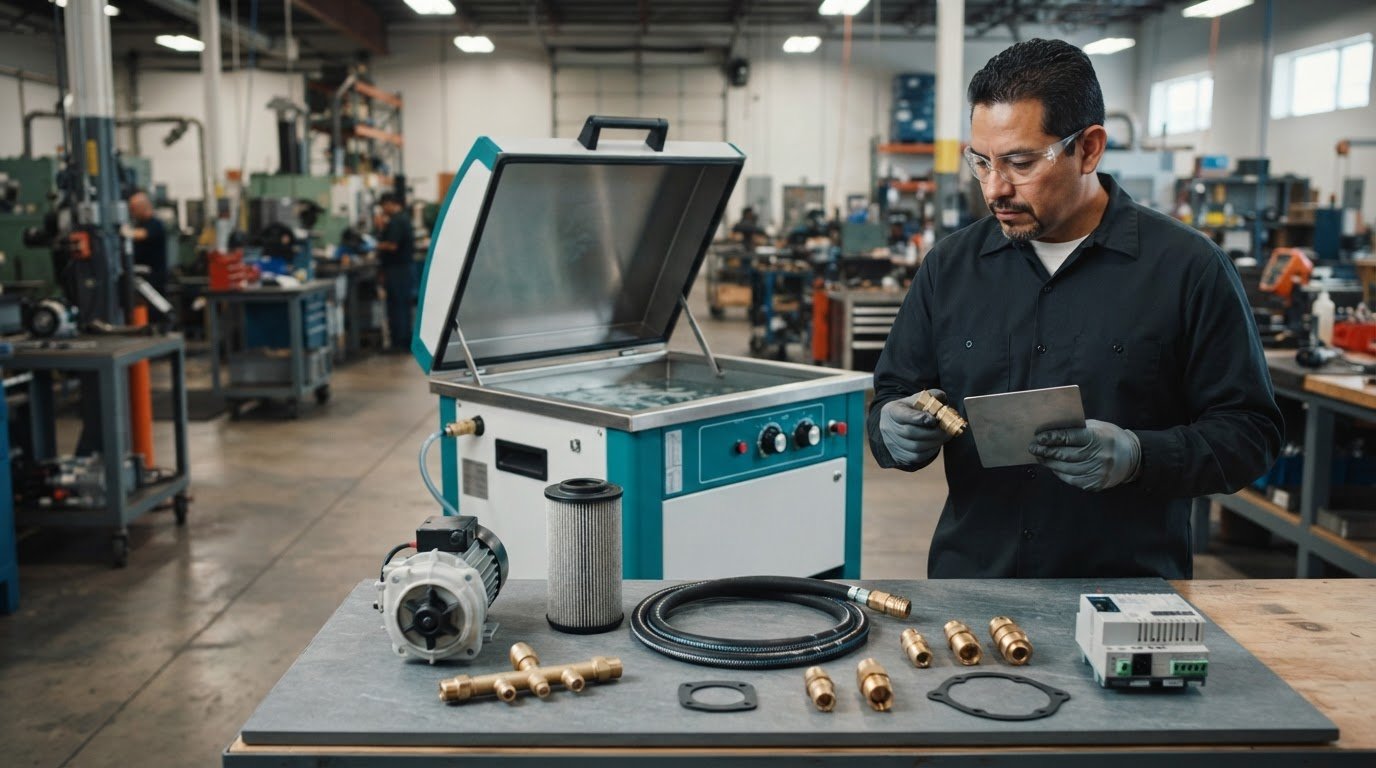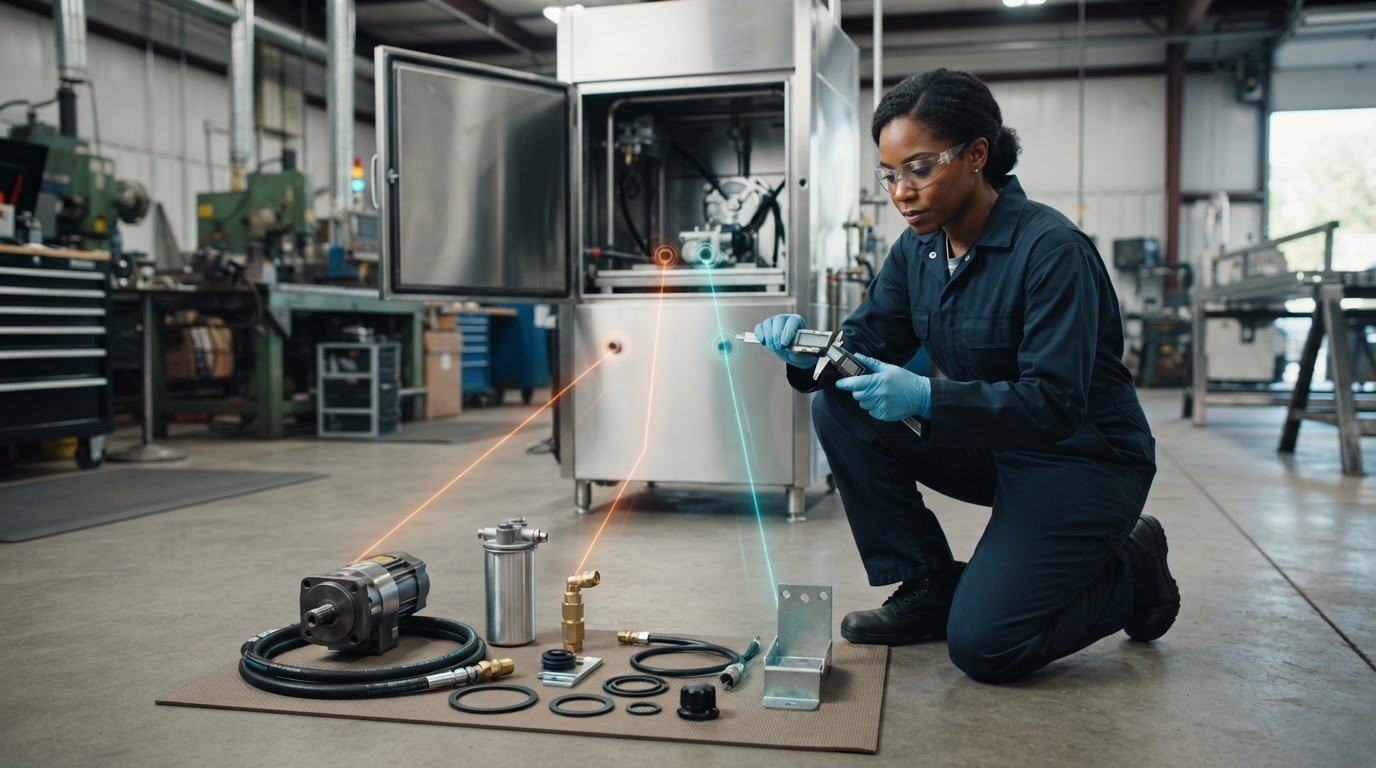
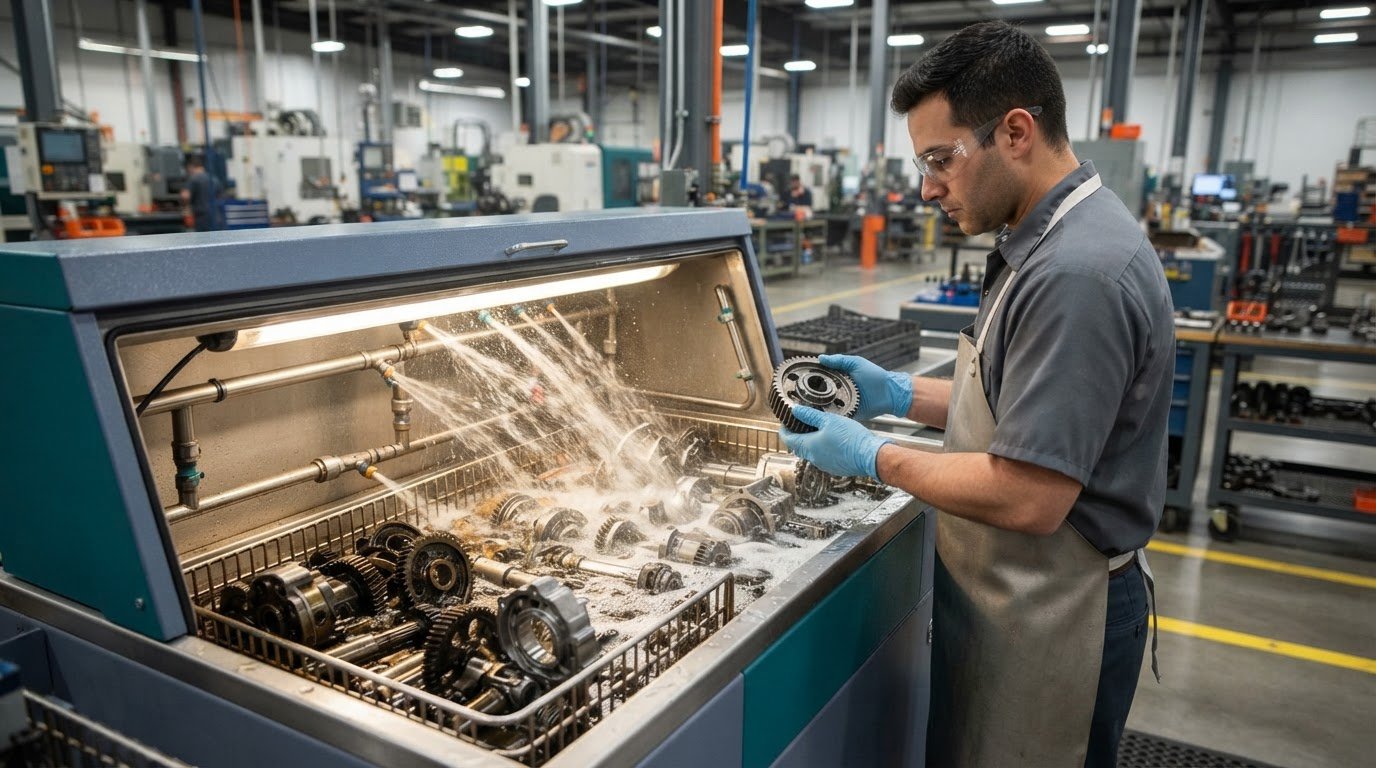
What does a “solvent-free” label tell you about cleaning results on the shop floor? A solvent free parts washer may use water-based chemistry, but that doesn’t automatically mean it will remove your specific oils, grease, or shop soils, or that the process has no handling requirements.
It’s reasonable to ask whether a different cleaning method will leave parts clean enough for inspection, assembly, or service. The answer depends on how well the chemistry, washer design, parts, contaminants, and cycle conditions work together, not on the label alone.
This article separates common claims from practical performance. You’ll learn what “solvent-free” can mean, how aqueous cleaning relies on chemistry, temperature, agitation, and cycle time, and what to verify for worker exposure, waste handling, material compatibility, and required cleanliness. Before choosing a washer, test the process on representative parts and confirm the cleaning agent’s safety information and operating recommendations. The Global One Group supplies industrial parts washers and specialized parts-washing chemistries to help facilities assess equipment and chemistry against real cleaning requirements.
Key Takeaways
- Treat “solvent-free” as a description to clarify, not proof of cleaning performance or safety.
- Assess a solvent free parts washer against your parts, soils, cleanliness standards, and production workflow.
- Compare the full process, including rinsing, drying, waste handling, and facility requirements, before switching methods.
- Build a validation plan around documented production needs, then test representative parts and soil loads using recommended conditions.
- Choose chemistry and washer design to meet verified operating requirements, not assumptions based on a label.
Solvent-Free Parts Washer Myths: What the Label Does, and Does Not, Promise
A “solvent-free” label alone proves neither that a washer will clean your parts nor that its process has no hazards. Treat the phrase as a description of a cleaning approach or chemistry, then verify what the supplier means for the specific equipment and cleaning fluid. A solvent free parts washer is only one part of a process: the washer’s action and the chemistry must suit the part, contaminant, and required result.
Solvent-free parts washing uses a cleaning approach that avoids a specified solvent, but performance and handling requirements depend on the equipment, formulation, and application. This distinction matters on the shop floor. A washer is equipment, while the cleaning fluid is a separate selection. Neither guarantees the right outcome on its own. Confirm that the chemistry is compatible with the washer and the parts, and check the recommended operating conditions.
Does solvent-free mean chemical-free or harmless?
No. Aqueous and other solvent-free processes can still rely on formulated cleaning chemistry. Water-based products may contain ingredients that help loosen and remove soils, and formulations vary. “Solvent-free” does not mean chemical-free, hazard-free, or suitable for every material.
Review the specific product’s safety data sheet (SDS) before use. Check its handling, storage, and exposure guidance, and assess it in the context of how your facility will use and dispose of the product. Don’t assume a broad marketing description establishes that a chemistry is safe, non-toxic, or compliant. Those conclusions require product-specific information and a review of the conditions where it will be used.
Is every aqueous parts washer solvent-free?
Aqueous cleaning generally uses water-based chemistry, but product descriptions and formulations vary. “Aqueous” and “solvent-free” aren’t exact synonyms in every supplier’s terminology, so ask which ingredients and process the claim refers to. Confirm that the chemistry suits your soils and part materials, too. Aqueous cleaners are one established approach to parts cleaning, with process requirements that differ from traditional solvent-based methods.
For an overview of how water-based systems work and what they can clean, see this aqueous parts washer guide. Use it to frame questions, then verify the details against the selected washer and chemistry. The label is a starting point, not a process specification.
How a Solvent-Free Parts Washer Removes Oil, Grease, and Shop Soils
Aqueous cleaning doesn’t rely on water alone. Results come from the interaction of cleaning chemistry, temperature, contact time, mechanical action, and the contaminant on the part. A spray washer, for example, uses moving fluid to reach exposed surfaces, while immersion may suit parts that need contact with the cleaning bath. The right method depends on the equipment, chemistry, and job.
Solvent-free cleaning results depend on the chemistry, temperature, cycle time, mechanical action, soil type, and part geometry working together. Adjusting one variable can affect the outcome. Follow the chemistry and equipment suppliers’ recommended operating conditions rather than assuming that more heat or a longer cycle will solve every cleaning problem.
What determines whether the washer removes a specific contaminant?
Different soils create different cleaning demands. Light oils may respond differently from heavy grease. Loose particulates need to be dislodged and carried away, while adherent residues may require chemistry and a process designed for that soil. Ask whether the selected cleaning fluid targets the actual contaminant on your parts, not just a general category such as “shop grime.”
Geometry matters, too. Blind holes, narrow passages, and shielded surfaces can limit how well cleaning action reaches a soil deposit. A representative test is especially useful when parts have tight features or cleanliness requirements that affect inspection, assembly, or downstream processing. Test real parts with realistic soil loads, then assess them against your documented acceptance criteria.
Why rinse, drying, and bath management still matter
Cleaning doesn’t end when the soil loosens. Depending on the chemistry, part material, and next operation, parts may need rinsing to remove cleaning residues and drying to meet handling or process requirements. Confirm these steps before selecting a cycle. Leftover moisture or chemistry may create problems for storage, coating, or assembly.
Bath condition can also affect consistent results. Soil accumulates as the bath does its work, so establish how operators will monitor its condition and whether filtration suits the application. Don’t assume a washer includes filtration or that one maintenance approach fits every process. Verify the equipment’s capabilities, chemical compatibility, and operating instructions with the relevant suppliers. For a step-by-step approach to controlling contamination and extending bath life, see this checklist to reduce hazardous waste in parts washing.
Define the contaminant and required result first, then match the chemistry and washer to the task. The Global One Group supplies industrial parts washers and specialized parts-washing chemistries. Reviewing parts washer and cleaning chemistry options can help you frame the right equipment questions for your application.
Solvent-Free vs. Solvent-Based Parts Washing: Compare the Whole Process
Compare cleaning methods against the same operating requirements, not a label. Start with the contaminant, part material and geometry, required cleanliness, production rate, and downstream process. Then assess every step, including loading, washing, rinsing, drying, and waste handling. A solvent free parts washer may suit a particular application, but water sensitivity, corrosion risk, trapped fluids, or narrow passages can change the process requirements.
The table provides a starting framework, not a performance guarantee. Actual needs depend on the specific chemistry, washer, part, soil, and facility.
| Process factor | Aqueous or solvent-free approach | Solvent-based approach |
|---|---|---|
| Chemistry | Typically uses water-based cleaning chemistry; confirm the formulation and its target soils. | Uses a solvent-based cleaning fluid; verify the specific product and its intended application. |
| Rinse needs | A rinse may be needed to remove cleaning residues, depending on the chemistry and next process. | Rinse requirements depend on the solvent and process; confirm with supplier instructions. |
| Drying | Assess how the part’s geometry and water sensitivity affect drying needs. | Confirm how the selected process handles fluid removal and any residue concerns. |
| Waste stream | Characterize spent bath and collected soils based on their actual contents. | Characterize used solvent and collected soils based on their actual contents. |
| Facility factors | Review space, utilities, handling steps, and process compatibility. | Review equipment instructions, chemical handling, ventilation, and applicable requirements. |
Which parts and soils may suit an aqueous approach?
Water-based cleaning may be worth evaluating for parts and contaminants that respond to the selected chemistry and washing action. Don’t assume a material or soil will work based on a general category. Check water sensitivity, corrosion concerns, fluids trapped in cavities, and whether tight passages allow effective cleaning and drying. The industrial aqueous cleaning systems guide can help frame the process questions to investigate.
What should operators verify before comparing process risks?
Review the current safety data sheet and equipment instructions for each candidate chemistry. Compare the actual handling steps and process conditions, then ask qualified environmental or safety personnel to verify waste characterization and handling requirements. Check applicable OSHA and EPA guidance, and confirm that it applies to the specific chemistry and use. Environmental and workplace obligations depend on those details and the rules that apply to your facility.
Neither method is universally safer, cheaper, or more effective. Choose by validating the cleaning result and the full operating process against your parts, soils, and facility requirements.

How to Validate a Solvent-Free Parts Washer Before Changing Processes
Don’t replace a cleaning process based on a label or a single clean-looking part. Validate performance against production requirements, part condition, and the steps operators must complete. A solvent free parts washer should demonstrate that it can meet your documented cleanliness criteria under conditions your facility can run consistently.
Before testing, have production, maintenance, quality, and environmental stakeholders agree on acceptance criteria. Define what “clean” means for the application, how you’ll assess it, and which process limits matter. This gives the trial a clear pass-or-fail basis instead of relying on visual judgment alone.
Build a representative cleaning trial
Choose parts that reflect your real workload, including difficult geometry and typical soil variation. Record how the current process performs on those parts to establish a baseline. Ask the equipment and chemistry suppliers to confirm appropriate test conditions, including recommended operating settings and compatibility. Document each trial so you can compare results fairly.
- Document requirements. Record cleanliness standards, part materials and geometry, contaminant types, typical soil loads, production volume, and any downstream needs.
- Select representative parts. Include routine work and hard-to-clean features, such as recesses or narrow passages, where the application requires them.
- Confirm trial conditions. Verify the washer and chemistry are compatible, then use supplier-recommended operating conditions. Keep the test conditions consistent across trial runs.
- Measure and record results. Assess each part against the agreed cleanliness criteria. Log cycle time, operator handling, rinse and drying steps, bath condition and changes, and any effect on the next process.
- Review and approve. Have the relevant stakeholders compare results with the baseline and decide whether the process meets the agreed criteria before rollout.
Assess production fit and changeover requirements
A cleaning result matters only if the process fits the line. Check throughput and operator steps, including part loading, rinsing, and drying. Consider floor-space implications and how the equipment integrates with existing work areas. Evaluate material compatibility and confirm that the process supports downstream coating, assembly, and inspection requirements.
Plan the operating routine, too. Identify training needs, bath monitoring and maintenance tasks, waste-handling steps, and the process records operators must keep. Verify each requirement with the relevant equipment and chemistry suppliers, and involve qualified facility personnel where needed. If the trial requires adjustments, document them and repeat the evaluation against the same acceptance criteria.
Once requirements are defined, compare industrial parts washers and cleaning chemistries against the application before selecting equipment or changing the process.
Choose Solvent-Free Parts Washing Around Your Operating Requirements
Set the cleaning target first. Then match the chemistry, washer design, and workflow to the parts and production demands. A solvent free parts washer label doesn’t confirm that a process will meet your cleanliness standard, fit your line, or suit every material. Base the decision on test results, supplier instructions, and requirements your facility has verified, not broad claims about a label or environmental benefits.
Before comparing equipment, separate established facts from assumptions. Document the soils, part materials, cleanliness criteria, process steps, and any handling or waste requirements confirmed for your operation. Flag details that still need verification, including chemistry compatibility, operating parameters, and applicable workplace or environmental rules.
What information should you bring to an equipment discussion?
Organize the details that will help suppliers assess your application. Specifics reveal process constraints that a general description like “greasy parts” can miss.
- Parts: Materials, dimensions, geometry, and features such as recesses or narrow passages.
- Cleaning target: Contaminants, typical soil loads, and the cleanliness result the part must meet.
- Current process: Cycle steps, throughput needs, operator handling, and any documented trial results.
- Facility conditions: Available utilities, floor-space limits, and workflow considerations around loading, rinsing, and drying.
- Compatibility information: Safety data for candidate chemistries and known requirements for downstream coating, assembly, or inspection.
Bring actual process records where available. Trial results and current cleaning performance give the equipment discussion a practical baseline rather than relying on assumptions.
When should you involve an equipment and chemistry supplier?
Bring suppliers in while you’re defining the process, not after selecting a washer. Ask them to confirm equipment and chemistry compatibility, recommended operating parameters for your parts and soils, and suitable ways to validate cleaning performance. Discuss washer configuration and chemistry as a matched process, then check how the proposed steps fit operator routines, throughput, and downstream needs.
The Global One Group supplies industrial parts washers and specialized parts-washing chemistries. A specific solvent-free model may not suit every application. Share your requirements and ask which equipment and chemistry options warrant evaluation.
Discuss your parts-washing requirements when you’re ready to compare options against your operating needs.
Make Your Next Parts-Washing Decision on Evidence
A “solvent-free” label describes an approach or chemistry, not a guaranteed cleaning result or a complete safety profile. The right process depends on how chemistry, washer design, operating conditions, part material, and soil work together. Compare the full workflow, including rinsing, drying, bath management, and waste handling.
Before changing methods, document your cleanliness and production requirements, test representative parts under supplier-recommended conditions, and agree on acceptance criteria with the teams responsible for production, maintenance, quality, and environmental considerations. These steps help you judge whether a solvent free parts washer fits your operation rather than relying on assumptions.
The Global One Group supplies industrial parts washers for manufacturing and repair environments, specialized parts-washing chemistries, and replacement parts for Magido and Fountain equipment. Discuss your application and equipment and chemistry requirements with The Global One Group. With clear requirements and a validated process, you can choose your next parts-washing solution with greater confidence.
Frequently Asked Questions
What is a solvent-free parts washer?
A solvent-free parts washer uses a cleaning approach or chemistry described as avoiding a specified solvent, but the term can mean different things across product descriptions. It doesn’t identify the washer’s cleaning method by itself or guarantee a result. Confirm what the supplier means, identify the cleaning fluid separately from the equipment, and check that both suit your parts, contaminants, and required cleanliness level.
Does solvent-free mean chemical-free?
No. A solvent-free process can still use formulated cleaning chemistry, including water-based solutions. The phrase doesn’t establish that a product has no hazards or handling requirements. Read the specific cleaning product’s safety data sheet (SDS) and follow its handling and operating instructions. Assess the chemistry for your actual use rather than assuming a broad label means it’s harmless, non-toxic, or suitable for every workplace.
Can a solvent-free parts washer remove heavy grease?
It may, but performance depends on whether the selected chemistry and washer process can remove that specific grease from your parts. Soil composition, part material and geometry, temperature, mechanical action, and cycle time all affect results. Heavy or stubborn deposits may require a process tailored to the application. Test representative parts with realistic soil loads, and assess the result against your documented cleanliness criteria before changing production methods.
Are solvent-free parts washers safer than solvent-based washers?
There’s no universal answer. Worker exposure and process risks depend on the actual chemistry, how operators use it, the equipment, and facility conditions. A solvent-free label alone doesn’t establish that a product is safe or meets applicable requirements. Review the current SDS and equipment instructions for each option, then consult qualified safety personnel about relevant workplace guidance and controls for your operation.
Is an aqueous parts washer always solvent-free?
Not necessarily. Aqueous cleaning generally uses water-based chemistry, but formulations and supplier terminology vary. Don’t treat “aqueous” and “solvent-free” as interchangeable without checking the specific product description and chemistry details. Confirm what the claim refers to, whether the cleaning fluid matches your soils and materials, and what rinse or drying steps the process requires. Evaluate the whole process, not just its category name.
How do you test whether a solvent-free parts washer works?
Start by defining the required cleanliness result and recording how your current process performs. Then test representative parts, contaminants, and realistic soil loads under equipment and chemistry supplier-recommended conditions. Include difficult features such as recesses where relevant. Record cleaning results, cycle time, handling steps, and any rinse, drying, or bath-management needs. Compare the findings with acceptance criteria agreed upon by the teams responsible for production, maintenance, and quality.
What should I check before switching to solvent-free parts washing?
Document the parts, materials, geometry, contaminants, soil levels, throughput, and cleanliness requirements. Check chemistry and equipment compatibility, recommended operating conditions, operator steps, available utilities, floor-space needs, rinsing and drying, and downstream requirements such as coating or assembly. Review SDS information, waste-handling needs, and maintenance routines with qualified facility personnel. Validate the process on representative parts before rollout, and confirm that it fits your workflow as well as your cleaning target.